How to Book a Professional Oven Clean That Doesn't Stink Up the House
Learn how to book an eco-friendly, odourless professional oven clean in Australia. Discover non-caustic dip-tank cleaning methods, typical AUD costs, and key tips.
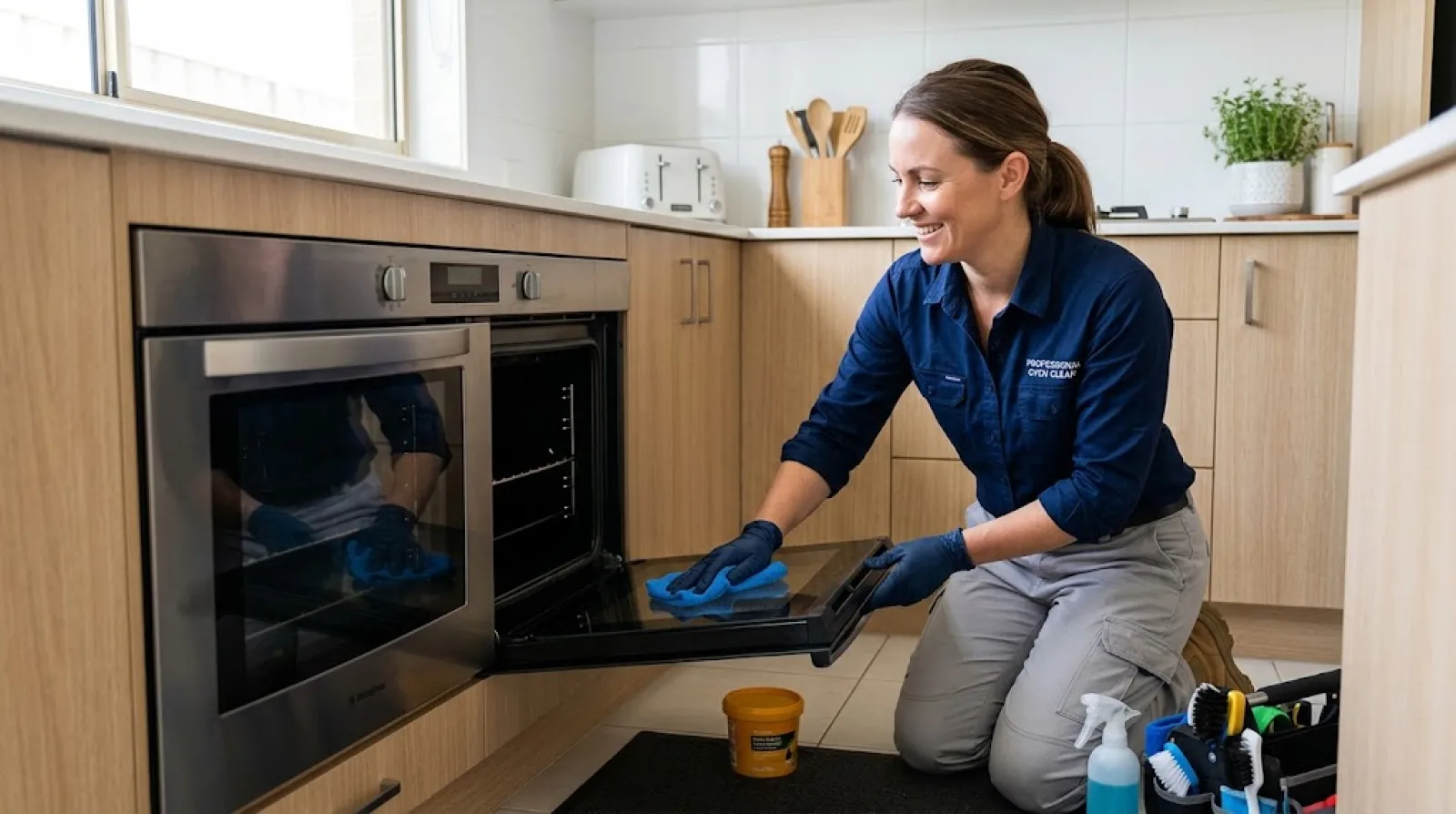
Baking a Sunday roast or crisping up a batch of sourdough shouldn't taste like leftover chemical solvent. Yet, for many Australian households, calling in a trade cleaner or picking up an off-the-shelf aerosol can turns the kitchen into a toxic hazard zone for days. The pungent, eye-watering stench of caustic chemicals like sodium hydroxide (lye) doesn't just fill the room—it seeps into your soft furnishings, triggers asthma flare-ups, and leaves behind unpleasant off-gassing when the appliance is next turned on.
Booking a professional oven clean shouldn't mean turning your home into a chemical exclusion zone. Across Australia, modern professional cleaning specialists have shifted away from harsh industrial solvents toward non-caustic, bio-degradable, van-mounted dip-tank methods. These techniques deliver a factory-fresh restore without leaving a trace of chemical fumes behind.
Whether you are an end-of-lease tenant in Melbourne striving to reclaim your full bond, a busy family in Sydney protecting young lungs, or a homeowner in Brisbane preparing for weekend entertaining, this guide covers everything you need to know about booking an odourless, high-performance oven clean in Australia.
Why Traditional Oven Cleaning Stinks (And Why It’s Hazardous)
To avoid a smelly kitchen, it helps to understand why conventional oven cleaning creates such an overpowering chemical stench in the first place.
The Problem with Caustic Chemicals
Traditional heavy-duty cleaning products rely on aggressive alkali compounds—most notably sodium hydroxide (caustic soda) and potassium hydroxide. These heavy-duty chemicals liquefy baked-on fat and carbonized grease through a severe chemical reaction called saponification. While effective at dissolving thick black grime, they come with substantial drawbacks:
-
Heavy Volatile Organic Compounds (VOCs): High-potency aerosols release aerosolized caustic particles into indoor air, hanging in closed spaces long after the cleaner leaves.
-
Corrosive Fumes: Respiratory irritation, coughing, throat burning, and severe eye tearing are common reactions to caustic spray mist.
-
Residue Burn-Off: When caustic sprays are baked into internal elements, fan assemblies, or door seals without complete rinsing, heating the oven later causes the remaining chemical layer to smoke and off-gas into your food.
-
Appliance Damage: Caustic chemicals strip enamel coatings, discolor rubber door seals, pit aluminum heating elements, and etch delicate glass panels over time.
For households with infants, elderly relatives, asthmatics, or indoor pets (particularly birds, whose delicate respiratory systems are exceptionally sensitive to airborne toxins), caustic fumes represent a genuine domestic hazard.
The Fume-Free Solution: Non-Caustic Van-Mounted Dip Tanks
When hiring an experienced Oven Cleaner in Australia, look specifically for operators using non-caustic, eco-friendly dip-tank technology.
How the Non-Toxic Method Works
Rather than drowning your entire kitchen in harsh aerosol spray, a eco-conscious specialist handles the heaviest carbon removal outside your home:
-
Complete Disassembly: The technician safely detaches all removable components from your unit—including chrome racks, side runners, back fan plates, enamel drip trays, and internal glass panels.
-
Van-Mounted Hot Dip Tank: These components are taken outside to a custom dip tank installed in the technician's vehicle. The tank contains a heated, non-caustic, water-based solution (often powered by plant-derived surfactants and mild alkaline compounds). As the parts soak at high temperatures, years of baked-on grease and carbon melt away effortlessly without dispersing fumes inside your house.
-
Low-Odour Cavity Gelling: While the racks soak outside, the technician applies a bio-degradable, non-caustic paste or gel to the interior oven cavity. This paste breaks down grease mechanically and thermally rather than chemically, producing zero toxic off-gassing.
-
Detailing & Reassembly: The technician scrapes away softened carbon using specialist brass-grade blades (which won't scratch vitreous enamel), wipes the cavity clean with pure water, rinses the soaked racks from the van, and reassembles the unit.
-
Immediate Usability: Because no volatile chemicals were sprayed inside, your oven can be turned on and used to cook food immediately after the service finishes.
Australian Standards, Regulations, and Consumer Guarantees
When booking any Domestic Cleaner in Australia or specialized appliance detailer, ensure your service provider complies with national safety and consumer regulations.
1. Consumer Guarantees (ACCC & Australian Consumer Law)
Under the Australian Consumer Law (ACL), enforced by the Australian Competition and Consumer Commission (ACCC), home cleaning services automatically come with consumer guarantees. The service must be:
-
Provided with acceptable care and skill.
-
Fit for any specified purpose (e.g., leaving an oven clean and operational without causing chemical damage or toxic contamination).
-
Delivered within a reasonable time.
If an inexperienced contractor damages your oven's heating element, shorts out the electronic thermostat, or scratches internal glass due to improper technique, you are legally entitled to a repair, replacement, or remedy under ACL guarantees.
2. Tenancy & End-of-Lease Compliance
For renters across Australia, oven cleanliness is one of the most frequently contested items during exit inspections:
-
New South Wales: Under the Residential Tenancies Act 2010 (managed by NSW Fair Trading), tenants must leave premises "reasonably clean."
-
Victoria: The Residential Tenancies Act 1997 (monitored by Consumer Affairs Victoria) requires properties to be returned in a reasonably clean condition, matching the condition report provided at start of lease, minus fair wear and tear.
-
Queensland: Under the Residential Tenancies and Rooming Accommodation Act 2008 (overseen by the Residential Tenancies Authority - RTA), tenants are expected to clean the oven to pass the final exit inspection.
Booking a professional Oven Cleaning Service in Australia that provides a written receipt and satisfaction guarantee helps safeguard your rental bond deposit without leaving chemical smells behind for the next tenant or property manager.
3. Safe Work Australia & Chemical Safety
Professional operators must adhere to Safe Work Australia workplace exposure standards for airborne contaminants and manage chemical waste responsibly. Reputable cleaners ensure all waste liquid from dip tanks is disposed of in compliance with local council environmental health regulations, avoiding unlawful discharge into stormwater drains.
How Much Does a Non-Toxic Professional Oven Clean Cost in Australia?
Pricing for professional oven cleaning varies based on oven size, configuration, degree of carbon buildup, and geographical location. Standard pricing in major capital cities like Sydney, Melbourne, Brisbane, Perth, and Adelaide typically aligns with the following AUD ranges:
Typical Australian Price Breakdown (GST Inclusive)
| Appliance Type | Configuration / Size | Cost Range (AUD) | Typical Duration | Best Suited For |
|
Standard Single Oven |
60cm built-in or under-bench |
A120 – A180 |
1.0 – 1.5 hours |
Regular annual reset, routine home care |
|
Wide Single Oven |
90cm built-in unit |
A160 – A230 |
1.5 – 2.0 hours |
Large family homes, frequent entertaining |
|
Double Oven |
Compact top grill/oven + main oven (60cm) |
A180 – A260 |
2.0 – 2.5 hours |
Multi-cavity wall units |
|
Freestanding Range Stove |
90cm - 120cm with cooktop |
A220 – A340 |
2.5 – 3.5 hours |
Gourmet kitchens, heavy gas/electric cooking |
|
Rangehood Add-On |
Up to 90cm (filters + stainless housing) |
A60 – A110 |
30 – 45 mins |
Removing sticky grease & oil drips |
|
Cooktop Add-On |
4 to 6 burner gas, induction, or ceramic |
A50 – A90 |
30 – 45 mins |
Complete cooking-station reset |
Cost Factors to Keep in Mind
-
Call-Out & Travel Fees: Most city-based operators include travel in their base quote, but regional or remote properties across rural WA, QLD, or NSW may incur a small travel surcharge.
-
Pyrolytic Ovens: If your unit features a pyrolytic self-cleaning function, let the cleaner know. Pyrolytic ovens require careful handling around rubber seals and glass linings, though racking and side frames still require specialist dip-tank degreasing.
-
Bundled Packages: Combining your oven clean with a rangehood, cooktop, or general end-of-lease kitchen package often reduces the total per-appliance cost by 15% to 25%.
Practical Australian Scenarios: Real-World Cleaning Needs
To show how non-caustic cleaning solves real everyday challenges, consider these common Australian household scenarios:
Scenario 1: The Inner-City Renter in Sydney
-
Location: Surry Hills, NSW
-
Challenge: Sarah is moving out of her 2-bedroom rental unit. The landlord requires a spotless exit clean. Sarah works long hours and has an indoor cat. She cannot afford toxic fumes settling in her small, single-balcony apartment.
-
Solution: Sarah books a local Domestic Cleaner in Australia specializing in non-caustic end-of-lease oven restores. The technician uses a portable dip tank set up on the outdoor driveway, keeps all chemicals eco-friendly, strips the grease off the glass, and leaves no residual odor behind. Sarah receives an itemized invoice for her property manager and secures her full bond refund.
Scenario 2: The Family Home with Asthma Concerns in Melbourne
-
Location: Glen Waverley, VIC
-
Challenge: Mark and Laura's 90cm freestanding cooker hasn't been deep cleaned in three years. Their 7-year-old son has severe bronchial asthma, making harsh aerosol cleaners impossible to use inside the home.
-
Solution: Mark hires a specialist oven cleaner who guarantees a 100% fume-free, non-caustic service. Using van-mounted hot dip tanks and citrus-based degreasing gels inside the cavity, the job is completed in two hours. The house remains completely odourless, and Mark cooks dinner that exact evening without triggering his son's respiratory symptoms.
Scenario 3: Pre-Holiday Hosting in Brisbane
-
Location: Paddington, QLD
-
Challenge: Dave is hosting a 15-person family Christmas lunch in three days. He turns on his oven to test it, only to have smoke and burnt grease smells fill his living area. He needs an urgent clean that won't leave chemical tastes on the turkey or pork roast.
-
Solution: Dave books an eco-friendly oven detailer. The specialist thoroughly cleans the fan housing, door glass, and heating elements using non-toxic steam and dip methods. With zero solvent residue remaining, Dave bakes his holiday roast with confidence, enjoying crisp, clean air throughout his kitchen.
Hidden Risks and Common Oven Cleaning Pitfalls
Not all cleaning services offer the same standard of care. Beware of these common industry pitfalls when selecting a provider:
-
Overspraying Electrical Components: Unqualified cleaners who spray high-pressure liquids directly into the back fan cavity or top thermostat element can short-circuit the appliance or trip your safety switch on the main electrical board.
-
Scratched Inner Glass: Using abrasive metal scourers, sandpaper, or improper razor blades on oven glass panels causes micro-scratches. Under high baking temperatures, these scratches create thermal stress points that can cause the glass panel to shatter unexpectedly.
-
Damaged Rubber Gaskets: Caustic chemicals rapidly deteriorate rubber door seals, causing them to dry out, crack, and lose their airtight seal. Replacement seals often cost upwards of A80 – A150 plus call-out fees.
-
Unrinsed Chemical Residue: Cheaper operators who rush the job may leave caustic residues behind heating element guards, resulting in dangerous chemical smoke when the oven is preheated above $200^\circ\text{C}$.
Smart Questions to Ask Your Cleaner Before Booking
To protect your home, health, and oven warranty, ask these specific questions before paying a deposit:
-
"Will there be any strong chemical fumes or smells in my home during or after the service?"
-
"Do you dismantle the door glass panels to clean between the inner layers?"
-
"Are your cleaning products safe for homes with infants, pets, or asthmatics?"
-
"How soon after the service finishes can I safely use the oven for cooking?"
-
"What steps do you take to protect my timber floors, tile grout, or surrounding cabinetry while working?"
How to Prepare Your Kitchen & Maintain an Odour-Free Oven
Once you've booked a specialist, taking a few simple steps before and after their arrival ensures a seamless experience.
Before the Cleaner Arrives
-
Clear the Countertops: Clear items off the cooktop and nearby bench space so the technician has room to lay down protective floor covers and tooling bags.
-
Provide Access: Ensure clear access between your kitchen and the driveway or carport where the operator's van and dip tank will be parked.
-
Empty the Cavity: Remove all baking trays, pizza stones, probe thermometers, and manual storage items from inside the oven cavity.
Post-Clean Maintenance Tips
To keep your oven shining and odor-free between annual deep cleans:
-
Wipe Spills Instantly: Clean up high-sugar or acidic food spills (like tomato sauce or fruit pie filling) as soon as the oven cools down using warm water and a microfiber cloth.
-
Use Steam Rinses Monthly: Place a heat-proof dish filled with water and lemon slices into the oven at 150°C for 20 minutes. The moisture softens grease buildup, allowing you to wipe it away effortlessly without chemical sprays.
-
Inspect Door Seals: Periodically wipe the flexible rubber door gasket with a damp cloth—never scrub it with stiff brushes or harsh detergents.
Find Local Oven Cleaning Services and Australian Information on AusLocaly
Keeping your home clean, healthy, and functional shouldn't mean sacrificing your indoor air quality. Whether you need a non-caustic Oven Cleaning Service in Australia, an end-of-lease kitchen refresh, or trusted tradespeople across your neighborhood, finding reliable local professionals is simple with AusLocaly.
At AusLocaly, we connect residents, renters, homeowners, and local business owners with trusted service providers across every state and territory. Explore curated categories and find skilled specialists in your local community:
-
Browse dedicated service options across our comprehensive AusLocaly Categories directory.
-
Find experienced home care professionals in major metropolitan hubs including Sydney, Melbourne, and Brisbane.
Whether you are preparing a property for sale, completing a lease turnaround, or simply restoring your kitchen cooking appliances to pristine condition, discover trusted local providers in your area today on AusLocaly.