Green Pool After Holidays? How Pool Cleaning Services Bring It Back
Returned from holidays to a dark green pool? Discover how professional pool cleaning services in Australia clear algae fast, costs, and prevention tips.
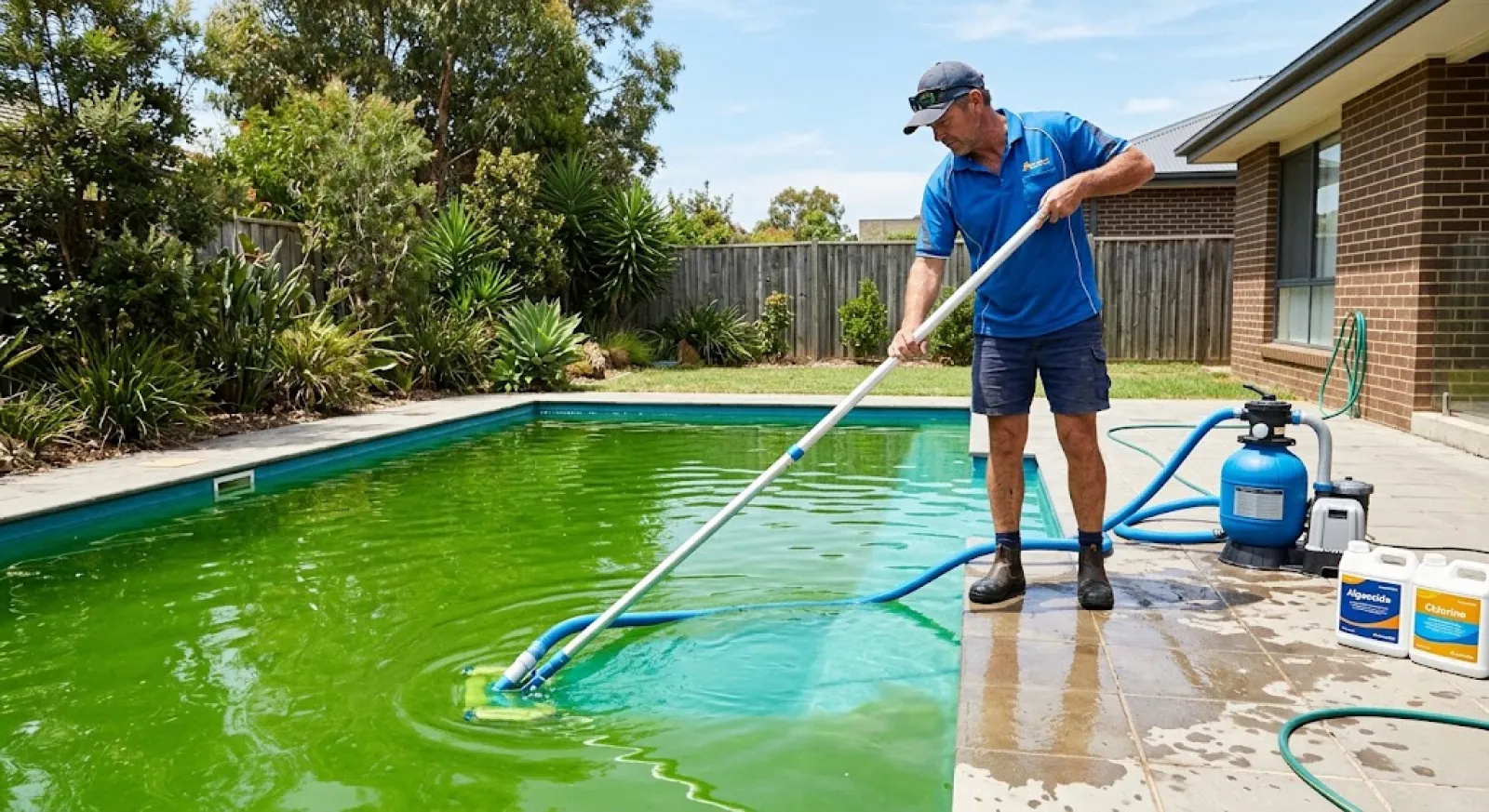
Returning home after a relaxing summer vacation in Australia only to step out into the backyard and find a thick, murky green swamp where your pristine swimming pool used to be is a frustratingly common experience. During peak Australian summer holiday periods—particularly December, January, and February—high temperatures, intense ultraviolet (UV) radiation, and sudden tropical downpours create the absolute perfect breeding ground for algae. When a pool is left unattended for even one to two weeks, chlorination levels can plummet, pumps can trip, and water chemistry can rapidly destabilise.
Turning a severe green pool back into crystal-clear, safe swimming water is rarely as simple as throwing a jug of chlorine into the skimmer. In fact, improper treatment can lock chemicals, damage expensive pool filtration equipment, stain surface finishes, or result in hundreds of dollars spent on ineffective retail products. Professional pool cleaner in Australia teams specialise in diagnosing the precise root cause of the infestation and executing a multi-stage "green-to-clean" recovery protocol.
This comprehensive guide covers everything Australian homeowners, property managers, landlords, and renters need to know about post-holiday green pools—from understanding why algae blooms happen so quickly in local climates to step-by-step restoration processes, realistic Australian pricing, health regulations, and how to connect with trusted local specialists through AusLocaly.
Why Australian Swimming Pools Turn Green While You're Away
The Australian climate provides world-class outdoor living, but it is notoriously tough on swimming pool chemistry. When you lock up your house for a holiday, several environmental and mechanical factors join forces to destroy your pool's sanitiser levels.
1. Solar Heat and Intense UV Radiation
Chlorine is the primary sanitiser used in Australian domestic pools to destroy bacteria and micro-organisms. However, free available chlorine is highly sensitive to sunlight. Unstabilised chlorine can degrade by up to 90% in just two hours under direct Australian midday sun. Even when pools are treated with Cyanuric Acid (CYA or sunblock for chlorine), extended stretches of 30°C+ heatwaves consume free chlorine at an accelerated rate. Once the chlorine level falls below 1.0 part per million (ppm), dormant algae spores begin to multiply exponentially.
2. Heavy Summer Rainfall and Dilution
Across Queensland, New South Wales, the Northern Territory, and coastal Western Australia, the summer holiday period frequently coincides with severe afternoon thunderstorms or tropical rain depressions. Heavy rain introduces three major problems:
-
Dilution: Rainwater dilutes the salt level in saltwater chlorinator pools and lowers the concentration of active liquid or granular chlorine.
-
pH Alteration: Rainwater is naturally slightly acidic, driving down the pH and alkalinity of your pool, which impairs chlorine's effectiveness.
-
Contaminants: Rain washes atmospheric dust, pollen, organic matter, and airborne algae spores directly into the water.
3. Lack of Circulation and Timer Issues
Water circulation is just as crucial as chemical balance. Stagnant water allows algae spores to attach to pool walls, steps, and grout lines. Common holiday circulation failures include:
-
Power outages or safety switch trips: Summer storms often trigger safety switches (RCDs), shutting down the pool pump timer for days without the owner knowing.
-
Inadequate timer settings: Leaving the pump running on a winter schedule (2 to 4 hours per day) during a 35°C January week fails to turn over the pool volume sufficient times.
-
Clogged skimmer baskets: Falling eucalyptus leaves or palm fronds quickly choke the skimmer basket, starving the pump of water and stopping all circulation.
4. High Phosphate Levels
Phosphates serve as super-food for algae. Phosphates enter pool water via lawn fertilisers, plant debris, soil runoff, bird droppings, and swimmer waste. When phosphate levels exceed 200 parts per billion (ppb) and chlorine drops, algae growth surges uncontrollably.
Identifying Your Pool's Algae Type and Severity
Before applying chemical treatments, an experienced swimming pool maintenance specialist in Australia will evaluate the type and severity of algae present. Treating all green pools with the exact same chemical dosage is inefficient and potentially harmful to pool surfaces.
Light Green / Hazy Green Water (Early Stage)
If you return home to find the water slightly hazy with a light pale-green tint, the algae bloom has only just begun. The bottom of the pool is typically still visible. In this scenario, a standard super-chlorination (shocking) treatment paired with continuous filtration for 24 to 48 hours is often enough to reverse the bloom.
Dark Green / "Pea Soup" Pool (Severe Stage)
When the pool water resembles opaque pea soup and you cannot see the main drain or the bottom steps, millions of algae cells are actively growing throughout the entire body of water. This level of infestation requires a full multi-stage chemical shock, flocculation (settling agent), power vacuuming directly to waste, and intensive filter backwashing or element washing.
Yellow or Mustard Algae
Yellow algae appears as fine, flour-like powder clinging to the shady walls, steps, or floor of the pool. It is frequently mistaken for sand or pollen. Mustard algae is extremely resistant to standard chlorine levels and can survive out of water on pool toys, swimmers, and cleaning brushes. Eliminating mustard algae requires specialised copper-free or sodium bromide algaecides alongside ultra-high chlorine shock levels.
Black Spot Algae (Black Algae)
Black spot algae presents as dark blue-green or black spots anchored firmly into porous pool surfaces, such as concrete, plaster, or tile grout. Each spot is protected by a tough, waxy outer membrane that shields the living organism from chlorine. Eliminating black spot requires aggressive manual wire brushing to breach the protective shell before applying specialised trichlor or localized algaecide treatments.
The Step-by-Step Professional "Green-to-Clean" Recovery Process
To safely restore an algae-infested pool, professional pool technician in Australia teams follow a structured protocol designed to protect pumps, filters, and pool liners while restoring water safety.
Step 1: Comprehensive Water Testing
The technician tests the water parameters using precise liquid titration or photometric testing equipment rather than basic test strips. Key parameters assessed include:
-
pH (Ideal Range: 7.2 – 7.6 for plaster/concrete; 7.0 – 7.4 for fibreglass): Chlorine is almost completely inactive if pH is above 8.0. Lowering the pH to 7.2 makes shock chlorine up to ten times more effective.
-
Free Chlorine (Ideal Range: 2.0 – 4.0 ppm): In a green pool, free chlorine is usually at 0 ppm.
-
Cyanuric Acid / CYA (Ideal Range: 30 – 50 ppm): If CYA is over 100 ppm (known as "chlorine lock"), shock treatment will not work, and a partial drain and refill is mandatory before chemical recovery.
-
Total Alkalinity / TA (Ideal Range: 80 – 120 ppm): Acts as a buffer to keep pH stable.
-
Phosphates: High phosphate levels must be chemically bound and filtered out to prevent immediate re-infestation.
Step 2: Mechanical Clearing and Debris Removal
Before chemicals are added, large organic debris (leaves, sticks, dead frogs, bark) must be manually scooped from the pool bottom using deep leaf rakes. Leaving organic debris on the bottom wastes chlorine, as the chlorine attempts to oxidize dead plant matter rather than killing live algae spores.
Step 3: Chemical Balancing and Super-Chlorination
The technician adjusts the pH down to approximately 7.2 using hydrochloric acid (muriatic acid) or dry acid (sodium bisulfate). Once balanced, a massive dose of sanitiser is introduced—often 20 to 50 litres of liquid sodium hypochlorite (liquid chlorine) or high-strength calcium hypochlorite shock powder depending on pool volume.
Step 4: Flocculation or Clarification
In dark green pools where dead algae leaves the water extremely cloudy, a chemical flocculant (aluminum sulphate or liquid polymer floc) is applied. Flocculants attach to microscopic suspended dead algae particles, causing them to bind together, gain weight, and drop to the floor of the pool overnight, leaving clear water above a thick layer of sediment on the floor.
Step 5: Power Vacuuming to Waste and Filter Servicing
Once the dead algae has settled to the bottom, the technician turns the multi-port valve on a sand filter to the "WASTE" setting (bypassing the filter media entirely) and slowly vacuums the heavy sediment directly out into the sewer/waste line.
-
Sand/Glass Media Filters: Must be thoroughly backwashed and rinsed once water clearing is complete.
-
Cartridge Filters: Cartridge elements must be removed, soaked in cartridge cleaning solution to break down organic fats and oils, and pressure-hosed clean. In severe cases, clogged elements must be replaced entirely.
Step 6: Final Sanitisation, Polish, and Salt Balance
Once the water is clear, the technician performs a final water balance test, restores salt or mineral levels if using a chlorinator cell, adds a long-term copper-free algaecide, and resets the filtration timer for ongoing maintenance.
Australian Pool Safety, Health Regulations, and Environmental Rules
1. Health Risks and Mosquito Nuisance Laws
Untreated green pools quickly turn into stagnant bodies of water that breed mosquitoes carrying dangerous viruses such as Ross River Virus and Barmah Forest Virus. Under state health legislation—such as the Queensland Public Health Act 2005 or the NSW Local Nuisance Laws—local council environmental health officers have the legal authority to issue formal notices or fines to property owners who maintain unsanitary, mosquito-breeding pools.
2. Environmental Stormwater Regulations
It is illegal across all Australian states and territories to discharge backwash water, green pool sediment, or highly chlorinated water into stormwater drains, gutters, or public waterways.
-
Protection of Environment Operations Act (NSW): Discharging polluted pool water into stormwater carries heavy on-the-spot fines for residents and trade contractors.
-
Correct Disposal: Pool waste water must be directed into the municipal sewer connection via a dedicated gully trap, in strict compliance with your local water authority guidelines (e.g., Sydney Water, Queensland Urban Utilities, Yarra Valley Water, Water Corporation WA).
3. Pool Barrier Safety (AS 1926.1)
During a green pool restoration, technicians and homeowners must ensure that pool safety gates and child-resistant barriers remain securely latched and compliant with Australian Standard AS 1926.1. Murky green pools represent an extreme drowning hazard because a child or pet submerged in dark water cannot be seen from above the surface.
Typical Costs for Professional Pool Cleaning Services in Australia
The cost to clear a green pool in Australia varies depending on pool size (litres), surface material (fibreglass, concrete, vinyl liner), algae severity, and equipment condition. Below are typical market cost ranges across major capital cities such as Sydney, Melbourne, Brisbane, and Perth.
Key Factors Influencing Final Costs
-
Pool Volume: A 30,000-litre townhouse courtyard pool requires significantly fewer chemicals than an 80,000-litre regional family pool.
-
Number of Visits Required: Severe green pools often require two to three separate technician visits spaced 24 to 48 hours apart to allow chemicals to settle and execute the waste vacuuming process.
-
Filter System Health: If the filter media is fouled with dead algae grease or mineral scale, backwashing may not suffice, requiring media replacement or cartridge renewal.
-
Access and Emergency Call-Outs: Peak post-holiday periods (early January) experience high service demand. Booking urgent standard or weekend slots may incur additional service charges.
Professional Services vs. DIY: A Realistic Comparison
When faced with a green pool, many homeowners consider running to a local retail pool shop to buy chemicals and handle the job themselves. While DIY recovery is possible for minor cloudiness, severe green pools often turn into expensive trial-and-error DIY exercises.
Common DIY Mistakes That Cost Homeowners Money
-
Adding Shock Chlorine Without Adjusting pH First: If pH is 8.2, up to 80% of the shock chlorine you purchase is rendered completely ineffective, wasting money.
-
Vacuuming Heavy Algae Through a Cartridge Filter: Pushing heavy algae sludge through a cartridge filter permanently clogs the micro-fibres, ruining a $200–$350 filter element instantly.
-
Mixing Chemicals Improperly: Mixing liquid chlorine with hydrochloric acid produces dangerous, deadly toxic chlorine gas. Professional pool cleaners are trained in chemical handling and SafeWork Australia safety protocols.
-
Draining the Pool Completely: Never drain an inground fibreglass or vinyl liner pool without professional hydrostatic advice. Groundwater pressure can lift the empty shell out of the ground or collapse vinyl walls, causing tens of thousands of dollars in structural damage.
Practical Australian Scenarios: Real-World Recovery Examples
Scenario 1: Post-Holiday Storm Damage in Suburban Brisbane
A family returned to their home in suburban Brisbane after a two-week holiday in Noosa. A severe thunderstorm tripped the outdoor RCD safety switch on day three of their trip, leaving their 55,000-litre concrete saltwater pool without power or circulation in 33°C heat.
-
The Problem: Complete lack of filtration for 11 days, heavy leaf drop, and total free chlorine depletion led to a thick, dark green pea-soup condition.
-
The Solution: The family booked a local mobile swimming pool maintenance specialist via an online directory. The technician restored power, tested water parameters (pH 8.1, Free Chlorine 0 ppm, Phosphates 800 ppb), added 30L of liquid chlorine alongside hydrochloric acid, applied a flocculant, returned 24 hours later to vacuum the sludge to waste, and replaced the fouled sand filter media with active glass media. Total cost: $580 AUD including chemicals.
Scenario 2: Investment Property Handover in Coastal Sydney
A property manager handling a rental home in Sydney discovered the outgoing tenants had switched off the pool pump prior to their final inspection before going away for three weeks in January. A new tenant was scheduled to move in within four days.
-
The Problem: Light-to-medium green fibreglass pool with yellow algae patches along the shady steps.
-
The Solution: The landlord engaged a certified pool cleaner in Australia service provider. The specialist brushed down all fibreglass walls using soft-bristled brushes, balanced the pH to 7.2, introduced a copper-free algaecide targeting yellow algae, super-chlorinated the system, and performed two follow-up backwashes. The pool was crystal clear and safe for the incoming tenant within 72 hours.
How to Prevent Your Pool Turning Green on Your Next Holiday
Preventing a green pool before you leave for a holiday is vastly cheaper and easier than curing one after you return. Follow this proactive pre-holiday maintenance checklist:
-
Perform a Pre-Vacation Shock Dosing: Two days before departing, add a double dose of liquid chlorine or shock powder to establish a strong sanitiser cushion.
-
Apply a Quality Multi-Action Algaecide: Add a preventative dose of long-life copper-free or quarterly algaecide to inhibit algae growth even if chlorine levels drop while away.
-
Clean All Baskets and Filters: Empty skimmer baskets, clean the pump lint pot, and thoroughly backwash or hose down filter cartridges so water flows at maximum efficiency.
-
Set Your Filtration Timer Correctly: Ensure your pump timer is set for summer filtration—typically 8 to 10 hours per day divided into morning and late afternoon runs.
-
Inspect the Salt Chlorinator Cell: If you own a saltwater chlorinator, inspect the cell plates for calcium buildup. A calcified cell cannot produce chlorine. Clean the cell with diluted cell-cleaning acid if required.
-
Maintain Pool Water Levels: Top up the pool water level to halfway up the skimmer box opening. If water drops below the skimmer box during hot weather, the pump will suck air and run dry, potentially burning out the motor.
-
Arrange a Mid-Holiday Service Check: For trips lasting longer than ten days during mid-summer, arrange for a local pool technician in Australia or a trusted neighbor to check pump operation and clear skimmer baskets halfway through your break.
Consumer Checklist: Evaluating Pool Cleaning Services
When hiring a local mobile pool service provider across Australia, use this practical checklist to ensure you receive professional, reliable service:
-
Licensing and SPASA Membership: Is the business or technician a member of SPASA (Swimming Pool and Spa Association Australia) or certified under national CERT III/IV in Swimming Pool and Spa Service?
-
Public Liability Insurance: Does the operator carry active public liability insurance (minimum $10 million or $20 million) to protect your property against accidental flood or equipment damage?
-
Clear Itemised Quotes: Does the service provider provide a clear breakdown separating call-out fees, labour, chemical costs, and disposal fees?
-
Equipment Familiarity: Is the technician experienced with your specific pool type (concrete, fibreglass, vinyl) and equipment brand (AstralPool, Zodiac, Hayward, Davey, Waterco)?
-
Environmental Compliance: Does the provider confirm that all backwash water and green waste vacuuming will be directed into compliant sewer points rather than stormwater drains?
-
Service Warranties: Does the business offer a water clarity guarantee or follow-up check if water does not clear within the expected timeframe?
Find Local Pool Cleaning Services and Outdoor Care on AusLocaly
Dealing with a stubborn green pool after returning from a summer holiday does not have to ruin your break or result in costly DIY mistakes. Whether you require an urgent green-to-clean shock recovery, routine chemical balancing, filter media replacement, or long-term pool maintenance, connecting with experienced local technicians is fast and straightforward.
AusLocaly connects Australian residents, homeowners, landlords, property managers, and businesses with trusted trade professionals and service providers across all states and territories.
Through AusLocaly, you can:
-
Discover top-rated local mobile Pool Cleaning & Maintenance Services across Australia.
-
Browse verified local service providers in major Australian capitals including Sydney, Melbourne, Brisbane, and Perth.
-
Compare local trade profiles, review service coverage, and access essential home maintenance information tailored to your neighbourhood.
-
Research related outdoor services including landscaping, pressure cleaning, property maintenance, and electrical trade repairs.
Before spending time and money purchasing random chemicals at retail stores, explore AusLocaly to find qualified local pool specialists who can bring your swimming pool back to sparkling life safely and efficiently.