Fridge Not Cooling or Washer Not Spinning? Repair or Replace Guide
Is your fridge not cooling or washer not spinning? Discover whether to repair or replace your appliance with this Australian cost, age, and law guide.
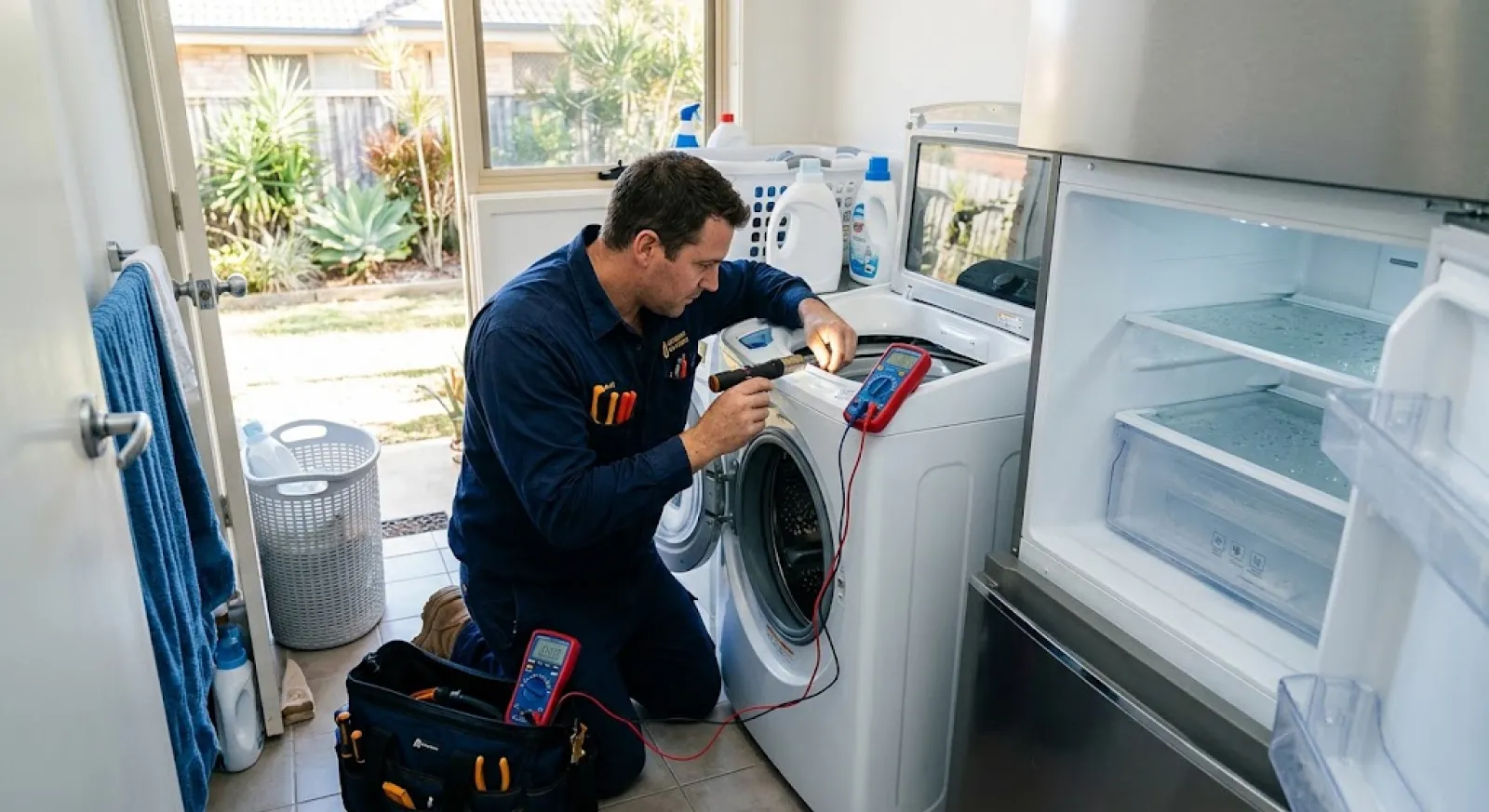
A malfunctioning household appliance creates an immediate disruption to daily life. When a refrigerator stops cooling, perishable food worth hundreds of dollars risks spoilage within hours. When a washing machine refuses to spin, households are left with soggy clothes, unwashed school uniforms, and a backup of laundry.
Faced with an unexpected appliance failure, Australian homeowners, renters, property managers, and business owners confront a recurring financial question: Should you pay to repair the unit, or cut your losses and purchase a replacement?
Making the right decision requires looking beyond the initial call-out fee. It involves evaluating the age of the machine, analyzing energy consumption rates, understanding your rights under Australian Consumer Law (ACL), and weighing the total cost of ownership. Whether you rely on an appliance repair technician in Australia or are considering a brand-new energy-efficient unit, this comprehensive guide provides the practical criteria, regulatory context, and financial breakdowns needed to make an informed choice.
Understanding the Problem: Why Fridges Stop Cooling and Washers Stop Spinning
Before calling a local tradesperson or browsing online retailers, identifying the basic symptoms of a failure can help you communicate effectively with a whitegoods repairer in Australia and gauge potential repair costs.
1. Refrigerator Cooling Failures
Refrigerators operate continuously to keep fresh food below 4°C and frozen goods below -18°C. When temperature control fails, the issue generally stems from airflow restrictions, mechanical failure, or gas leaks.
-
Dirty Condenser Coils: Condenser coils vent heat away from the cabinet. In many Australian homes, dust, lint, and pet hair build up on these coils beneath or behind the unit, causing the compressor to overheat and trip out.
-
Defrost System Malfunction: Frost-free fridges rely on a defrost heater, thermostat, and timer/control board. If any of these components fail, ice builds up on the evaporator coils, blocking cold air circulation into the fresh food section while the freezer may remain cold.
-
Faulty Evaporator or Condenser Fan: Fans circulate air over the coils and through the fridge compartments. A failing fan motor often makes a squealing or chirping noise before stopping altogether.
-
Failed Compressor or Start Relay: The compressor is the heart of the refrigeration cycle. If the compressor clicks on and off every few minutes without cooling, the start relay may be burnt out—a straightforward repair. If the compressor motor itself has seized, repair costs increase dramatically.
-
Refrigerant Gas Leak: A gradual loss of refrigerant gas reduces cooling efficiency over time, causing the compressor to run constantly.
2. Washing Machine Spinning Failures
Washing machines—both top loaders and front loaders—rely on a balanced sequence of mechanical, electrical, and hydraulic systems to complete a spin cycle.
-
Unbalanced Load or Overloading: Modern washers feature electronic sensors that halt high-speed spinning if heavy items (such as bath mats or thick blankets) cluster on one side of the drum to prevent structural damage.
-
Blocked Drain Pump or Filter: Washing machines will not enter a high-speed spin cycle if water remains in the tub. Foreign objects like coins, lint, hairpins, or small socks frequently clog the drain pump filter.
-
Worn Drive Belt: In belt-driven washing machines, a stretched, slipped, or snapped drive belt prevents the motor from rotating the drum during the spin cycle.
-
Worn Carbon Brushes (Front Loaders): Many front-load washer motors use carbon brushes to transfer electricity to the armature. As these brushes wear down over years of use, the motor loses power under load and fails to spin.
-
Door Lock / Interlock Failure: For safety reasons, front loaders and modern top loaders will not spin unless the door or lid mechanism signals to the main circuit board that it is securely locked.
-
Suspension Rods or Shock Absorbers: Worn suspension elements cause excessive tub vibration during acceleration, triggering the machine's internal balance switch to terminate the spin cycle prematurely.
The Australian "50% Rule" and Appliance Lifespan Matrix
To determine whether an appliance repair makes financial sense, professional trade organizations across Australia commonly recommend applying the 50% Rule:
The 50% Rule: If the cost of repairing an appliance exceeds 50% of the cost of a comparable new model, and the unit has already passed 50% of its expected lifespan, replacement is usually the more economical choice.
Average Appliance Lifespans in Australia
Appliance lifespans vary based on build quality, usage frequency, maintenance, and environmental conditions (such as coastal humidity or hard water supply).
| Appliance Type | Average Expected Lifespan | 50% Lifespan Threshold | Critical Replacement Indicators |
|
Top-Mount / Bottom-Mount Fridge |
10 – 14 Years |
5 – 7 Years |
Continuous compressor running, sealed system gas leak, cabinet rusting. |
|
Side-by-Side / French Door Fridge |
8 – 12 Years |
4 – 6 Years |
Electronic mainboard failure, dual compressor failure, door seal assembly unrepairable. |
|
Front-Load Washing Machine |
8 – 12 Years |
4 – 6 Years |
Drum bearing failure (loud roar), cracked outer tub, main controller board burn out. |
|
Top-Load Washing Machine |
7 – 10 Years |
3.5 – 5 Years |
Transmission/gearbox failure, rusted chassis, severe tub off-balance wear. |
Typical Appliance Repair Costs in Australia
When booking a service call, understanding standard industry pricing structures helps prevent unexpected expenses. In Australia, whitegoods trade services typically charge a baseline call-out fee that covers travel and initial diagnosis, followed by labour and component costs.
Cost Breakdown Components
-
Service Call-Out Fee: Generally ranges from $80 to $160 AUD. This fee usually includes the first 15 to 30 minutes of diagnostic work on-site.
-
Hourly Labour Rate: Ranging between $90 and $150 AUD per hour after the initial call-out period.
-
Spare Parts Costs: Minor parts (belts, relays, door latches, drain pumps) typically cost between $30 and $140 AUD. Major components (compressors, main circuit boards, inverter motors, drum assemblies) range from $200 to $650+ AUD.
-
GST: Standard 10% Goods and Services Tax applies to all local service quotes and invoices.
Australian Consumer Law (ACL): Rights and Statutory Guarantees
Many Australian consumers prematurely throw away failing appliances because they assume their rights end when the manufacturer’s express 1-year or 2-year warranty expires. Under the Australian Consumer Law (ACL), enforced by the Australian Competition and Consumer Commission (ACCC) and state fair trading agencies, consumer guarantees exist independently of commercial warranties.
Statutory Consumer Guarantees
When you purchase a fridge or washing machine in Australia, the law automatically guarantees that the product must:
-
Be of acceptable quality (safe, durable, free from defects, and fit for purpose).
-
Match descriptions provided by the supplier or manufacturer.
-
Have spare parts and repair facilities available for a reasonable period after purchase.
What Is a "Reasonable Period"?
The length of your ACL protection depends on the price and expected durability of the appliance.
-
Example: If a high-end $2,500 French door refrigerator suffers a complete control board breakdown after 3 years, the ACCC considers it reasonable to expect a unit of that price to last longer. Under ACL, the retailer or manufacturer may still be legally obligated to provide a remedy (repair, replacement, or refund) at no cost to you, even if the written 12-month warranty has ended.
-
Minor vs Major Failure:
-
Minor Failure: The supplier can choose between providing a free repair, replacement, or refund within a reasonable timeframe.
-
Major Failure: (e.g., the appliance is dangerous, cannot be easily fixed, or differs significantly from its description), the consumer has the choice between requesting a full refund or a replacement unit.
-
Before paying for private repairs on appliances under 5 years old, contact the original retailer or manufacturer to assert your statutory rights under Australian Consumer Law.
Licensing, Electrical Safety, and Environmental Regulations
When hiring a trade contractor to work on home appliances in Australia, specific regulatory and licensing requirements must be met to ensure safety and legal compliance.
1. Restricted Electrical Licensing
In Australian states and territories—including New South Wales, Victoria, Queensland, Western Australia, and South Australia—working on fixed or plug-in 240V electrical appliances for reward requires appropriate licensing.
-
An electrician in Australia holding an Unrestricted Electrical Licence can perform all appliance wiring and internal electrical repairs.
-
A specialised technician should hold a Restricted Electrical Licence (Disconnect/Reconnect & Fault Finding on Electrical Equipment) issued by state regulators such as Fair Trading NSW, EnergySafe Victoria (ESV), or the Queensland Electrical Safety Office (ESO).
2. Refrigerant Handling Certification (ARC)
Refrigerators contain fluorinated greenhouse gases or hydrocarbon refrigerants (e.g., R600a, R134a). Under federal environmental laws administered by the Department of Climate Change, Energy, the Environment and Water (DCCEEW):
-
Technicians who discharge, recover, or re-gas refrigeration systems must hold a Refrigerant Handling Licence (RHL) issued by the Australian Refrigeration Council (ARC).
-
Venting synthetic refrigerants into the atmosphere is illegal and carries significant fines under the Ozone Protection and Synthetic Greenhouse Gas Management Act 1989.
3. E-Waste Disposal Regulations
If you decide to replace your appliance, old whitegoods cannot simply be placed in regular municipal kerbside rubbish bins.
-
State Directives: Victoria, South Australia, and ACT have implemented strict landfill bans on e-waste.
-
Council Drop-Offs & Collection: Most local councils across Sydney, Melbourne, Brisbane, and regional hubs offer scheduled hard waste collections or designated resource recovery transfer stations where appliances are safely degassed, dismantled, and recycled.
Repair vs Replace: Fridge Decision Matrix
Use this breakdown to determine the best path forward for a refrigerator that is not cooling.
When to Repair a Fridge
-
The unit is under 5 years old: Most structural components retain substantial service life.
-
Simple diagnostic cause: Faulty door gaskets, dirty condenser coils, blocked drain tubes, or a failed start relay ($150 – $280 AUD repair).
-
High-end or integrated model: Built-in integrated fridges or premium wide-cabinet units ($3,000 – $7,000+ AUD value) generally justify repairs costing up to $800 AUD.
When to Replace a Fridge
-
The unit is over 8–10 years old: Internal insulation degrades over time, reducing thermal efficiency.
-
Compressor or sealed system failure: Replacing a burnt-out compressor and re-gassing costs between $600 and $1,100+ AUD, which rarely makes economic sense for older standard fridges.
-
Refrigerant gas leak inside cabinet walls: If an internal evaporator pipe leaks within injected polyurethane foam, repair is physically impossible.
-
High Energy Consumption: Older fridges consume up to 2 to 3 times more electricity per year than modern Energy Rating certified models, adding significantly to quarterly energy bills.
Repair vs Replace: Washing Machine Decision Matrix
Use this breakdown to evaluate a washing machine that is no longer spinning.
When to Repair a Washing Machine
-
The blockage is user-serviceable: Unclogging the front drain pump filter coin-trap costs $0 AUD in trade fees and takes 10 minutes.
-
Minor component wear: Replacing worn motor carbon brushes, drive belts, or door lock mechanisms ($180 – $320 AUD total repair cost) on a unit under 6 years old.
-
Premium brand investment: Mid-to-high-tier German or European front loaders ($1,500 – $2,800 AUD retail) are designed for long-term modular repairability.
When to Replace a Washing Machine
-
Failed Drum Bearings: If the washer sounds like a jet engine during spin acceleration and shows brown grease drops under the tub, drum bearings have failed. Repair requires a complete outer tub tear-down ($500 – $800+ AUD labour and parts).
-
Main PCB Control Board Burnout: Replacing an out-of-warranty main control module on a low-cost base washer often costs $350 – $500 AUD—close to the price of a brand-new machine with a full warranty.
-
Structural Rust or Cracked Outer Tub: Severe chassis corrosion or cracked plastic tubs present safety hazards that make repairs unfeasible.
Real-World Australian Practical Examples
Scenario A: Renters in Melbourne (VIC)
-
The Situation: A rental unit's included top-load washing machine stops spinning and leaves clothes soaking wet in Brunswick, Victoria.
-
Legal Responsibility: Under the Residential Tenancies Act 1997 (VIC), if an appliance is provided by the housing provider/landlord as part of the tenancy agreement, maintenance and repair responsibilities fall entirely on the landlord.
-
Action Plan: The tenant should submit an urgent maintenance request in writing to the property manager rather than attempting personal repairs or paying a private contractor. Landlords in Melbourne must ensure repairs are conducted by a qualified technician using appropriate safety precautions.
Scenario B: Suburban Homeowner in Sydney (NSW)
-
The Situation: A 4-year-old French door refrigerator stops cooling in Parramatta, New South Wales. The original 2-year warranty has expired.
-
Diagnostic & Rights: The service quote shows a failed defrost thermostat costing $240 AUD.
-
Action Plan: Because the fridge was bought for $2,200 AUD four years ago, spending $240 AUD on a minor component repair represents excellent value (around 10% of replacement cost). Alternatively, if the diagnosis reveals a dead compressor ($950 AUD quote), the homeowner should submit an Australian Consumer Law claim through the original Sydney retailer citing statutory durability expectations. Residents seeking local service assessments can check available technicians in Sydney on AusLocaly.
Scenario C: Family in Regional Queensland (QLD)
-
The Situation: A 9-year-old front-load washer stops spinning in Toowoomba, Queensland.
-
Diagnostic & Costs: The local technician charges a $130 AUD call-out fee and diagnoses worn drum bearings and a failing main PCB. Total repair quote: $680 AUD. A new 8kg high-efficiency replacement washer costs $750 AUD delivered.
-
Action Plan: The family pays the diagnostic fee and declines the repair. Investing $680 AUD into a 9-year-old machine offers no warranty guarantees on other aging parts, whereas buying a new washer delivers lower water usage, improved energy ratings, and a fresh 2-to-5-year manufacturer warranty. Homeowners exploring local service options in Queensland can review regional services in Brisbane on AusLocaly or local regional hubs.
Hidden Costs and Common Pitfalls
When managing appliance repairs or purchasing replacements, consumers frequently encounter hidden fees that alter the financial equation:
-
Call-Out Fee Stacking: Some service companies charge an initial call-out fee plus separate hourly increments and diagnostic charges. Always ask if the call-out fee is deductible from the final repair cost if you proceed with the work.
-
Unavailability of OEM Spare Parts: Older or imported off-brand appliances often suffer from discontinued spare parts. Waiting 6 to 8 weeks for air-freighted components can leave a household without essential services.
-
Delivery and Installation Fees: When buying a replacement appliance, factor in unboxing, staircase transport fees, inlet hose connections, and level balancing ($80 – $180 AUD).
-
Old Appliance Removal & Disposal Charges: Retailers generally charge $40 to $90 AUD to haul away and responsibly recycle an old fridge or washing machine.
-
Re-Gassing Scams: Beware of technicians who offer to re-gas a domestic fridge without locating and sealing the refrigerant leak first. Injecting new gas into a leaking system provides only temporary cooling for a few days before the gas escapes again.
How to Choose the Right Local Appliance Repairer
To ensure safe, compliant, and cost-effective service, evaluate potential local repairers against the following standard verification steps:
-
Licensing & Qualifications: Verify that the technician holds a valid Restricted Electrical Licence or full electrical qualification, along with an ARC Refrigerant Handling Licence for refrigeration work.
-
Insurance Coverage: Confirm the business holds public liability insurance (typically $5M – $10M minimum) to protect your property against accidental water or electrical damage during repairs.
-
Transparent Quote Structure: Choose providers who furnish written estimates clearly distinguishing call-out fees, hourly labour rates, GST, and replacement part prices.
-
Workmanship Warranties: Reputable tradespeople offer a warranty on both installed parts and labour—typically 3 to 12 months.
-
Local Reputation & Reviews: Look for established local operators with genuine customer feedback regarding punctuality, diagnostic accuracy, and fair billing practices across metro markets like Melbourne on AusLocaly and regional areas.
Find Local Appliance Repair Services and Australian Home Resources on AusLocaly
Navigating home maintenance challenges requires access to qualified local trade professionals who understand regional requirements and offer fair, transparent pricing.
Whether you need a diagnostic check on a cooling refrigerator, urgent assistance for a washing machine that will not spin, or general home improvement advice, AusLocaly connects residents, property managers, and business owners with local businesses across Australia.
Through AusLocaly, users can:
-
Discover verified trade contractors, repair specialists, and technical service providers in their local area.
-
Browse structured service categories on the AusLocaly Categories page to compare options across major trades.
-
Access location-specific business directories in major Australian metropolitan centers, including Sydney, Melbourne, and Brisbane.
-
Research practical local guidance to make confident decisions about maintaining, repairing, or upgrading your property assets.
Before replacing a major household appliance or paying for complex electrical repairs, explore your options on AusLocaly to find qualified service providers near you.