How to Choose a Tiler: Waterproofing, Grout and Warranty Checks
Looking to hire a tiler in Australia? Learn critical waterproofing standards (AS 3740), grout options, warranty checks, state licensing, and pricing.
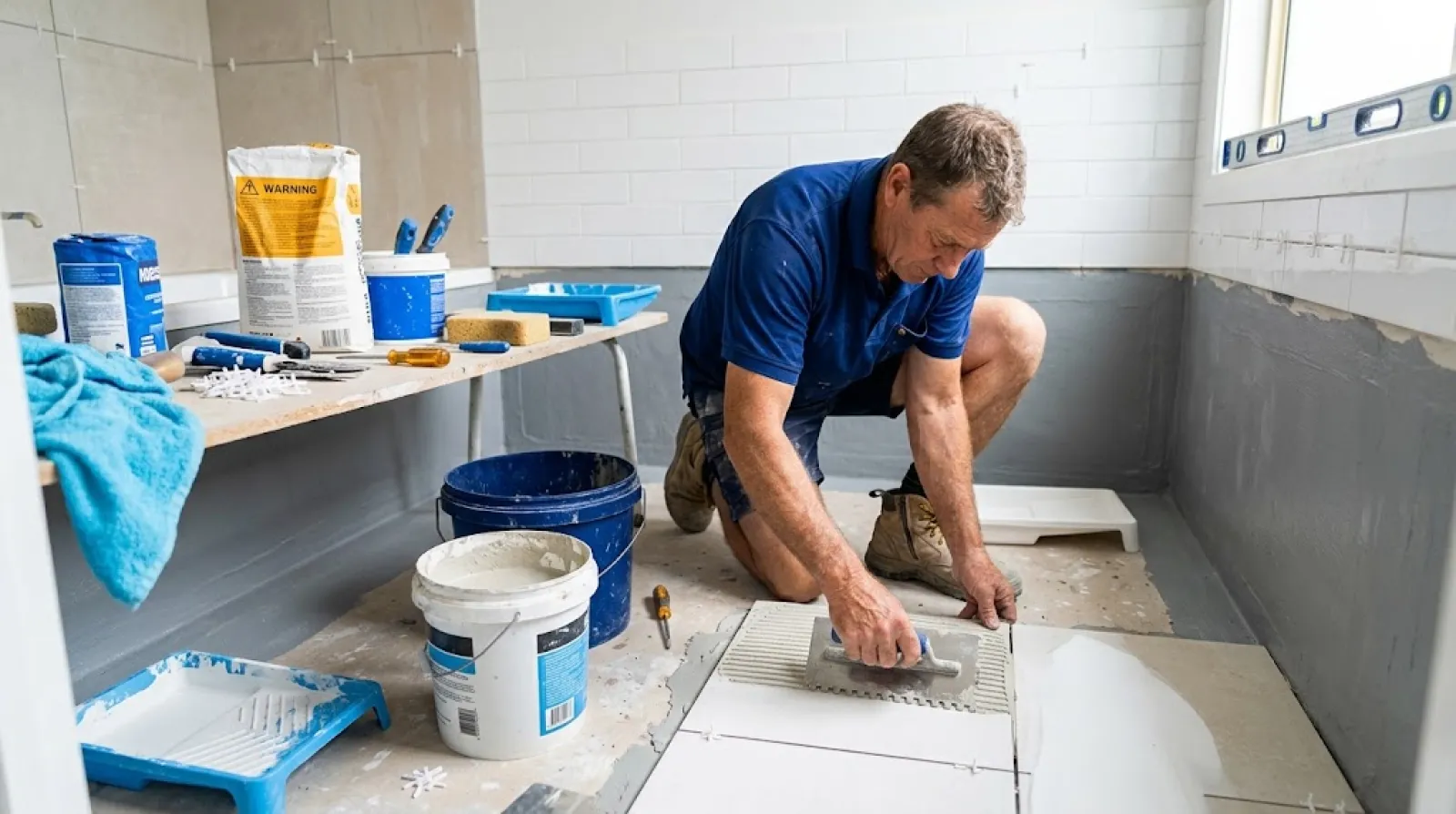
Tile installation is one of the most visible and high-impact trades in residential construction and renovation. Whether updating a master ensuite, laying living room porcelain, or tiling a outdoor alfresco, high-quality tile work adds durability and value to an Australian property. However, behind every beautiful tiled finish lies a complex set of hidden structural requirements, waterproofing membranes, and adhesion mechanics.
Tiling failures are rarely caused by the surface tile itself. Instead, water leaks, cracked grout, loose tiles, and mould issues almost always stem from inadequate substrate preparation, compromised waterproofing membranes, or incorrect grout selection. In Australia, internal wet area repairs rank among the most common home building disputes.
Choosing the right wall and floor tilers in Australia requires asking targeted questions about state licensing, compliance certificates, membrane flood testing, and warranty terms before any mortar is mixed. This practical guide covers everything you need to evaluate local tiling contractors, verify legal qualifications, select resilient grouts, and safeguard your investment.
Understanding the Service: What Does a Professional Tiler Do?
A professional tiler prepares subfloors and wall surfaces, applies waterproofing systems (when licensed to do so), cuts and fits ceramic, porcelain, or natural stone tiles, and applies grouts and movement joint sealants.
While tiling appears straightforward on the surface, professional tiling service providers in Australia must adhere to precise national standards:
-
AS 3740-2021 (Waterproofing of wet areas within residential buildings): Outlines minimum design and installation standards for waterproofing systems in bathrooms, laundries, ensuites, and toilets.
-
AS 3958.1 (Guide to the installation of ceramic tiles): Governs surface preparation, adhesive selection, tile coverage, movement joint placement, and acceptable tolerances for levelness and alignment.
In many Australian wet area renovations, tiling is intrinsically tied to waterproofing. Some tradespeople hold dual qualifications as both licensed wall and floor tilers and certified waterproofers, while others work alongside specialized waterproofing sub-contractors. Understanding who is responsible for each phase of the installation is critical before signing any contract.
Australian Rules, Regulations and Licensing by State
Licensing rules for tiling and waterproofing vary significantly depending on the state or territory. Hiring an unlicensed trade contractor can void your building insurance and leave you with no recourse if structural water damage occurs.
New South Wales (NSW)
Under NSW Fair Trading, contractors performing residential wall and floor tiling or waterproofing valued at over $5,000 (including labour and materials) must hold a valid contractor licence. For residential work exceeding $20,000, the contractor must provide Home Building Compensation Fund (HBCF) insurance cover before taking any deposit or commencing work.
Queensland (QLD)
In Queensland, the Queensland Building and Construction Commission (QBCC) strictly regulates both tiling and waterproofing. A QBCC licence is mandatory for any wall and floor tiling or waterproofing work valued at more than $3,300 (including materials and GST). Waterproofing is a distinct occupational licence category; contractors must issue a QBCC Form 16 or Form 43 compliance certificate upon project completion.
Victoria (VIC)
The Victorian Building Authority (VBA) requires contractors carrying out domestic building work valued at over $10,000 to be registered domestic builders or registered trade contractors. Any residential project valued over $16,000 requires Domestic Building Insurance (DBI). Waterproofers must comply strictly with AS 3740 and provide a compliance certificate to the certifier or owner.
Western Australia, South Australia, and Other Territories
In Western Australia, building contractors registering with the Building Services Board (DMIRS) are required for general residential projects over $20,000, though specific trade standards apply. In South Australia, trade contractors must hold a licence issued by Consumer and Business Services (CBS).
Waterproofing Checks: The Most Critical Inspection Phase
Water damage is one of the most expensive building defects to repair. Water leaking through a bathroom subfloor can rot structural timber joists, destroy lower-floor plasterboard ceilings, and attract termites.
When evaluating a tiler's process for wet areas (showers, bathrooms, laundries, balconies), ensure they follow these non-negotiable waterproofing steps:
1. Substrate Preparation and Falls
Tiles do not prevent water from pooling—the subfloor beneath them must be correctly sloped. Under Australian standards, shower floors and wet area floors must have a continuous fall toward the waste outlet (typically 1:100 for general floor areas and 1:80 inside shower enclosures). If a tiler attempts to lay tiles on a flat sheet of yellowtongue or uneven concrete without applying a sand-and-cement screed first, water will pond under the tiles.
2. Puddle Flanges and Bond Breakers
A puddle flange must be installed flush with the substrate at every floor drain so that any water penetrating the tile/grout layer drains away through the waste pipe rather than pooling beneath the mortar bed. Additionally, flexible bond breaker tape or neutral-cure silicone must be applied to all wall-to-floor and wall-to-wall internal junctions before applying liquid membranes to allow for structural movement without tearing the membrane.
3. Membrane Heights and Flood Testing
Under AS 3740-2021, liquid-applied or sheet membranes must extend:
-
At least 1800 mm up walls within shower enclosures.
-
At least 150 mm above the finished floor level along all wet area perimeter walls.
-
Across the entire floor area in upper-storey bathrooms or hobless shower installations.
Pro Tip: Request a 24-hour flood test before tiling begins. The waterproofer seals the floor waste and fills the shower tray with 25–50 mm of water for 24 hours to verify water-tightness before tiles are laid.
Selecting the Right Grout: Cementitious vs Epoxy vs Urethane
Grout fills the joints between tiles, stabilizes the installation, and prevents dirt and moisture from entering sub-layers. Choosing the wrong grout for a high-moisture or high-traffic area often leads to discolouration, cracking, and mould growth.
1. Standard Cementitious Grout
Made from a mix of cement, water, and pigments. While economical, standard cementitious grout is porous. It absorbs moisture, stains easily, and requires regular application of a penetrating sealant.
2. Polymer-Modified Cement Grout
Enhanced with acrylic or polymer powders to improve flexibility, water resistance, and bond strength. This is the industry standard for most interior residential tiling jobs in locations like Sydney, Melbourne, and Brisbane.
3. Epoxy Grout
Epoxy grout is composed of epoxy resins and a filler powder. It is virtually non-porous, highly stain-resistant, chemical-resistant, and completely waterproof.
-
Pros: Never requires sealing, resists black mould, and will not discolour in shower bases.
-
Cons: Requires fast, highly skilled application; sets quickly and can leave a haze on tiles if not washed off properly during installation.
4. Movement Joints and Silicone
Grout should never be used in internal corners, change-of-plane junctions (wall-to-floor, wall-to-wall), or around fixtures. Because buildings expand and contract, rigid grout in corners will crack. Professional tilers use colour-matched, neutral-cure flexible silicone sealants for expansion joints.
Typical Costs of Hiring a Tiler in Australia
Tiling costs depend on location, site access, surface preparation requirements, tile material, and layout complexity.
Key Factors Influencing Total Price
-
Tile Material and Size: Natural stone (marble, travertine) requires sealing and specialized adhesives. Large-format sheets (e.g., 1200x600 mm) require two-person handling and flat subfloors. Small mosaic tiles or herringbone patterns require double the labour time.
-
Surface Preparation: Removing existing tiles, grinding old adhesive, repairing damaged plasterboard, or laying screed to establish drainage falls adds to initial estimates.
-
Access and Location: Regional areas may incur travel fees, while high-rise apartment renovations in metropolitan hubs often require parking permits, waste management fees, and lift protection.
Warranty Checks and Statutory Guarantees
When engaging a trade professional, ensure you understand the legal protections available under Australian Consumer Law (ACL) and state-specific building acts.
Statutory Warranties
Under Australian consumer regulations, building and trade services must be rendered with due care and skill, fit for purpose, and completed within a reasonable timeframe.
-
Major Defects (Structural / Waterproofing): Most states mandate a 6-year statutory warranty period covering structural defects and major waterproofing failures.
-
Minor Defects (Non-Structural): Typically covered by a 2-year statutory warranty covering minor cracks, loose grouting, or surface blemishes.
Manufacturer Product Warranties
Waterproofing membranes, adhesives, and grouts come with manufacturer warranties ranging from 10 to 20 years. However, manufacturer warranties are void if the tradesperson fails to follow technical data sheet instructions—such as failing to apply primer, applying liquid membrane under recommended thickness, or tiling before curing is complete.
Always request written confirmation from your tiler stating the exact brand and product system used (e.g., Ardex, Dunlop, Davco, Mapei) along with the associated technical data sheets.
Practical Scenarios: Selecting the Right Tiler
Scenario 1: Apartment Bathroom Renovation in Sydney
-
The Challenge: A homeowner in an upper-floor Sydney unit wants to renovate a 1980s bathroom. The strata body requires strict acoustic underlay acoustic compliance, waterproofing sign-off, and restricted noise hours.
-
The Solution: The homeowner hires a tiler who holds dual licensing in wall/floor tiling and waterproofing with NSW Fair Trading. The contractor provides a detailed scope of work including membrane flood testing, noise-mitigated removal, an acoustic membrane layer, and a formal compliance certificate for the strata executive.
Scenario 2: Outdoor Alfresco Tiling in Brisbane
-
The Challenge: A family in Brisbane wants to tile an exposed outdoor patio with large porcelain pavers.
-
The Solution: The tiler selects tiles rated P4 or P5 for slip resistance under AS 4586, uses a C2S2 highly flexible exterior tile adhesive to accommodate thermal movement during hot summers, installs perimeter expansion joints every 4.5 metres, and uses polymer-modified grout.
Common Pitfalls and Red Flags to Avoid
-
Accepting Quotes Without Site Visits: Tiling costs depend heavily on wall squareness and floor levelness. Quotes given over the phone without viewing the job often result in unexpected variation fees later.
-
Tiling Direct to Plywood or Unsuitable Substrates: Waterproofing membranes and cement adhesives do not bond permanently to untreated plywood or particleboard. Approved fiber-cement underlay (e.g., Villaboard or Scyon) must be installed first.
-
Missing Expansion Joints: Tiling tight against walls without leaving a 6 mm perimeter gap causes tile "tenting" or cracking when ambient temperatures shift.
-
Tiling Over Uncured Waterproofing: Liquid membranes need 24–48 hours curing time depending on ambient temperature and humidity. Rushing tiling over tacky membrane damages the seal.
Practical Consumer Checklist for Hiring a Tiler
Use this checklist when interviewing local tilers and reviewing formal proposals:
-
Licence Verification: Checked trade licence number on state register (e.g., Fair Trading, QBCC, VBA).
-
Insurance Coverage: Verified current Public Liability Insurance (minimum $5M–$10M) and Home Warranty / Domestic Building Insurance where required.
-
Waterproofing Certification: Confirmed the contractor will issue a written Waterproofing Compliance Certificate upon completion.
-
Detailed Written Quote: Ensure quote itemises site preparation, screeding, waterproofing, adhesives, tile laying, grout type, silicone sealing, and waste removal.
-
Grout Selection: Discussed epoxy vs polymer-modified grout options for wet areas.
-
Tile Substrate Fall: Confirmed falls toward floor waste (1:80 in shower) will be established via screed prior to tiling.
-
Movement Joints: Verified that flexible silicone (not rigid grout) will be applied to internal corners and perimeter edges.
-
References & Portfolio: Reviewed photos of recent completed projects showing neat cuts, level lippage, and clean grout lines.
Find Local Tiling Services and Australian Information on AusLocaly
Selecting a qualified, licensed professional is the best way to ensure your tiling project remains beautiful, durable, and completely watertight for decades to come.
When planning your next renovation or residential build, explore AusLocaly to connect with trusted local businesses across Australia. You can browse through dedicated trade categories on the AusLocaly Categories page to compare local trade services, review specialist portfolios, and access regional home improvement resources.
Whether you are looking for licensed tilers in metropolitan centers like Sydney, Melbourne, or Brisbane, or searching for qualified contractors across regional Australia, AusLocaly provides a simple, direct directory to help you locate trade professionals in your immediate area.