Dealership vs Independent Mechanic: Where Aussies Get Better Value
Comparing dealership vs independent mechanic car servicing in Australia. Learn about logbook warranty rights, capped-price deals, costs, and value.
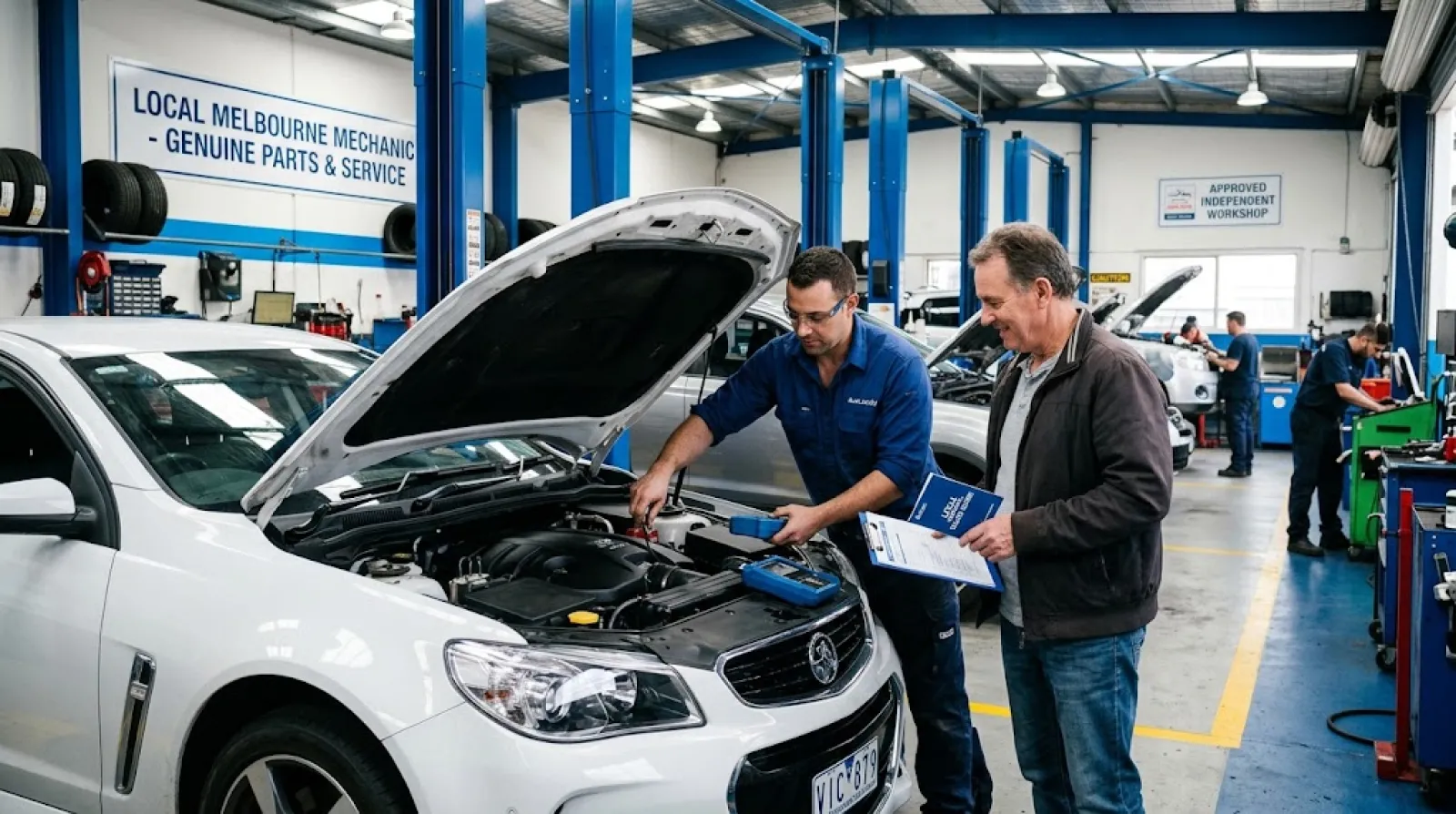
Maintaining a car in Australia is one of the most significant recurring costs for households and small businesses. With the Australian Automobile Association (AAA) reporting that transport costs take up a major portion of weekly household budgets across capital cities and regional areas alike, deciding where to take your vehicle for routine maintenance or complex repairs is a decision that directly impacts your bank account.
When it is time for a routine oil change, a major logbook service, or diagnostic troubleshooting, Australian drivers usually face a fundamental choice: take the vehicle back to an authorised dealership service centre or build a relationship with a qualified mechanic in Australia working at a local independent workshop.
Misconceptions regarding manufacturer warranties, technical diagnostic equipment, capped-price servicing schemes, and trade qualifications frequently cloud this decision. Many car owners mistakenly believe they must stick with a dealer to keep their warranty valid, while others assume an independent workshop always offers cheaper labour without considering specialized tooling or software needs.
This comprehensive guide breaks down the financial, practical, legal, and technical factors governing dealership and independent automotive servicing across Australia. Whether you drive a brand-new dual-cab ute in suburban Queensland, a family SUV in Sydney, or a European hatchback in Melbourne, this practical comparison will help you determine where you get true value for your money.
The Legal Truth About Logbook Servicing and Warranties
The single biggest myth in Australian motoring is that servicing your new vehicle at an independent workshop voids your manufacturer’s express warranty.
Under the Australian Consumer Law (ACL), enforced by the Australian Competition and Consumer Commission (ACCC), car manufacturers cannot force you to service your vehicle exclusively through their dealer network to maintain your standard new-car warranty.
The ACCC Guidelines on New-Car Warranties
To keep your factory warranty completely intact when using an independent workshop, the service must meet four clear conditions:
-
Qualified Technicians: The work must be performed by qualified automotive trade personnel (such as a licensed car mechanic in Australia holding relevant state trade certifications).
-
Manufacturer Specifications: The service must strictly follow the vehicle manufacturer’s logbook schedule and service specifications for time or distance intervals.
-
Fit-for-Purpose Parts: The parts and fluids used must meet or exceed original equipment manufacturer (OEM) specifications. They do not necessarily have to bear the manufacturer's brand logo, but they must be fit for purpose (for instance, engine oil meeting exact factory viscosity and specifications such as VW 504.00 or Toyota 0W-20).
-
Accurate Documentation: The service logbook must be stamped, signed, and accompanied by an itemised tax invoice detailing the specific parts, lubricants, and inspection items completed.
If a dealer tells you that your warranty is void simply because an independent workshop stamped your service book, they are providing misleading information. Under the ACL, you have explicit consumer guarantees that protect your choice of repairer.
The Role of the Motor Vehicle Information Scheme (MVIS)
In July 2022, Commonwealth legislation introduced the Motor Vehicle Information Scheme (MVIS) under the Competition and Consumer Act 2010. This mandatory data-sharing law requires car manufacturers to provide independent repairers and registered technical training organisations with access to identical service and repair information, diagnostic software updates, wiring diagrams, and technical bulletins previously restricted to main dealers.
Because of MVIS, independent mechanics can access factory repair manuals, code-reset procedures, and technical diagnostics for late-model cars, effectively removing the technical monopoly once held by franchise dealers.
Dealership Servicing: Benefits, Costs, and Limitations
Dealership service departments are large-scale operations attached to franchise car sellers. They are designed to deliver consistent, brand-specific vehicle maintenance, acting as both customer-service centers and primary revenue generators for motor dealers.
The Advantages of Dealership Servicing
-
Brand-Specific Specialisation: Dealership technicians work almost exclusively on one or two brands every day. They are intimately familiar with common factory defects, technical service bulletins (TSBs), and model-specific quirks.
-
Factory Recall and Software Updates: When a car manufacturer issues a safety recall, customer service campaign, or software update for engine control units (ECU) or transmission control modules (TCM), only authorised franchise dealers can carry out these updates under warranty at no cost to you.
-
Specialised Manufacturer Tooling: Franchise workshops possess brand-specific diagnostic interfaces (such as Ford's FDRS, Toyota's Techstream, or VAG ODIS) that allow deep system calibration, module flashing, and key coding.
-
Goodwill Warranty Claims: If your car suffers a major mechanical component failure shortly after its factory warranty period expires, having a complete dealership service history makes it significantly easier to request "goodwill" assistance from the vehicle manufacturer.
The Drawbacks and Hidden Costs
-
Higher Hourly Labour Rates: Dealership shop rates are among the highest in the automotive repair sector, routinely ranging between $180 and $280+ GST per hour, driven by massive showroom overheads, administrative staff, and corporate infrastructure.
-
Significant Parts Markups: Dealers generally fit original genuine parts packaged in brand-labeled boxes. These parts carry substantial retail margins compared to identical OEM components manufactured by suppliers such as Bosch, Denso, Ryco, or Bendix.
-
Less Direct Communication: At a franchise dealership, you almost never speak directly with the technician working on your vehicle. Instead, communication flows through a service advisor who acts as a liaison between the workshop and the customer, which can occasionally lead to miscommunications regarding symptoms or repair priorities.
Independent Mechanics: Benefits, Costs, and Limitations
Independent workshops range from small, family-owned neighborhood garages to large, multi-bay modern auto repair centers equipped with state-of-the-art diagnostic machinery.
The Advantages of Independent Workshops
-
Competitive Labour Rates: Independent mechanics operate with leaner overhead structures, passing savings on to consumers. Labour rates typically range from $110 to $170+ GST per hour, offering immediate savings on complex diagnostic and repair work.
-
Direct Access to the Technician: In an independent garage, you can frequently speak directly with the head mechanic or workshop manager who inspected your car. This direct line of communication leads to realistic explanations, practical advice, and clearer prioritization of non-urgent safety items.
-
Flexible Sourcing of Parts: Independent workshops can offer multiple replacement options depending on your budget and vehicle age. You can select genuine factory parts, high-quality OEM-equivalent alternatives, or robust heavy-duty aftermarket components (such as upgraded brake pads or heavy-duty suspension for towing).
-
Long-Term Personal Relationships: Local mechanics rely heavily on community trust, word-of-mouth recommendations, and repeat business within their immediate suburbs. As a result, they are often motivated to build transparent, long-term customer relationships.
The Potential Risks or Limitations
-
Variations in Equipment and Expertise: While elite independent workshops invest tens of thousands of dollars in high-end diagnostic tools (such as Snap-on, Autel, or Bosch systems), smaller workshops may lack specific factory calibration tools required for complex modern driver-assistance systems (ADAS) or hybrid/EV battery module diagnostics.
-
Varying Warranty Policies: While reputable workshops provide clear workmanship warranties (often 12 months or 20,000 km), smaller operations may have differing terms for honoring labor guarantees on user-supplied parts or complex multi-system repairs.
Cost Comparison: Real-World Australian Scenarios
To understand where Aussies get better value, we must examine typical servicing scenarios across different vehicle types, service stages, and geographic locations.
Capped-Price Servicing: Fact vs Reality
Many new cars sold in Australia come with a Capped-Price Servicing (CPS) program lasting between 3 and 7 years. These programs promise fixed service prices for initial logbook intervals.
-
When CPS Offers Excellent Value: During the initial 3 to 5 years, manufacturer-subsidised capped-price schedules for popular brands (such as Toyota, Hyundai, or Kia) can offer competitive entry-level pricing (e.g., $220 to $350 per basic service). In these specific instances, dealer servicing is genuinely cost-effective.
-
The Catch: Capped-price schemes often cover only the bare minimum standard inspection items (engine oil, oil filter, basic fluid top-ups). They frequently exclude wear-and-tear items such as brake pads, brake fluid flushes, cabin filters, spark plugs, wiper blades, wheel alignments, or transmission servicing. Dealerships often quote premium retail prices for these "out-of-cap" items when identified during routine inspections.
Detailed Price Breakdown Table
The table below outlines average costs for routine maintenance across major Australian cities such as Sydney, Melbourne, Brisbane, Perth, and Adelaide, comparing franchise dealerships with local independent mechanics.
| Service Type & Vehicle Category | Franchise Dealership (Typical Cost Range AUD) | Independent Mechanic (Typical Cost Range AUD) | Average Potential Savings | Key Considerations |
|
Minor / Basic Service(Japanese/Korean Hatch/Sedan) |
$280 – $480 |
$180 – $290 |
25% – 40% |
Includes engine oil, oil filter, safety check, fluid check. |
|
Logbook Service (40,000 km / Major)(Popular SUV e.g., RAV4, CX-5) |
$550 – $950 |
$380 – $620 |
30% – 35% |
Includes air/cabin filters, brake fluid replacement, spark plugs/fuel filter as scheduled. |
|
European Vehicle Logbook Service(VW, Audi, BMW, Mercedes) |
$750 – $1,600+ |
$450 – $900 |
35% – 50% |
Requires specific European specification oil grades and factory diagnostic tools. |
|
4WD / Diesel Ute Service(Hilux, Ranger, Triton, D-Max) |
$600 – $1,200 |
$420 – $780 |
25% – 40% |
Includes primary/secondary fuel filters, differential oil checks, transmission fluid checks. |
|
Front & Rear Brake Pad Replacement(Standard Passenger Car) |
$450 – $850 |
$300 – $520 |
30% – 40% |
Independent mechanics can offer low-dust ceramic OEM options at lower prices. |
Practical Consumer Case Studies
Scenario A: Suburban Family SUV in Sydney (Within Capped-Price Window)
-
Vehicle: 2023 Hyundai Tucson 2.0L Petrol
-
Location: Parramatta, NSW
-
Situation: The vehicle is 3 years old with 45,000 km on the odometer. It is covered under a 5-year capped-price servicing program at $330 per annual service.
-
Outcome: The owner opts to stay with the local dealership for standard logbook servicing because $330 is competitive for a fully documented factory check. However, when the dealer alerts the owner that front brake pads and rotors are worn down and quotes $780 for replacement, the owner gets a second quote from a trusted local mechanic nearby. The independent mechanic fits equivalent OEM-grade DB A/Bendix brake components for $480, saving the family $300 without affecting their vehicle warranty.
Scenario B: European Hatchback in Melbourne (Out of Factory Warranty)
-
Vehicle: 2018 Volkswagen Golf 110TSI
-
Location: Inner Suburbs, Melbourne, VIC
-
Situation: The vehicle is out of factory warranty and due for its major 90,000 km service, which involves spark plug replacement, air/pollen filter renewal, brake fluid flush, and a comprehensive transmission scan.
-
Dealer Quote: $1,250 + GST
-
Independent Specialist Quote: $680 + GST (using genuine VW-spec Liqui-Moly oil and Bosch spark plugs).
-
Outcome: The owner chooses an independent European vehicle specialist. The independent specialist uses identical VAG-compliant diagnostic software to clear system codes, performs the work for nearly half the price, and stamps the original logbook.
Scenario C: Fleet Trade Ute in Brisbane
-
Vehicle: 2021 Ford Ranger 3.2L Turbo Diesel
-
Location: Rocklea / Acacia Ridge, Brisbane, QLD
-
Situation: A local plumbing contractor runs three diesel dual-cab utes requiring routine 15,000 km maintenance intervals and heavy-duty fuel filter changes due to frequent towing and site visits.
-
Outcome: Dealership turnarounds required booking 3 to 4 weeks in advance, taking vehicles out of service for full days. The contractor partnered with a local independent commercial mechanic in Brisbane offering express morning drop-offs and heavy-duty filtration upgrades. The contractor saves roughly $350 per service per ute while reducing vehicle downtime by half.
State and Territory Regulatory Frameworks
In Australia, automotive repairers are governed by state and territory trade legislation to ensure consumer protection, environmental safety, and workmanship standards.
-
New South Wales (NSW): Under the Motor Dealers and Repairers Act 2013, all automotive repair businesses in NSW must hold a valid Motor Vehicle Repairer Licence (MVRL) issued by NSW Fair Trading. Individual tradespeople must hold an tradesperson's certificate.
-
Victoria: The Victorian Automobile Chamber of Commerce (VACC) sets industry standards, while Consumer Affairs Victoria oversees trade compliance and repair disputes under the ACL.
-
Queensland: The Office of Fair Trading (OFT) and Department of Transport and Main Roads (TMR) regulate motor vehicle repairers, safety certificates (roadworthy certificates), and trade practices.
-
Western Australia: Under the Motor Vehicle Repairers Act 2003, businesses and individual mechanics operating in WA must hold a Motor Vehicle Repair Business Licence (MVRB) and individual repairer certificates issued by the Department of Energy, Mines, Industry Regulation and Safety (DEMIRS).
-
South Australia, Tasmania, ACT, & NT: Regulated by Consumer and Business Services (CBS SA), Access Canberra, Fair Trading Tasmania, and NT Consumer Affairs respectively, ensuring licensed premises adhere to environmental handling standards (such as Arctick refrigerant handling certifications for air conditioning repairs).
When to Choose a Dealership vs an Independent Mechanic
To help you make an informed decision for your vehicle, consider this straightforward comparison guide:
Choose a Franchise Dealership When:
-
Your vehicle has an outstanding safety recall or campaign: Recalls must be completed by an authorised franchise dealer at no cost to you.
-
You are making a factory warranty claim: Repairs for original manufacturing defects must be submitted and processed through the dealership network under the manufacturer’s warranty policy.
-
Your car is on an extremely cheap capped-price schedule: If your capped-price service fee is heavily subsidized (e.g., $150 to $250 per year), the cost savings at an independent workshop may be minimal for routine maintenance.
-
The vehicle requires proprietary factory ECU reflashing: Complex electronic module replacements or software updates unavailable outside the brand network may require dealer facilities.
Choose an Independent Mechanic When:
-
Your factory warranty or capped-price servicing period has expired: Independent workshops generally offer lower hourly labour rates and flexible parts choices.
-
You need out-of-cap maintenance: When items such as brakes, suspension, tyres, or drive belts fall outside capped-price schedules, independent workshops typically provide more competitive quotes.
-
You want direct communication with your mechanic: Speaking directly to the tradesperson working on your car allows for practical advice and clear prioritization of upcoming repair needs.
-
You own a European or specialized vehicle out of warranty: Specialist independent European workshops often possess the same diagnostic capability as dealers at significantly lower costs.
-
You support local Australian small businesses: Building a relationship with a local garage supports small business owners in your community.
Consumer Checklist: Booking Your Next Car Service
Use this practical consumer checklist before handing over your keys for routine servicing or major vehicle repairs:
-
Verify License & Qualifications: Confirm that the workshop holds required state business licenses (e.g., MVRL in NSW, MVRB in WA) and Arctick licenses for aircon repairs.
-
Confirm Logbook Compliance: Ask specifically: "Will this service follow the manufacturer's logbook schedule to keep my ACL warranty rights intact?"
-
Request a Detailed Itemised Quote: Ensure the quote clearly separates labour, lubricants, parts, and GST before authorizing any work.
-
Specify Parts Preferences: Clarify whether the mechanic will fit original genuine parts, OEM-equivalent parts, or trusted aftermarket brands (e.g., Ryco, Bosch, Bendix).
-
Establish Contact Limits: Instruct the workshop to call you for approval before carrying out any additional work exceeding the agreed quote.
-
Ensure Logbook Stamping: Remind the technician to stamp, sign, and date your physical or digital service logbook upon completion.
-
Retain Tax Invoices: Store your detailed itemized invoices alongside your vehicle records to preserve warranty protection and maximize future resale value.
Find Local Automotive Services and Mechanics on AusLocaly
Whether you need a routine logbook service, brake repairs, auto electrical diagnostics, or a roadworthy inspection, finding a reliable, licensed automotive professional in your local area is essential for protecting your vehicle investment.
At AusLocaly, we help Australian vehicle owners connect with local businesses across the country. Instead of spending hours comparing options on search engines, you can use our directory to research service providers in your specific suburb or city.
Explore Automotive Categories and Locations
-
Browse Categories: Explore our directory of local trades and repairers across all main AusLocaly Categories.
-
Sydney Vehicle Services: Find trusted repairers across Greater Sydney by visiting AusLocaly Sydney.
-
Melbourne Automotive Specialists: Locate independent mechanics and auto workshops throughout Victoria on AusLocaly Melbourne.
-
Brisbane & Regional QLD Services: Discover automotive trades across Southeast Queensland on AusLocaly Brisbane.
Take control of your car servicing costs today. Explore AusLocaly to find local automotive service providers in your neighbourhood, compare local options, and get better value on your next car service.