Cracked Windscreen? Repair vs Replacement and What Insurance Covers
Learn when to repair or replace a cracked windscreen in Australia, roadworthy rules, ADAS calibration costs, and how car insurance glass cover works.
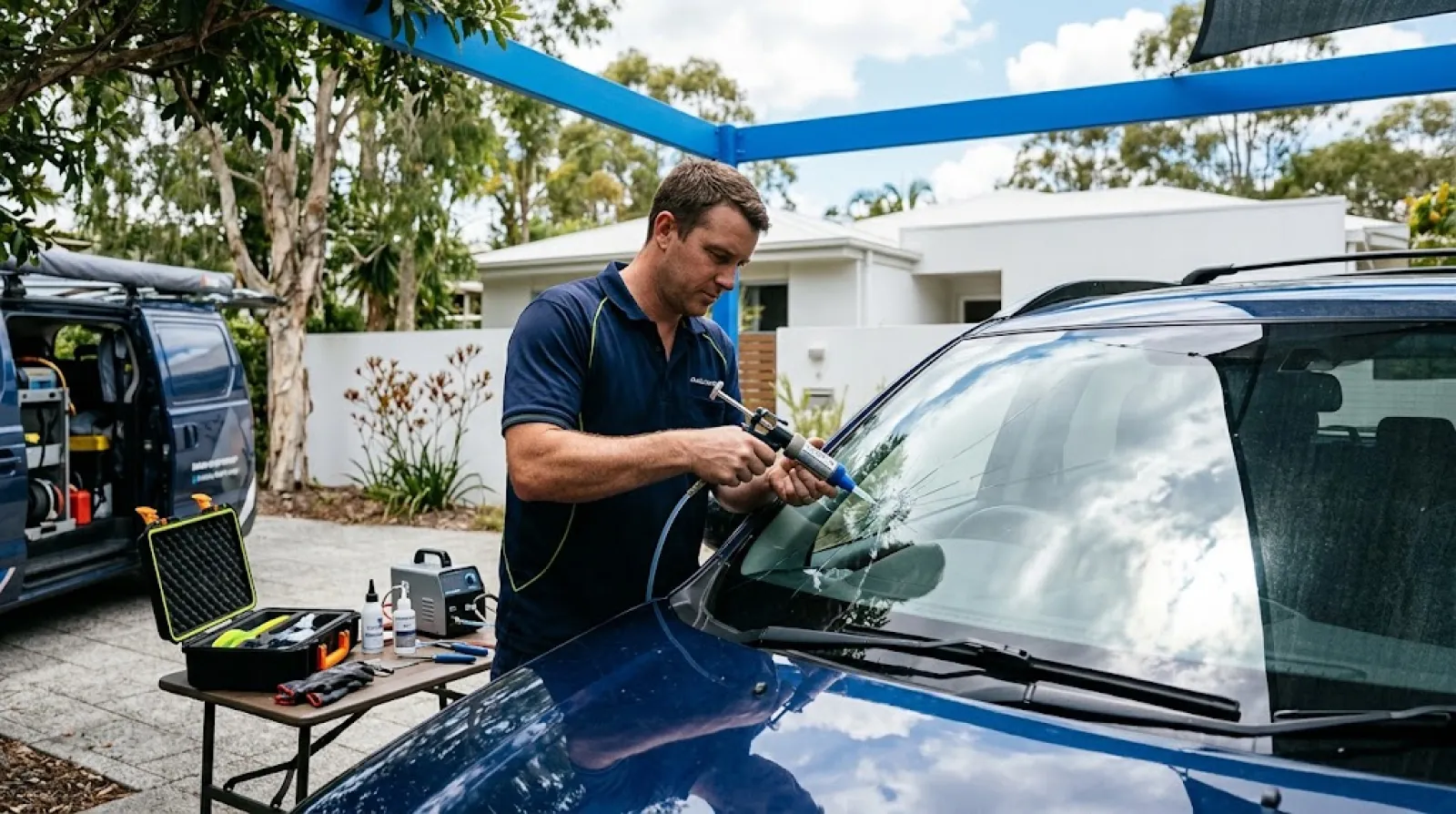
A sharp thwack against your windscreen while cruising down the Hume Highway, Pacific Motorway, or a regional backroad is a familiar sound to Australian drivers. A stray pebble kicked up by a passing road train or heavy vehicle can instantly transform a pristine piece of glass into a web of hairline cracks or leave a nasty bullseye chip directly in your line of sight.
When faced with automotive glass damage, vehicle owners immediately confront three critical questions: Is this damage safe and legal to drive with?, Can the windscreen be repaired, or does it need a full replacement?, and Will car insurance cover the bill?
Understanding how Australian safety standards, state traffic laws, and vehicle technology influence windscreen repairs can save you hundreds of dollars and prevent unexpected fines or defect notices. This comprehensive guide breaks down the technical criteria for repair versus replacement, typical Australian costs, roadworthy regulations across states, ADAS recalibration necessities, and how car insurance policies handle auto glass claims.
Understanding Windscreen Damage: Types & Structural Role
Modern automotive windscreens are far more than transparent barriers protecting you from wind, rain, and insects. In contemporary vehicle design, the windscreen serves as a key structural safety component. It contributes up to 30% of a vehicle's structural roof strength during a rollover and provides backstop support for the front passenger airbag when it deploys.
Laminated Glass Construction
Unlike side and rear windows—which are made of toughened glass designed to shatter into tiny harmless pebbles upon impact—windscreens are made of laminated safety glass. This construction consists of two thin sheets of glass bonded together around a clear inner layer of Polyvinyl Butyral (PVB) plastic.
When an object strikes the outer glass layer, the PVB inter-layer holds the broken fragments together, preventing glass from flying into the cabin and maintaining structural integrity even when cracked.
Common Types of Windscreen Damage
Before deciding whether a repair or replacement is appropriate, a qualified windscreen repair specialist in Australia will assess the specific type and depth of damage:
-
Bullseye: A circular, cone-shaped break in the outer glass layer that leaves a dark circle where the glass separated from the plastic inter-layer.
-
Star Break: A central impact point with multiple distinct cracks radiating outwards like star points.
-
Half-Moon / Crescent: A partial bullseye caused by an angled impact.
-
Combination Break: A damage site featuring both a bullseye and star cracks.
-
Stress Crack: A long crack running across the glass without a clear point of impact, usually caused by sudden temperature extremes (such as pouring warm water on an icy screen in an Australian winter or blasting air conditioning on a 40°C summer day).
-
Surface Pit / Crater: A small piece of glass chipped off the outer surface without cracking into the inner laminate.
Australian Road Rules, Safety Standards & Legality
Driving with a damaged windscreen in Australia is not merely an aesthetic issue—it can render your vehicle unroadworthy and result in immediate fines and demerit points from state police or transport officers.
Australian Standards: AS/NZS 2080 and AS 4615
Automotive glass installed in Australia must comply with AS/NZS 2080:2006 (Safety glass for road vehicles), while windscreen repairs are governed by AS 4615 (Selection and repair of laminated road vehicle glass). These standards define maximum allowable defect sizes depending on where the damage is located on the glass.
The Critical Vision Area (CVA)
Australian vehicle roadworthy inspections divide the windscreen into distinct zones. The most important of these is the Critical Vision Area (CVA).
-
Critical Vision Area (CVA): Defined as the area directly swept by the driver’s side windscreen wiper, centered on the steering wheel line of sight (typically a 300mm wide zone extending from the top to the bottom of the wiper sweep on the driver's side).
-
Non-Critical Area: The remainder of the windscreen, including the passenger side and extreme top or bottom borders outside the main wiper sweep.
State-by-State Defect Rules & Fines
While national safety standards exist, vehicle enforcement is managed at the state and territory level by authorities such as Transport for NSW, VicRoads, Department of Transport and Main Roads (QLD), and Department of Transport (WA).
If police observe damage that obstructs your vision or compromises glass integrity, they can issue a Defect Notice (often referred to as a "canary sticker"). Depending on severity, you may receive:
-
Minor Defect Notice: Gives you 7 to 14 days to repair or replace the glass while allowing continued driving.
-
Major Defect Notice: Immediately grounds the vehicle until it is towed to a certified facility, repaired, and re-inspected.
| Jurisdiction | Responsible Authority | Potential Penalty for Driving Unroadworthy | Key Inspection Trigger |
|
New South Wales |
Transport for NSW / NSW Police |
Fine (~$362+) & 3 Demerit Points |
Pink Slip (eSafety Check) & Roadside Enforcement |
|
Victoria |
VicRoads / Victoria Police |
Defect Notice & On-the-spot Fine |
Roadworthy Certificate (RWC) & Police Checks |
|
Queensland |
TMR Queensland / QPS |
Defect Notice & Fine |
Safety Certificate (for vehicle sale) & Police Enforcement |
|
Western Australia |
Department of Transport (WA) |
Yellow Sticker (Defect Notice) & Fine |
Annual inspections for transport / Roadside checks |
|
South Australia |
DIT South Australia |
Defect Notice & Fine |
Tiered safety checks & Police enforcement |
Windscreen Repair vs Replacement: How to Decide
When a Windscreen Can Be Repaired
A professional auto glazier in Australia can typically repair the glass if:
-
Small Chip Size: The chip or bullseye diameter is smaller than an Australian $2 coin (roughly 25mm in diameter).
-
Short Crack Length: Cracks are shorter than 75mm (and outside the main driver vision area).
-
Single Layer Damage: The damage penetrates only the outer layer of glass and has not punctured the PVB plastic layer.
-
Located Away From Edges: The break is situated at least 50mm away from the outer edge of the windscreen frame.
-
Outside Driver's Direct View: Minor chips outside the CVA that do not create visual distortion when light shines through.
How Repair Works: The technician cleans the damaged area, attaches a vacuum tool to draw air out of the fracture, injects an optical-grade acrylic or epoxy resin under pressure, and cures it using ultraviolet (UV) light. Finally, the surface is polished smooth. The entire process takes approximately 30 to 45 minutes and restores roughly 80%–95% of optical clarity while sealing the glass to prevent crack propagation.
When Full Replacement Is Mandatory
A complete replacement is necessary under the following conditions:
-
Damage in CVA: Any chip larger than 10mm–15mm or crack directly in the driver’s primary line of sight.
-
Long Cracks: Any crack exceeding 75mm in length anywhere on the screen, or cracks extending longer than 30mm within the wiper sweep.
-
Edge Cracks: Cracks that extend to the outer perimeter or seal of the glass frame, as these severely compromise structural integrity.
-
Multiple Damage Points: More than 3 distinct chips or star fractures on the same screen.
-
Inner Layer Puncture: Any damage extending through both glass layers into the cabin.
-
Contaminated Damage: Older cracks that have collected dirt, oil, windscreen washer fluid, or road grime over weeks, making resin adhesion impossible.
The Impact of ADAS (Advanced Driver Assistance Systems)
For modern vehicles built after 2017, windscreen replacement is no longer a simple mechanical job of swapping out glass and silicone sealant. A significant proportion of late-model cars sold in Australia are equipped with Advanced Driver Assistance Systems (ADAS).
What Is ADAS?
ADAS features rely on precision forward-facing cameras and optical sensors mounted directly behind the top centre of the windscreen (near the rear-vision mirror). These cameras power critical vehicle safety functions, including:
-
Autonomous Emergency Braking (AEB)
-
Lane Keep Assist (LKA) and Lane Departure Warning
-
Traffic Sign Recognition
-
Adaptive Cruise Control
-
Automatic High Beam Assist
Why Calibration Is Essential
When a windscreen is removed and replaced, the forward-facing camera is unclipped and remounted onto the new glass. Even a sub-millimetre misalignment during installation can throw off camera angle calculations by several metres on the open road, potentially causing emergency braking to trigger incorrectly or lane-assist systems to fail.
Types of ADAS Calibration
-
Dynamic Calibration: The technician connects a diagnostic tool to the car’s OBD-II port and drives the vehicle on marked roads at specified speeds for a set duration until the system self-calibrates.
-
Static Calibration: Performed inside a controlled workshop using specialised target boards, laser measuring tools, and diagnostic software tailored to the vehicle manufacturer's specifications.
-
Dual Calibration: Certain European and high-tech vehicles require both static target setup and a dynamic road test.
When receiving quotes for replacement, always ensure ADAS camera recalibration is included if your car features forward-facing safety tech.
Typical Australian Costs: Repair & Replacement
Windscreen service pricing in Australia varies significantly based on vehicle make, model, glass features (such as acoustic insulation, rain sensors, heated elements, or heads-up display coatings), and location.
Cost Breakdown Table
| Service Type | Vehicle Type | Typical Price Range (AUD) | Key Factors & Extras |
|
Resin Chip / Bullseye Repair |
Standard Sedan / Hatch |
$110 – $180 |
Single chip repair (mobile or workshop) |
|
Multiple Chip Repair |
Any Passenger Vehicle |
$150 – $240 |
Additional chips done in the same booking |
|
Basic Windscreen Replacement |
Older / Standard Vehicle (Pre-2015) |
$300 – $550 |
Non-sensor standard laminated glass |
|
Standard Replacement + Rain Sensor |
Modern Hatch / SUV / Ute |
$500 – $850 |
Rain sensor bracket & solar tinting |
|
Advanced Replacement + ADAS |
Late-Model Vehicles (Post-2018) |
$800 – $1,600+ |
Includes camera removal & static/dynamic calibration |
|
Luxury / European / HUD Screen |
High-end / EV / Luxury Models |
$1,200 – $2,500+ |
Genuine OEM glass + Heads-Up Display coating + ADAS |
Cost Factors Explained
-
Mobile Call-Out Fees: Mobile services providing home or workplace installation may charge a $30–$80 call-out fee, though many providers absorb this into standard packages in metro areas like Sydney, Melbourne, and Brisbane.
-
OEM vs Aftermarket Glass: Original Equipment Manufacturer (OEM) glass carries identical stamps to factory-installed glass and is typically more expensive than high-quality aftermarket glass produced to Australian Standard AS/NZS 2080.
-
Emergency Service Surcharges: Same-day or after-hours call-outs in regional areas can incur additional labor charges.
What Car Insurance Covers in Australia
Understanding how your car insurance policy handles glass damage can save you substantial out-of-pocket expenses. Coverage depends heavily on the type of insurance policy you hold.
Policy Types Breakdown
-
Compulsory Third Party (CTP) / Green Slip: Provides cover strictly for personal injury liability to third parties. Zero coverage for vehicle glass damage.
-
Third Party Property Damage (TPPD): Covers damage your vehicle causes to other people's property. Zero coverage for your own windscreen damage.
-
Third Party Fire & Theft (TPFT): Covers your car if stolen or damaged by fire. Does not cover stone chips or accidental cracked windscreens unless directly tied to an attempted theft or fire incident.
-
Comprehensive Car Insurance: Covers accidental damage to your own vehicle, including windscreen cracks and broken window glass.
Standard Excess vs Excess-Free Glass Cover Option
While standard Comprehensive Insurance covers windscreens, filing a claim under your main policy requires paying your basic policy excess (which commonly ranges between $650 and $1,200). If a windscreen replacement costs $500, paying a $750 policy excess makes claiming financially impractical.
To address this, most Australian comprehensive insurers offer an optional add-on known as Excess-Free Windscreen Cover or Excess-Free Glass Extension.
Features of Excess-Free Glass Cover:
-
Cost: Typically costs an additional $50 to $110 per year on top of your standard comprehensive premium.
-
Benefit: Entitles you to one free windscreen replacement (or unlimited chip repairs) per policy year without paying any excess.
-
No Claim Bonus (NCB) Protection: In most cases, making a claim under an excess-free glass rider does not count as an at-fault claim and will not reduce your Rating 1 / No Claim Bonus discount upon policy renewal.
Insurance Claims Process for Glass Damage
When claiming windscreen repair or replacement through an insurer:
-
Check Preferred Suppliers: Insurers often partner with national automotive glass repair networks.
-
Assess Policy Limits: Verify whether your policy specifies OEM glass or permits compliant aftermarket glass. If your car is under 3 years old or under factory warranty, request genuine OEM glass to maintain sensor integration.
-
Book Direct or via Insurer: Many auto glass providers in Australia handle the claim submission directly with major insurance companies on your behalf once you supply your policy details.
Hidden Costs, Risks & Common Pitfalls
Failing to address a cracked windscreen promptly or selecting an unqualified installer can lead to costly ongoing issues:
-
Uncalibrated Safety Cameras: Replacing an ADAS windscreen without performing recalibration can disable safety functions or cause lane-keeping systems to drift, posing severe collision risks on high-speed roads.
-
Water Leaks & Rust Formation: Improper surface preparation or cheap urethane sealants can allow rainwater to seep past the pinch-weld seal into the interior cabin. Over time, trapped moisture corrodes structural body pillars and damages expensive electronic control units (ECUs) located under the dashboard.
-
Rapid Crack Expansion: Small stone chips can suddenly expand into long cracks when subjected to stress, vibration, or temperature swings. Turning on your demister defrost function on a winter morning in Canberra or leaving a chipped vehicle parked in the sun in Perth can instantly ruin an otherwise repairable chip.
-
Poor Workmanship & Noise: Incorrectly aligned glass or missing rubber moulding trims create annoying wind whistle at highway speeds and increase interior road noise.
Practical Australian Scenarios
Scenario A: The Regional Highway Tradie (Queensland)
Situation: A tradesman driving a dual-cab ute along the Bruce Highway in QLD gets struck by a stone thrown by a freight truck, causing a 12mm bullseye chip on the passenger side windscreen.
Action: Since the damage is outside the driver's Critical Vision Area and under 25mm in diameter, a mobile technician repairs it on-site at a worksite for $140 within 40 minutes. The chip is sealed, restoring strength without requiring full replacement.
Scenario B: The Suburban Family SUV (Victoria)
Situation: A parent driving a late-model family SUV in suburban Melbourne notices a hairline crack expanding from the lower edge of the driver-side glass, sweeping across the wiper zone. The vehicle features lane-assist cameras and rain-sensing wipers.
Action: Because the crack crosses the driver's line of sight and reaches the frame edge, full replacement is mandatory. The owner had added Excess-Free Glass Cover to their comprehensive insurance policy. The repairer replaces the windscreen and performs static camera calibration. The total $1,250 bill is billed directly to the insurer, requiring $0 out-of-pocket payment from the owner.
How to Choose a Local Auto Glazier in Australia
When selecting an auto glass provider, look beyond price alone to ensure safety and quality standards are maintained.
-
Trade Qualification: Verify that technicians hold relevant automotive glass qualifications (e.g., Certificate III in Automotive Glazing Technology).
-
Compliance with Australian Standards: Ensure all replacement glass meets AS/NZS 2080:2006 standards.
-
ADAS Calibration Support: Confirm that the provider can perform in-house or mobile camera recalibration following installation and provide a certificate of calibration.
-
Workmanship Warranty: Choose providers offering a lifetime warranty on installation defects, adhesive bonding failure, and water leaks.
-
Turnaround & Drive-Away Time: Ask about the adhesive’s Safe Drive-Away Time (SDAT). Modern high-grade polyurethane urethane adhesive typically requires 1 to 2 hours of cure time before the car can be driven safely with active airbag protection.
Australian Consumer Checklist for Windscreen Care
Use this practical checklist whenever you encounter automotive glass damage:
-
Inspect Damage Immediately: Measure the diameter of chips and the length of cracks.
-
Check Location: Determine if damage falls within the driver's Critical Vision Area (300mm wide zone over steering wheel).
-
Protect the Damage: Place a piece of clear sticky tape over a fresh chip to keep dirt, water, and washer fluid out until a repairer can inspect it.
-
Avoid Temperature Shock: Do not pour hot water on frozen glass, and avoid blasting heat or cold air directly onto damaged glass.
-
Check Your Insurance Policy: Review your Comprehensive Insurance certificate to see if you have Excess-Free Glass Cover.
-
Verify ADAS Requirements: Confirm whether your vehicle has forward-facing safety cameras requiring recalibration.
-
Confirm Workmanship Guarantee: Request a written warranty covering water leaks, wind noise, and adhesive bonding.
-
Ensure Proper Cure Time: Allow the recommended Safe Drive-Away Time before driving after a replacement.
Find Local Auto Glaziers and Automotive Services on AusLocaly
Dealing with a damaged windscreen requires fast action from experienced, trustworthy local professionals. Whether you need an emergency mobile chip repair, a full windscreen replacement, or specialized ADAS camera recalibration, finding the right provider in your local area makes the process simple and stress-free.
AusLocaly helps Australian vehicle owners, commuters, and fleet operators connect with local service specialists across Australia. You can explore relevant automotive service categories, compare local providers, and access practical information for your specific region.
-
Search trusted service providers across major metropolitan areas including Sydney, Melbourne, and Brisbane.
-
Explore the complete directory of local trade and service providers across all AusLocaly categories.
-
Discover localized insights, business listings, and consumer guides tailored to your state or territory.
Visit AusLocaly today to find qualified auto glaziers and local service specialists near you.