What Does a Handyman Actually Do? Jobs, Limits and When You Need a Licence
Learn what jobs a handyman can legally do in Australia, state licensing thresholds, hourly rates, and when you must hire a licensed trade specialist.
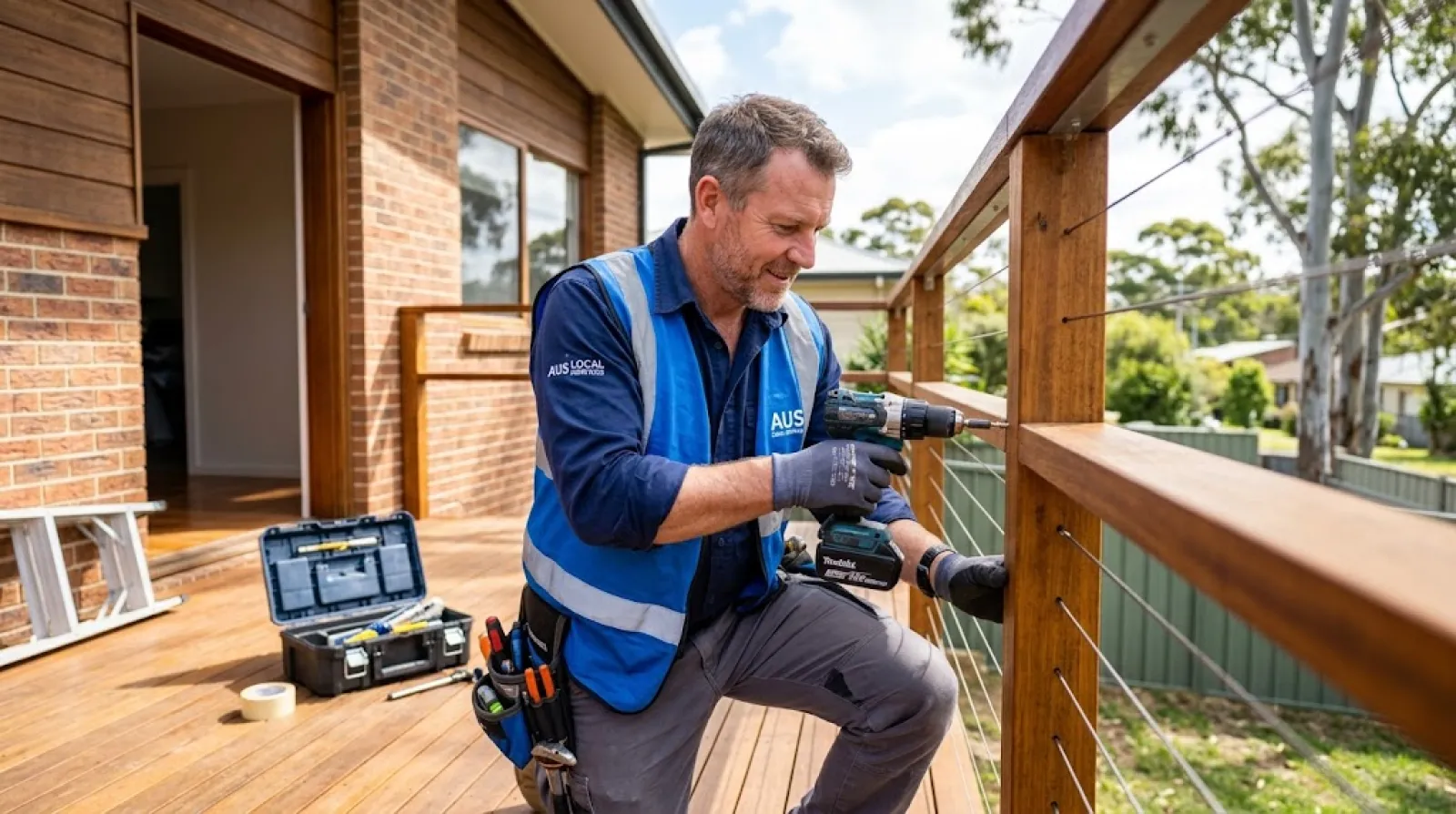
Property maintenance requires a balance between keeping costs manageable and ensuring work is performed safely, legally, and to an acceptable standard. For routine home repairs, cosmetic touch-ups, and minor odd jobs, engaging a handyman in Australia is often the most practical and budget-friendly solution.
However, Australian building regulations impose strict boundaries on what an unlicensed operator can legally carry out. Crossing the line between minor maintenance and restricted trade work can lead to severe fines, invalidation of home insurance policies, and compromised property safety.
Understanding the difference between handy tasks and trade-restricted work requires an appreciation of state-based monetary caps, specialised licensing requirements, and safety standards across Australian jurisdictions.
What Does a Handyman Actually Do?
A handyman (or handyperson) provides general repair, maintenance, and cosmetic improvement services across residential and commercial properties. Unlike specialised tradespeople—such as licensed electricians, plumbers, or carpenters who complete multi-year apprenticeships in a single discipline—a handyman offers versatile skills across a broad spectrum of non-structural and minor repair tasks.
Common Jobs Handled by a Handyman
-
Flat-Pack Furniture Assembly: Assembling modular kitchen units, bedroom wardrobes, desks, and outdoor settings from retailers like IKEA or Bunnings.
-
Plaster & Drywall Patching: Filling small-to-medium holes, scuffs, or cracks in interior plasterboard walls and applying sandable compound prior to painting.
-
Cosmetic Touch-Ups & Painting: Painting timber trim, doors, feature walls, or repairing minor timber rot on non-structural surfaces.
-
Door & Window Hardware Maintenance: Adjusting sticking timber doors, replacing door handles, fitting privacy locks, re-meshing flyscreens, and replacing window stays.
-
Carpentry & Timber Repairs: Fixing loose timber decking boards, replacing broken timber fence palings, re-attaching skirting boards, or installing simple shelving.
-
Gutter & Exterior Cleaning: Clearing leaves from roof gutters, high-pressure washing paved driveways, cleaning shade sails, and sealing timber outdoor furniture.
-
Garden & Outdoor Structure Maintenance: Repairing garden sheds, assembling flat-pack greenhouses, fixing latch gates, and re-attaching downpipe support clips (without altering drainage lines).
Strict Legal Limits: What a Handyman Cannot Do
While a skilled home maintenance specialist in Australia can resolve dozens of household issues in a single visit, Australian state legislation strictly prohibits unlicensed workers from executing regulated trade work.
1. Electrical Work (Zero Tolerance)
Under state electrical safety legislation (such as the NSW Electricity Safety Act 2004 or Queensland’s Electrical Safety Act 2002), all fixed electrical work must be performed by a licensed electrician.
-
Prohibited: Replacing light switches, hardwiring ceiling fans, installing double power points, fixing stove elements, or touching safety switches.
-
Allowed: Changing standard plug-in light globes, fitting battery-operated smoke alarms, or plugging appliances into standard power outlets.
2. Plumbing & Gasfitting
State plumbing regulations reserve any work involving mains water, drainage, sewage, or gas for licensed plumbing and gasfitting practitioners.
-
Prohibited: Altering water supply lines, replacing hot water systems, installing new tapware behind walls, connecting gas bayonets, or unblocking sewer lines.
-
Allowed: Replacing a worn tap washer or jumper valve, fitting a shower head onto an existing arm, or changing a pop-up waste plug.
3. Structural Modifications
Any construction activity that alters the load-bearing integrity of a structure requires an appropriately credentialed, registered builder.
-
Prohibited: Removing internal studs or load-bearing timber walls, modifying roof trusses, building retaining walls over 1 metre (or requiring engineering design), or constructing upper-level balconies.
4. Asbestos Handling
Under WorkSafe standards across all Australian jurisdictions, removing more than 10 square metres of non-friable (bonded) asbestos material requires a Class B asbestos removal licence. Any removal of friable asbestos requires a Class A licence. Handymen without specific certification must never drill, cut, or remove suspected fibro sheeting produced before 1990.
State-by-State Licensing Thresholds in Australia
In Australia, general building work carried out by an unlicensed handyman is subject to maximum dollar value thresholds per project. These limits include the combined total of labour, materials, and GST.
If a single job exceeds the state threshold, it legally requires a licensed builder or trade contractor, even if the work itself is relatively straightforward.
| State / Territory | Licensing Regulator | Maximum Unlicensed Threshold (Incl. Labour, Materials & GST) | Primary Governing Legislation / Rules |
|
New South Wales (NSW) |
NSW Fair Trading |
$5,000 |
Home Building Act 1989 |
|
Victoria (VIC) |
Victorian Building Authority (VBA) |
$10,000 |
Domestic Building Contracts Act 1995 |
|
Queensland (QLD) |
Queensland Building & Construction Commission (QBCC) |
$3,300 |
Queensland Building and Construction Commission Act 1991 |
|
Western Australia (WA) |
Building and Energy (DEMIRS) |
$20,000 |
Building Services (Registration) Act 2011 |
|
South Australia (SA) |
Consumer and Business Services (CBS) |
$12,000 |
Building Work Contractors Act 1995 |
|
Tasmania (TAS) |
Consumer, Building & Occupational Services (CBOS) |
$20,000 |
Occupational Licensing Act 2005 |
|
Australian Capital Territory (ACT) |
Access Canberra |
$5,000 |
Construction Occupations (Licensing) Act 2004 |
|
Northern Territory (NT) |
Building Advisory Services / NT WorkSafe |
$12,000 |
Building Act 1993 |
Detailed Jurisdictional Breakdown
New South Wales (NSW)
Under NSW Fair Trading guidelines, any residential building or trade work valued above $5,000 requires an endorsed contractor licence or minor maintenance licence. Splitting a $7,000 project into two separate $3,500 invoices to evade the $5,000 limit is explicitly illegal under the Home Building Act 1989.
Victoria (VIC)
The Victorian Building Authority (VBA) stipulates that domestic building work valued at over $10,000 must be performed by a registered building practitioner. Furthermore, any domestic building work exceeding $16,000 requires Domestic Building Insurance (DBI) to be taken out by the builder prior to receiving a deposit.
Queensland (QLD)
Queensland maintains Australia’s strictest building licensing framework under the QBCC. Unlicensed individuals cannot carry out building work valued above $3,300. Additionally, certain trades in QLD—such as waterproofing, wall and floor tiling, or acrylic rendering—require a specific trade licence even if the project total falls under the standard $3,300 threshold.
Western Australia (WA) & Tasmania (TAS)
Both Western Australia and Tasmania operate with a higher residential building threshold of $20,000. Above this figure, workers must hold full builder registration. However, specialized trade licences for electrical, plumbing, gasfitting, and painting (where paint work exceeds $1,000 in WA) remain mandatory regardless of total job size.
Typical Australian Handyman Costs
Handyman pricing varies significantly depending on location, skill level, tool requirements, and job urgency. Major metropolitan centres like Sydney, Melbourne, and Brisbane generally record higher hourly rates than regional hubs due to travel overheads and higher business operating expenses.
Handyman pricing in Australia typically ranges from AUD $60 to $120 per hour for small odd jobs that take less than three hours. A call-out fee generally costs AUD $80 to $150, covering the initial travel and first hour of service. For medium-sized maintenance tasks, a half-day rate usually falls between AUD $300 and $500, while a full day of comprehensive handyman work can cost approximately AUD $550 to $950. Actual prices may vary depending on the type of work, job complexity, location, materials required, and the handyman’s experience.
Factors Influencing Handyman Rates
-
Travel Distance & Parking: In metropolitan areas, inner-city parking fees and high transit times lead to higher call-out fees or minimum charges (typically 1 to 2 hours minimum).
-
Specialist Tools & Equipment: Jobs requiring ladder scaffolding, concrete core drills, tile cutters, or commercial high-pressure washers may carry equipment surcharges.
-
Materials Handling: Most handymen charge a small percentage markup (typically 10%–20%) or an hourly fee for time spent sourcing materials at trade suppliers or hardware stores.
-
Emergency or Weekend Services: After-hours, weekend, or same-day urgent call-outs often attract penalty rates of 1.5x to 2x the standard hourly fee.
Practical Scenarios: Who Needs a Handyman?
To illustrate how licensing limits and handyman capabilities work in real life, consider these four common Australian scenarios:
Scenario 1: Tenant Preparing for an Exit Inspection
-
The Situation: A tenant in Parramatta, NSW is moving out of an apartment and needs to patch four small picture-frame holes, fix a loose timber kitchen handle, and replace a damaged bedroom flyscreen.
-
The Solution: A local handyman can complete all these tasks in a single 2-hour visit. Because the total cost is approximately $250 (well below the $5,000 NSW threshold) and no electrical or plumbing lines are touched, the work is entirely legal, fast, and cost-effective.
Scenario 2: Homeowner Revitalising an Outdoor Decking Area
-
The Situation: A homeowner in Geelong, VIC wants to replace six rotting deck boards, pressure wash the timber decking, and apply two coats of outdoor decking oil.
-
The Solution: A handyman can procure the replacement timber, replace the damaged decking boards, and stain the surface. The total cost for materials and labour comes to $1,800, well below the Victorian $10,000 registration threshold.
Scenario 3: Landlord Renovating a Rental Bathroom
-
The Situation: A property investor in Brisbane, QLD wants to modernise a unit by replacing the toilet, relocating the shower rose, tiling over the existing floor, and installing new downlights.
-
The Solution: This project cannot be completed solely by a handyman. Relocating the shower rose and toilet requires a licensed plumber. Installing downlights requires a licensed electrician. Tiling and waterproofing over $3,300 requires a QBCC-licensed contractor. The landlord must engage licensed trade specialists.
Scenario 4: First-Home Buyer Assembling Flat-Pack Furniture
-
The Situation: A buyer moving into a new home in Joondalup, WA has six flat-pack bedroom wardrobes and a outdoor dining set to assemble.
-
The Solution: A handyman can assemble all items over a full day ($600–$800 labour cost). No trade licence is required anywhere in Western Australia for assembly tasks.
Hidden Costs, Risks, and Common Pitfalls
Failing to verify a provider's scope of work or licensing compliance can result in significant legal and financial liabilities.
1. Voided Property Insurance Claims
If an unlicensed handyman alters electrical wiring that subsequently causes a house fire, or improperly connects water lines that burst and flood timber floorboards, home insurance underwriters routinely deny liability. Policy contracts strictly require all structural, electrical, and plumbing work to comply with the National Construction Code (NCC) and state licensing laws.
2. The Danger of "Contract Splitting"
Some operators attempt to bypass state licensing limits (e.g., Queensland's $3,300 rule) by breaking a $6,000 renovation into multiple smaller $1,500 quotes or invoices. State fair trading regulators classify this practice as intentional licensing evasion. Homeowners involved in these arrangements lose statutory consumer protections and access to state warranty schemes.
3. Lack of Public Liability Insurance
Unlike registered trade contractors who must hold minimum levels of insurance to maintain registration, informal handymen operating on cash terms may lack Public Liability Insurance. If an uninsured worker accidentally damages a neighbor's property or injures someone on-site, the financial liability often falls back on the property owner.
How to Choose the Right Local Handyman
Selecting a qualified, trustworthy handyman involves verifying basic credentials, evaluating communication transparency, and clarifying project expectations before work commences.
1. Verify Insurance Coverage
Always confirm that the operator holds valid Public Liability Insurance (ideally $5 million to $10 million cover). Request a copy of their Certificate of Currency before they begin work on your premises.
2. Check State Licence Registers (Where Applicable)
If your job approaches statutory limits or involves minor trade work, verify credentials on official state databases:
-
NSW: NSW Fair Trading Public Register
-
VIC: Victorian Building Authority Public Register
-
QLD: QBCC Licence Search
-
WA: DEMIRS Builder Search
3. Request a Written Itemised Quote
Ensure your written quote explicitly separates:
-
Hourly or fixed labour costs
-
Estimated material expenses
-
Call-out fees or minimum charges
-
GST allocations
4. Review Past Work and References
Ask for photographic proof of recent local projects or check authentic online reviews from past local clients to evaluate workmanship standards and reliability.
Handyman Hiring Consumer Checklist
Use this practical checklist before engaging a handyman for property maintenance:
-
Job Scope Clarified: Is the job purely cosmetic or maintenance-related?
-
Licence Check: Does the work involve restricted trades (electrical, plumbing, gas, structural)? If yes, book a licensed trade specialist instead.
-
State Threshold Verified: Is the total cost (labour + materials + GST) comfortably below your state’s handyman threshold (e.g., $3,300 in QLD, $5,000 in NSW, $10,000 in VIC)?
-
Insurance Verified: Has the provider supplied a valid Certificate of Currency for Public Liability Insurance?
-
Written Scope & Pricing: Have you received a written estimate or quote detailing labour, materials, and call-out fees?
-
Site Access & Materials: Have you confirmed who is purchasing the required materials and hardware?
-
Payment Terms Agreed: Avoid paying full upfront costs. Standard practice involves paying upon satisfactory inspection of completed minor work.
Find Local Handyman Services and Home Maintenance Information on AusLocaly
Managing property upkeep is straightforward when you have access to verified local information and reliable service categories. Whether you need an experienced technician for flat-pack assembly, plaster repairs, deck maintenance, or minor home touch-ups, AusLocaly helps connect Australian residents, homeowners, and businesses with service providers across the country.
Explore structured business categories and local service options:
-
Search through hundreds of verified trade and maintenance listings on the main AusLocaly Categories directory.
-
Find local property services and home maintenance specialists across major metropolitan regions, including Sydney, Melbourne, and Brisbane.
-
Research local service rules, business details, and area-specific trade directories to ensure your home projects are completed safely and legally.
Visit AusLocaly today to discover local maintenance professionals and navigate property care across Australia with confidence.