Inground vs Above Ground Pool - What Suits Australian Backyards?
Compare inground and above ground pools for Australian backyards. Explore costs, site conditions, building approvals, fencing rules, and maintenance tips.
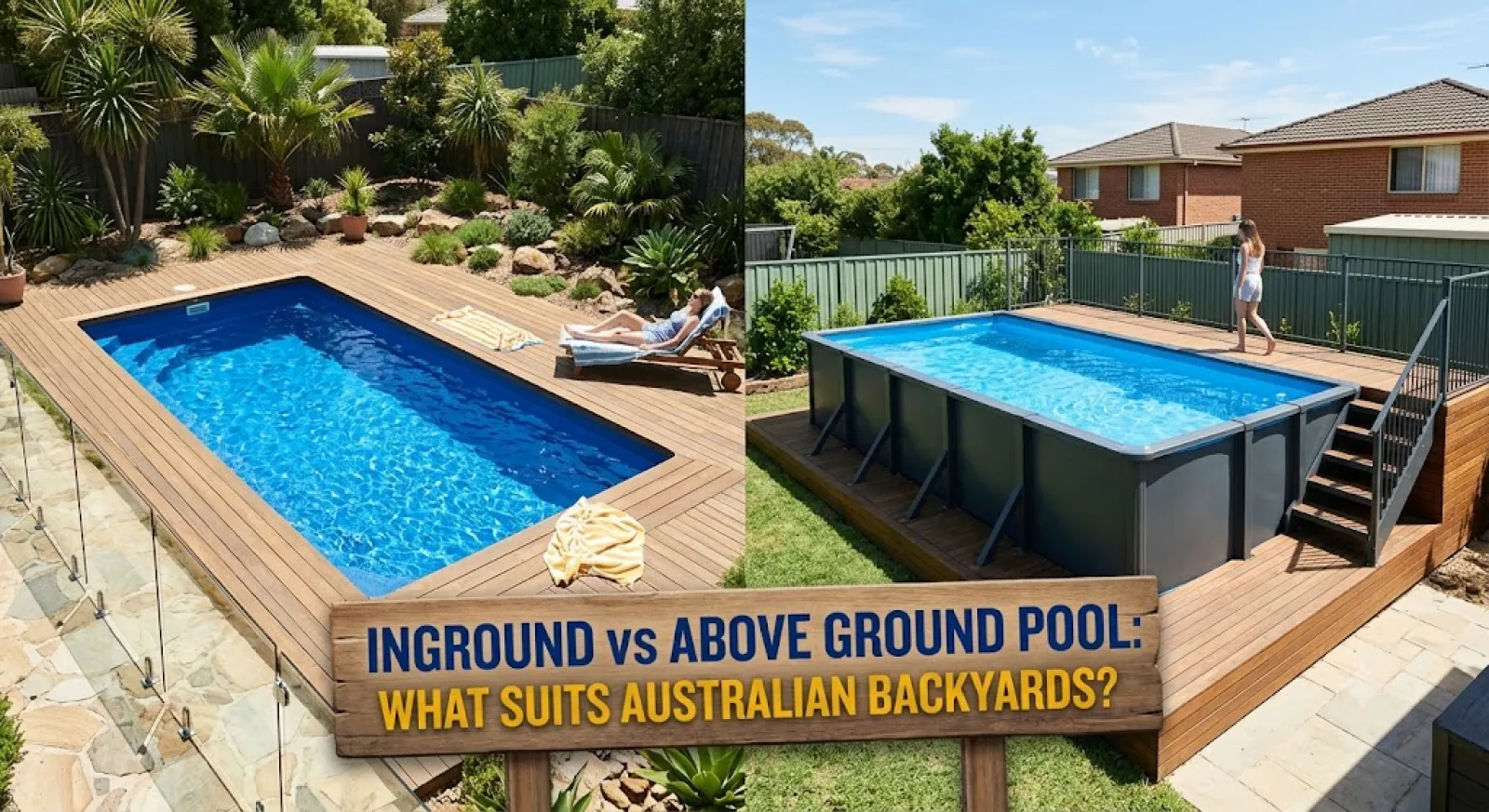
Installing a swimming pool is one of the most rewarding home improvements an Australian homeowner can make. From hot summers in Brisbane and Western Australia to entertaining outdoors in Sydney or Melbourne, a backyard pool creates a personal oasis for summer cooling, exercise, and family entertainment. Choosing between an inground pool and an above ground pool is a decision that involves evaluating long-term property goals, budget constraints, yard layout, soil conditions, and municipal council requirements.
Both styles offer distinct benefits depending on whether you occupy a sprawling regional block, a sloping residential block, or a compact urban lot. Understanding key structural differences, local compliance regulations, and total project costs will help you choose the best option for your home.
Structural Comparison: Inground vs Above Ground Pools
Choosing between an inground or above ground pool requires assessing how the pool structure interacts with your site’s geology, layout, and long-term land use.
Inground Pools
Inground pools sit level with the natural ground surface. They are excavated directly into the earth and supported by backfilled soil and engineered structural retaining walls.
-
Fibreglass Shells: Pre-moulded factory shells transported directly to the site and lowered via crane into a prepared excavation pit. Fibreglass features smooth gelcoat finishes that resist algae growth and reduce chemical use.
-
Concrete Pools: Custom poured on-site using spray-applied shotcrete over engineered steel reinforcement grids. They offer maximum design flexibility, accommodating custom shapes, swim jets, integrated spas, and edge details like infinity borders.
-
Vinyl-Lined Inground Pools: Constructed using steel, aluminium, or resin structural walls seated in a excavated trench, lined with a flexible, heavy-duty vinyl sheet.
Above Ground Pools
Above ground pools sit directly on a level surface or a slightly recessed gravel/sand base.
-
Modular Metal or Resin Wall Pools: Rigid steel or resin wall panels supported by vertical uprights and top rails, paired with an interior vinyl liner.
-
Above-Ground Fibreglass & Prefabricated Plunge Pools: Heavy-duty, self-supporting fibreglass or engineered concrete plunge units designed to sit entirely above ground or partially backfilled into sloping sites.
-
Framed Soft-Sided Pools: Temporary PVC/vinyl liners suspended by tubular steel framing. These are ideal for renters or budget-conscious setups, provided safety barrier compliance is met.
Key Selection Criteria for Australian Yards
Soil and Terrain Considerations
-
Sloping Blocks: Sloping terrain makes standard inground excavation challenging and costly due to soil retention needs. Semi-inground or timber-decked above ground pools provide cost-effective solutions for steeply sloping yards.
-
Rock, Clay, and High Water Tables: Digging in areas with heavy coastal rock (e.g., Sydney sandstone) or reactive clay soils (common in Victoria and South Australia) significantly increases excavation costs. In high water table areas, unanchored inground shells risk floating if drained incorrectly. An above ground or semi-inground setup avoids deep excavation fees.
-
Narrow Access Blocks: Inner-city suburban blocks often have restricted access pathways under 1.5 metres wide. Heavy excavation machinery or large cranes required for inground pools may face operational limits, making flat-pack modular above ground pools a practical alternative.
Climate and Sunlight Exposure
-
Solar Heating Efficiency: Above ground pools lose heat faster through exposed outer walls during cool nights. In contrast, inground pools benefit from surrounding soil insulation, maintaining water temperatures longer.
-
Evaporation: Both pool types experience evaporation in hot, dry regions like inland New South Wales or Western Australia. Using a pool cover helps conserve water and chemicals across all setups.
Australian Rules, Regulations, and Safety Standards
Every residential pool built in Australia must comply with strict safety rules, regardless of whether it is an inground concrete shell or a temporary above ground setup.
Mandatory Pool Safety Barriers (AS 1926.1)
Under Australian Standard AS 1926.1 (Safety Barriers for Swimming Pools), any private pool containing water deeper than 300 mm must be completely enclosed by a compliant safety barrier.
-
Height Requirements: The safety barrier must be at least 1,200 mm high from the finished ground level outside the pool area. If a boundary fence serves as part of the barrier, specific height minimums apply (e.g., 1,800 mm in NSW).
-
Gates and Latching: All access gates must open outwards (away from the pool area) and feature an automatic self-closing and self-latching mechanism.
-
Non-Climbable Zone (NCZ): A 900 mm non-climbable quadrant must be maintained on the outside of the pool barrier. Nearby trees, pots, elevated decks, or barbecues must be placed well clear of this zone.
-
Above Ground Pool Walls as Barriers: The external wall of an above ground pool can only serve as a barrier if it stands at least 1,200 mm high, lacks footholds, and access points (like ladders or surrounding decks) are fully gated and compliant.
State-Specific Regulatory Overview
Financial Breakdown: Upfront and Ongoing Costs
Installing a pool involves upfront installation, essential structural work, site preparation, safety barriers, and ongoing maintenance. The breakdown below details typical expenditure for both configurations in Australian dollars (including GST).
Factors Influencing Final Project Price
-
Site Access Constraints: Narrow suburban driveways requiring micro-excavators or long-reach cranes increase total labor costs.
-
Sub-soil Profiles: Hitting solid granite or subterranean water run-off requires heavy machinery attachments (like rock saws), adding unexpected costs.
-
Pumps and Automation: High-efficiency variable-speed pumps, automated salt chlorinators, and mineral dosing systems increase initial outlay but lower ongoing power bills.
-
Surrounding Finishes: Custom timber decking, frameless glass fencing, and extensive poolside paving increase overall landscape budgets.
Annual Operating Costs
-
Electricity: Running a standard single-speed pool pump costs $800 – $1,300 annually. Upgrading to an energy-efficient variable-speed pump can lower running costs to $250 – $500 per year.
-
Chemicals and Water Balancing: Chemical supplies (chlorine, acid, salt, balance adjusters) average $350 – $700 per year.
-
Liner Replacements (Above Ground / Vinyl Inground): Vinyl liners require replacement every 7 to 12 years, with costs ranging from $3,500 to $7,000 including installation and fresh water refills.
Practical Real-World Scenarios
Scenario A: Urban Family Home in Suburban Brisbane
-
Property: Flat 600m² block with clear side entry access.
-
Selection: Inground fibreglass shell.
-
Reasoning: A fibreglass inground pool offers fast installation, smooth surfaces ideal for young children, and durable structural integrity in warm coastal climates. It integrates cleanly with outdoor entertaining areas while adding value to suburban property.
Scenario B: Sloping Block in Regional Victoria
-
Property: Elevated residential block with steep rear slopes and rocky subsoil.
-
Selection: Semi-inground modular pool wrapped in a elevated timber deck.
-
Reasoning: Excavating rocky soil for a deep inground pool would require expensive rock saws and retaining walls. A semi-inground modular pool balances excavation costs while building out an elevated deck that connects directly to the home's upper level.
How to Choose the Right Local Service Provider
Proper installation ensures structural safety, regulatory compliance, and reliable operation. When hiring a Pool Builder in Australia, follow these essential verification steps:
-
Licensing Verification: Ensure the builder holds an active licence with the relevant state body (such as NSW Fair Trading, VBA in Victoria, or QBCC in Queensland). Verify their license category covers swimming pool construction.
-
Insurance Coverage: Request proof of current Public Liability Insurance and mandatory state home building compensation insurance (e.g., HBCF in NSW or Domestic Building Insurance in Victoria) before signing contracts or paying deposits.
-
Detailed Written Quotes: Obtain itemised quotes outlining all project costs—including excavation, soil removal, concrete pumping, crane hire, filtration equipment, basic paving, council fees, and compliance certificates.
-
SPASA Membership: Look for providers associated with the Swimming Pool & Spa Association (SPASA) Australia. SPASA members use standard consumer contracts and adhere to a strict industry code of ethics.
-
Site Inspections: Ensure the builder conducts a thorough site inspection to check underground utility lines (via Dial Before You Dig / Before You Dig Australia), examine soil conditions, and assess machinery access.
Consumer Checklist for Australian Pool Buyers
-
[ ] Check Underground Services: Run a DBYD (Before You Dig Australia) assessment to check for underground sewer, water, gas, or electrical mains.
-
[ ] Measure Access Points: Measure driveway clearance, gate widths, and eaves to determine if excavation machinery or cranes can access the backyard.
-
[ ] Confirm Council Zoning Regulations: Review local council rules regarding boundary setbacks, easements, site coverage limits, and heritage overlay restrictions.
-
[ ] Determine the Total Budget: Account for the pool shell, site preparation, safety fencing, landscape paving, electrical hookups, and council approval fees.
-
[ ] Plan Safety Barriers Early: Ensure fence height (minimum 1,200 mm), gate latching mechanisms, and non-climbable zones (900 mm) meet AS 1926.1 standards.
-
[ ] Verify Builder Credentials: Confirm your builder’s licence, public liability insurance, and home building insurance coverage.
-
[ ] Book a Certified Inspector: Schedule a licensed pool safety inspector or certifier to inspect and certify the pool barrier upon completion.
Find Local Pool Contractors and Australian Services on AusLocaly
Planning a pool installation requires coordinating with qualified trades, suppliers, and certifiers. Whether you need an experienced Pool Builder in Australia for an inground project, an above ground pool installer, a Fencing Contractor in Australia for compliant glass or aluminium fencing, or a Pool Technician in Australia for ongoing maintenance, finding reliable local professionals is key.
AusLocaly helps Australian homeowners connect with verified trade professionals, explore business categories, and access reliable services across major metropolitan areas and regional centers.
-
Explore trusted trade listings on the AusLocaly Categories page.
-
Connect with local pool professionals across major hubs, including Sydney, Melbourne, and Brisbane.
Start planning your backyard pool project with confidence by sourcing experienced local professionals on AusLocaly.
Related Topics & Tags
Amelia covers businesses operating in the broader wellness and lifestyle space. Her interests include fitness, relaxation and non-clinical personal wellbeing services. She takes care to describe service categories without making health outcome promises. Her writing gives readers useful context when exploring local providers.