Moving Interstate? How Removalists Quote Sydney to Melbourne and Beyond
Planning an interstate move? Learn how interstate removalists quote for Sydney to Melbourne, Brisbane, and Adelaide routes, including fixed fees vs backloading.
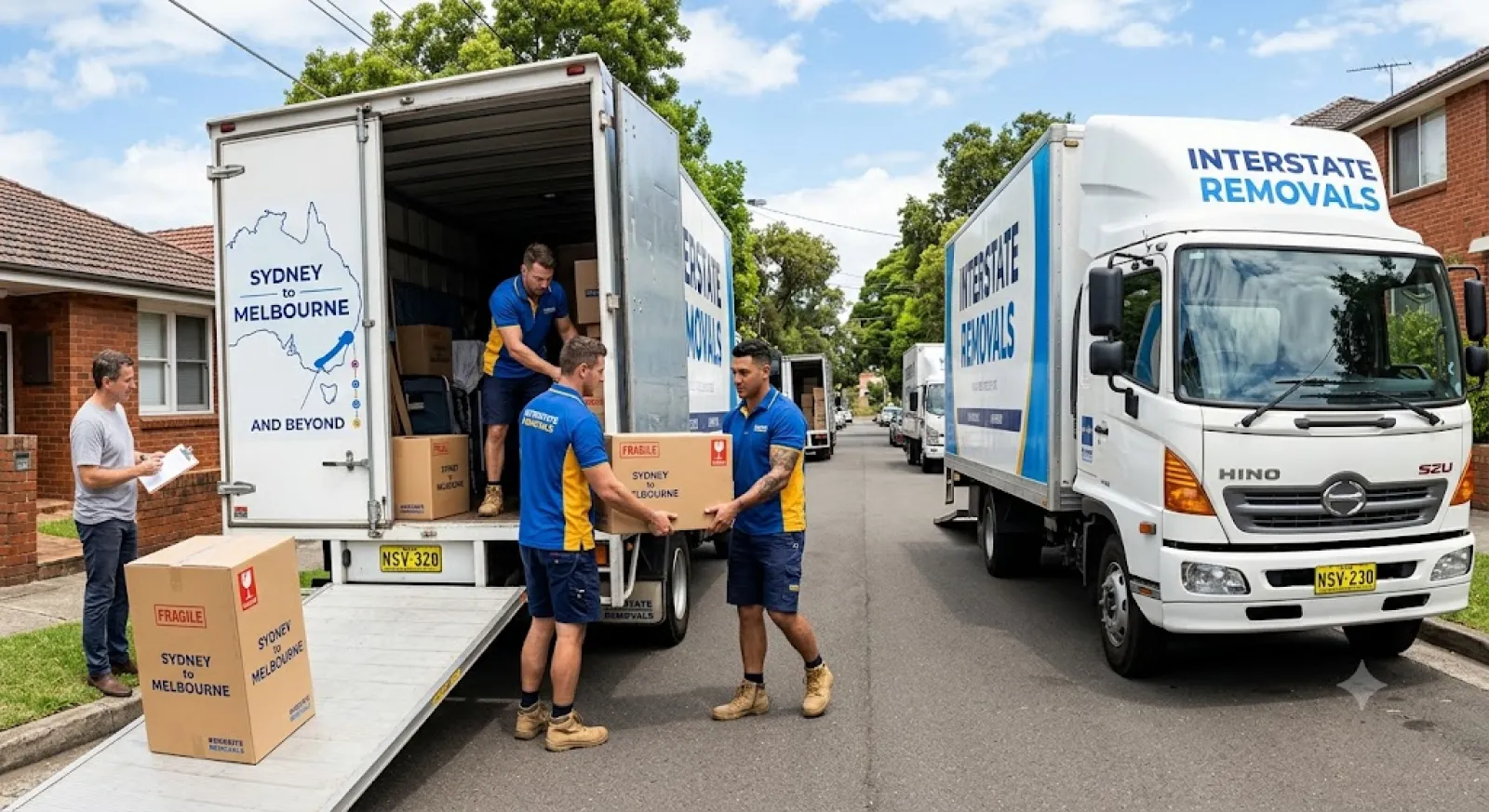
Relocating across state lines in Australia is a major life transition, whether you are moving from a sunlit terrace in Sydney to a suburban home in Melbourne, relocating from Brisbane to Adelaide, or making the long trek across to Perth. Beyond the emotional and administrative setup of changing addresses, the most pressing practical question for any household is understanding the actual cost of transport.
Interstate removal pricing in Australia does not follow a simple distance-based calculation. Freight logistics across major highways—such as the Hume Highway (M31) connecting New South Wales and Victoria, or the Pacific Highway (M1) heading into Queensland—depend on volume, vehicle availability, access constraints, and route demand.
An experienced interstate removalist in Australia calculates quotes using precise volumetric formulas, access metrics, and service inclusions. This practical guide breaks down how removalists construct quotes for interstate runs, compares dedicated transport against backloading options, explains state-by-state considerations, and highlights hidden charges to watch for before signing a contract.
How Interstate Removalist Quotes Are Calculated
Unlike local metropolitan relocations that typically charge hourly rates (e.g., $130 to $250+ per hour depending on team size), long-distance interstate moves are almost always quoted as a fixed-price package. Standard pricing is calculated using specific volumetric metrics:
1. Cubic Metre Volume (m³) vs Weight
Removalists measure domestic household contents in cubic metres (m³) rather than weight. One cubic metre represents a 1m x 1m x 1m space.
-
A standard 1-bedroom apartment contains approximately 10 m³ to 15 m³ of goods.
-
A 3-bedroom suburban home generally requires 30 m³ to 45 m³.
-
A large 4- to 5-bedroom family property can range from 55 m³ to 80+ m³.
2. Full Truckload (Dedicated Service) vs Backloading
How your goods travel between capital cities significantly dictates the final invoice:
-
Dedicated Transit (Direct Move): A single heavy vehicle or container is reserved exclusively for your belongings. The vehicle loads at your residence and drives straight to the destination address. This is the fastest, most direct method but carries the highest cost.
-
Backloading (Shared Freight): A backloading specialist in Australia utilizes empty space on trucks returning from a primary delivery or combines multiple smaller household loads traveling along the same corridor (such as Sydney to Melbourne or Melbourne to Brisbane). Backloading can cut transport expenses by 25% to 40%, provided your drop-off dates offer some flexibility.
Typical Interstate Moving Costs in Australia
Prices fluctuate based on seasonal demand, fuel surcharges, and property size. Below are realistic cost expectations for popular Australian interstate transport routes:
Note: Figures are estimates reflecting standard suburban access; severe stairs, narrow streets, or peak holiday periods will increase these ranges.
Major Factors Affecting Your Quote
When you submit an inventory list to a relocation consultant in Australia, several site-specific variables alter the base price:
Access Challenges at Origin and Destination
Large interstate pantechnicon trucks (often 12 to 15 metres long) cannot maneuver through narrow heritage lanes in Sydney’s Inner West (such as Balmain or Paddington), steep driveways in Brisbane’s Western Suburbs, or high-density apartment precincts in Melbourne CBD or Southbank.
If the large truck cannot park within 20 to 30 metres of your front entrance:
-
Ferry / Shuttle Fees: The removal company must park the primary truck at a nearby staging area, load a smaller 4.5-tonne shuttle truck, and ferry items back and forth. This typically adds $300 to $800 to the contract.
-
Long Walk Charges: Carrying furniture more than 50 metres from door to truck adds extra labor hours.
-
Stair & Lift Access: Flights of stairs without working lifts increase physical labor demands, resulting in stair-tier surcharges.
Australian Legal Frameworks, Standards & Consumer Protections
Relocating goods interstate spans federal and state-level consumer protections and heavy vehicle transport regulations.
1. AFRA Accreditation (Australian Furniture Removers Association)
While any individual with a heavy vehicle licence can operate a truck, reputable operators hold accreditation from AFRA (Australian Furniture Removers Association). AFRA-accredited removalists must meet strict industry standards:
-
Premises, storage facilities, and transport vehicles are regularly inspected.
-
Staff undergo formal training in safe handling, packing, and securing freight.
-
Members are legally authorised to offer valid Transit Insurance directly underwritten by licensed insurers.
2. Transit Insurance vs Public Liability
A common misconception among Australian consumers is that a removalist's standard commercial insurance covers household belongings during transit.
-
Public Liability Insurance: Protects against property damage (e.g., scraping a wall or damaging a driveway). It does not cover your furniture if the truck is involved in a road collision or severe weather event.
-
Goods in Transit Insurance: Covers damage caused by vehicle accidents, fire, flood, or overturning during highway haulage.
-
Full Cover (Accidental Damage): Covers dropped items, scratches, or structural breakage during loading, transit, and unloading. If you self-pack cardboard boxes, operators generally will not insure the contents of those boxes unless there is visible external damage to the box itself.
3. Australian Consumer Law (ACL)
Under the Competition and Consumer Act 2010, removalist services in Australia automatically come with consumer guarantees. Services must be rendered with due care and skill, fit for specified purposes, and supplied within a reasonable time frame.
4. Heavy Vehicle National Law (HVNL)
Interstate truck drivers operate under national fatigue management guidelines enforced by the National Heavy Vehicle Regulator (NHVR) across NSW, VIC, QLD, SA, ACT, and TAS. Mandatory rest stops and strict driving hour limits mean a Sydney-to-Melbourne road trip takes roughly 10 to 14 total operational hours including compulsory rest periods.
Practical Case Studies: Understanding Real Moves
Scenario 1: Renters Moving a 2-Bedroom Unit from Sydney (Surry Hills) to Melbourne (Brunswick)
-
The Challenge: Narrow street access at the Surry Hills apartment (stairs only, no lift) and tight parking in Brunswick.
-
The Solution: The couple booked an accredited interstate removalist in Australia utilizing a shared backloading schedule over a 3-day delivery window.
-
Cost Breakdown:
-
Volume (18 m³): $1,800
-
Stair surcharge (2 flights in Sydney): $250
-
Full transit insurance cover: $180
-
Total Paid: $2,230 (incl. GST)
-
Scenario 2: A Family Relocating a 4-Bedroom Home from Melbourne (Glen Waverley) to Brisbane (Indooroopilly)
-
The Challenge: Large volume of household items, short notice due to employment transfer, and a 10-day gap between selling and moving into the new home.
-
The Solution: They hired a relocation consultant in Australia to manage a dedicated full-truck service, complete professional packing of 60 boxes, and 10 days of container storage at a Brisbane depot.
-
Cost Breakdown:
-
Direct Truckload (52 m³): $6,800
-
Full packing service & materials: $1,100
-
Storage in transit (10 days @ depot): $450
-
Comprehensive Transit Insurance: $380
-
Total Paid: $8,730 (incl. GST)
-
Hidden Costs and Red Flags to Avoid
When gathering interstate quotes, extraordinarily low prices frequently hide significant operational risks.
-
Unquoted "Depot Fees" or "Call-Out Charges": Always ensure the quote specifies door-to-door delivery rather than depot-to-depot.
-
Cubic Metre Recalculations: Unscrupulous operators under-quote volume on paper to present an attractive rate, then measure goods upon loading and demand double payment before unloading. Ensure your written contract explicitly states how volumetric disputes are resolved.
-
Sub-Contracting Without Notice: Some brokers take deposit payments and offload the actual transit to unvetted third-party contractors without proper transit insurance.
-
Delays and Holding Fees: Verify what happens if weather, road closures, or vehicle breakdowns cause delays along major routes like the M1 or M31.
How to Choose the Right Local Provider
To safeguard your possessions across long distances, follow these step-by-step verification points:
-
Verify Physical Address: Check that the removalist operates a legitimate physical depot or office, rather than just an anonymous website or mobile phone number.
-
Ask for AFRA Certification: Look for current AFRA membership credentials.
-
Request a Digital or On-Site Inventory Survey: Accurate volume estimates require a video walkthrough or an itemized room-by-room inventory tool.
-
Confirm Written Guarantees: Obtain written confirmation covering pickup dates, maximum transit timeframes, shuttle fees, and cancellation policies.
Consumer Checklist for Interstate Moving
Use this checklist prior to booking your interstate relocation:
-
[ ] Calculate total household volume using a detailed inventory list.
-
[ ] Verify the business’s ABN and registration via the official Australian Business Register.
-
[ ] Confirm whether the service is dedicated or backloaded.
-
[ ] Clarify parking restrictions at both origin and destination addresses.
-
[ ] Obtain a formal Product Disclosure Statement (PDS) for transit insurance.
-
[ ] Pack and label essential personal items, critical documents, and valuables to carry with you directly.
-
[ ] Review the contract for hidden charges regarding stairs, long walks, or heavy items.
Find Local Interstate Removalists and Relocation Services on AusLocaly
Moving across state borders requires working with trusted, experienced operators who ensure your belongings arrive safely and on time. Whether you need an accredited interstate removalist in Australia, an affordable option from a backloading specialist in Australia, or end-to-end coordination from a relocation consultant in Australia, selecting the right service provider makes all the difference.
You can use AusLocaly to find verified businesses and transport specialists across Australia:
-
Explore key logistics and relocation categories on AusLocaly Categories.
-
Connect with regional and interstate moving specialists serving capital cities, including AusLocaly Sydney, AusLocaly Melbourne, and AusLocaly Brisbane.
-
Research local operators, request quotes, and compare options for your upcoming move.
Visit AusLocaly today to find local removalist solutions and plan your interstate move with confidence.
Related Topics & Tags
Amelia covers businesses operating in the broader wellness and lifestyle space. Her interests include fitness, relaxation and non-clinical personal wellbeing services. She takes care to describe service categories without making health outcome promises. Her writing gives readers useful context when exploring local providers.