Granny Flat Rules in Australia - Approvals, Costs and Rental Income
Thinking of building a granny flat in Australia? Learn state planning rules, Complying Development Approval, construction costs, tax, and rental returns.
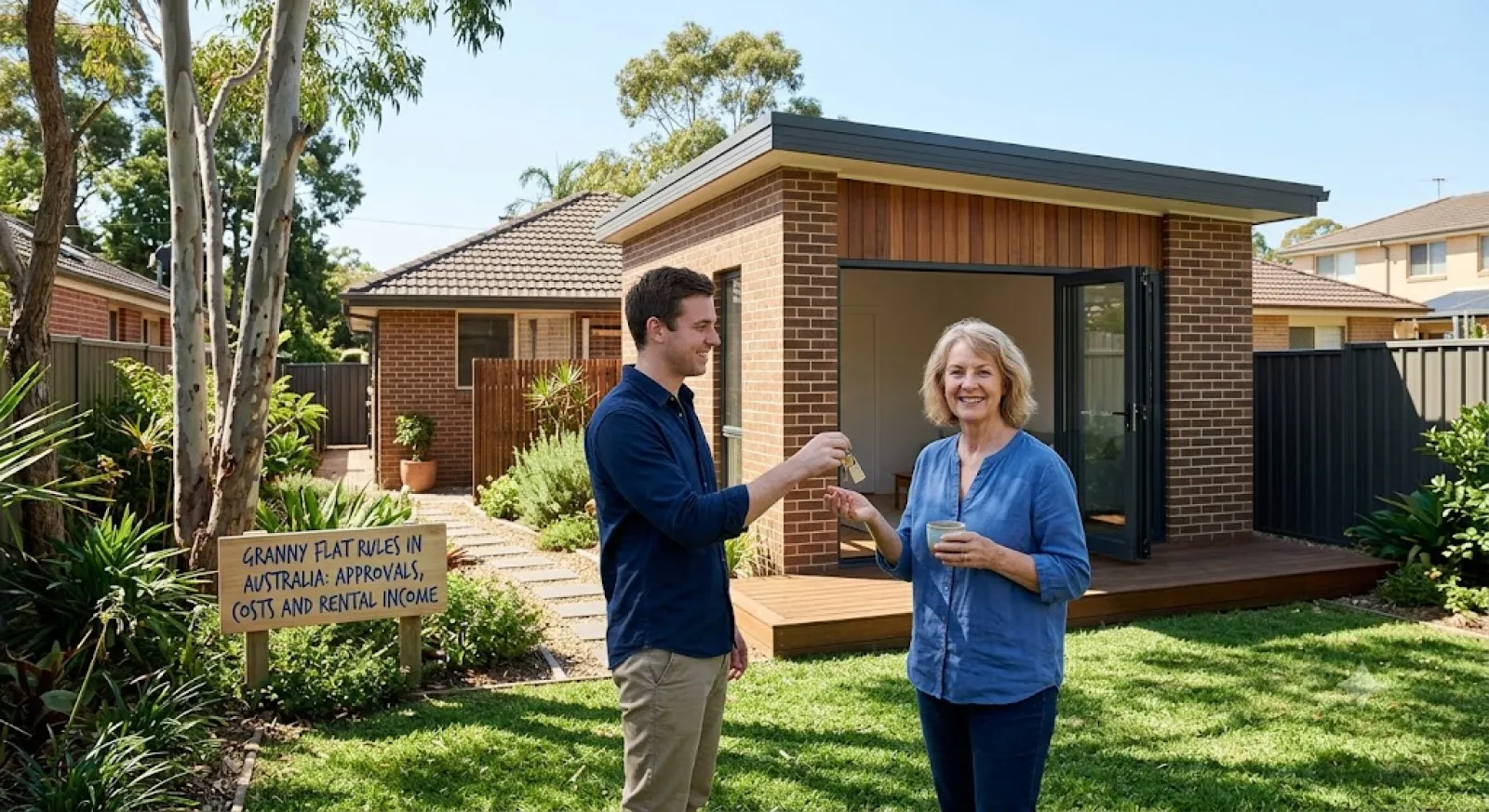
Adding a secondary dwelling—commonly known as a granny flat—to a residential property has become one of the most popular property strategies across Australia. Driven by housing affordability pressures, rising rental demand, and evolving multi-generational living arrangements, homeowners and property investors are increasingly unlocking backyards in capital cities like Sydney, Melbourne, and Brisbane.
However, building a compliant granny flat involves navigating distinct state planning frameworks, local council controls, site setback rules, National Construction Code (NCC) standards, and tax implications. Whether your goal is generating passive rental yield or housing extended family, understanding state planning approvals, realistic building costs, tax duties, and potential rental returns is essential before commencing construction.
What Is a Secondary Dwelling (Granny Flat)?
Under Australian planning frameworks, a granny flat is legally classified as a secondary dwelling. It is a self-contained residential unit built on the same lot of land as a principal single dwelling.
To meet legal definitions across Australian jurisdictions, a secondary dwelling must include:
-
Its own private entrance.
-
A self-contained kitchen or kitchenette.
-
At least one dedicated bathroom and toilet facility.
-
Living and sleeping areas.
-
Direct access to private outdoor open space.
State-by-State Planning Rules and Approval Pathways
While state governments have moved to streamline approvals to boost housing supply, rules regarding fast-tracked approvals, maximum size limits, minimum lot sizes, and renting to unrelated tenants vary across Australia.
1. New South Wales (NSW)
NSW leads Australia in streamlined secondary dwelling planning under the State Environmental Planning Policy (Housing) 2021.
-
Complying Development Certificate (CDC): If your property meets baseline criteria (minimum lot size of 450m², 12-metre street frontage, and standard setback distances), you can bypass traditional local council planning approval. A Private Certifier or Accredited Certifier can issue a CDC within 20 days.
-
Development Application (DA): If your block has heritage overlays, bushfire constraints (BAL-40 or Flame Zone), steep slopes, or non-standard setbacks, you must submit a standard DA to your local council.
2. Victoria (VIC)
In Victoria, reforms introduced in December 2023 removed historical "Dependent Person's Unit" (DPU) restrictions.
-
Small Second Homes: Dwellings up to 60m² Gross Floor Area (GFA) generally do not require a planning permit in residential zones, provided no heritage, flood, or environmental overlays apply.
-
Rentability: Anyone can live in or rent the small second home; it is no longer restricted to family dependents.
-
Energy Standards: Must meet NCC 7-star NatHERS energy rating standards and Livable Housing Design accessibility provisions.
3. Queensland (QLD)
In September 2022, the Queensland Government amended planning regulations to allow homeowners across all local government areas (LGAs) to rent secondary dwellings to unrelated tenants to ease housing pressures.
-
Brisbane & Gold Coast: Brisbane City Council allows secondary dwellings up to 80m² GFA within a specified radius of the main home, while other South East Queensland councils cap size at 60m².
-
Siting & Services: Must meet boundary setbacks (typically 1.5m to side and rear boundaries) and connect cleanly to municipal water and sewer networks.
4. Western Australia (WA)
Western Australia updated its Residential Design Codes (R-Codes) to encourage ancillary dwellings.
-
In most urban residential zones, ancillary dwellings up to 70m² GFA do not require planning approval if they meet deemed-to-comply setbacks, site coverage, and open space requirements.
Typical Costs to Build a Granny Flat in Australia
Constructing a secondary dwelling involves a range of fixed building expenses, professional fees, site works, and utility connection charges.
Factors That Drive Up Construction Costs
-
Site Accessibility and Slope: Sloped land requires cut-and-fill earthworks, retaining walls, or elevated pier foundations. Narrow side access (under 1.2m) restricts heavy machinery, increasing manual labour charges.
-
Utility Upgrades: Connecting independent power, water, sewer, and stormwater to the main street network can require trenching through existing concrete, installing sub-meters, or upgrading main electrical switchboards.
-
Bushfire and Flood Overlays: Sites located in Bushfire Attack Level (BAL) rated zones require specialized construction materials—such as toughened glass, non-combustible cladding, ember screens, and steel frames—adding 10% to 30% to total building costs.
-
Soil Classifications: Building on reactive clay soils (Class H or E) requires engineered concrete slab designs, deep piers, or heavy steel reinforcement.
Rental Income, Yields, and Return on Investment (ROI)
Adding a secondary dwelling provides strong cash-flow generation, particularly in metropolitan and high-growth regional rental markets.
Tax Considerations for Rented Granny Flats
Earning rental income from a secondary dwelling introduces tax obligations managed under the Australian Taxation Office (ATO) framework:
-
Income Tax Declaration: All rental income must be declared in your annual income tax return. You can claim deductible expenses, including property management fees, council rate proportions, repairs, water charges, and loan interest.
-
Tax Depreciation Schedules: Owners can claim tax depreciation deductions on the new building structure (Division 43 capital works) and plant and equipment items (Division 40, such as air conditioners, blinds, and stoves).
-
Capital Gains Tax (CGT) Impact: While your principal place of residence (PPOR) is generally CGT-exempt, renting out a portion of your land creates a partial CGT exposure upon the eventual sale of the property. The CGT liability is calculated proportionally based on the land area occupied by the granny flat and the duration it was rented.
-
Family Granny Flat CGT Exemption: Under ATO rules, formal, non-commercial "granny flat arrangements" created for elderly relatives or individuals with a disability are exempt from CGT, provided specific written agreement conditions are satisfied.
Real-World Case Examples
Scenario 1: Suburban Investor in Western Sydney
-
Homeowner: An investor with a 650m² block in Sydney.
-
Project: Built a 2-bedroom custom granny flat under CDC rules for $195,000 total outlay.
-
Outcome: Rented the new secondary dwelling for $580 per week ($30,160 annually). The project achieved a gross rental yield of 15.4% on construction costs, turning the overall property cash-flow positive.
Scenario 2: Multi-Generational Family in Suburban Melbourne
-
Homeowner: A family in Melbourne seeking to support aging parents.
-
Project: Erected a 60m² accessible 1-bedroom small second home in the rear garden for $165,000 following Victoria's 2023 planning reforms.
-
Outcome: Parents relocated into a modern, energy-efficient home close to family. The main home retained its primary residence status without triggering commercial CGT rules.
Common Hidden Costs and Pitfalls
-
Unapproved DIY Constructions: Purchasing a property with an unapproved, illegal granny flat carries major risk. Local councils can issue demolition orders or force expensive retrospective compliance works.
-
Infrastructure Contribution Fees: Some local councils charge Section 7.11 / 7.12 developer contribution fees (ranging from $3,000 to $15,000) when approving secondary dwellings to fund local infrastructure upgrades.
-
Easements and Dial-Before-You-Dig Checks: Building over registered drainage or sewer easements requires formal approval from your local water authority (e.g., Sydney Water or Yarra Valley Water). Encroaching on easements without consent is prohibited.
-
Over-Capitalisation: Spending over $300,000 on a high-end secondary dwelling in a suburb with low rental ceilings can erode overall return on investment.
How to Choose the Right Granny Flat Builder
Executing a successful build requires engaging qualified residential construction specialists.
-
Licence Verification: Confirm your builder holds an active residential builder's licence with your state regulator (such as NSW Fair Trading, the Victorian Building Authority, or the QBCC).
-
Certifier Relationships: Experienced builders work alongside a licensed Town Planner in Australia or private certifier to manage site surveys, soil testing, and CDC/DA applications.
-
Turnkey Written Quotes: Ensure the building contract explicitly includes site preparation, earthworks, council submission fees, utility connections, interior fittings, paint, and final sign-off certificates.
-
Home Building Compensation Fund (HBCF): In states like NSW and VIC, builders must provide mandatory home building compensation insurance for residential works exceeding statutory cost thresholds.
Consumer Checklist for Building a Granny Flat
Follow this checklist before signing a construction agreement:
-
[ ] Dial Before You Dig Check: Map underground sewer, water, electrical, and telecommunications mains.
-
[ ] Verify Title and Easements: Request a current land title certificate to check for registered easements or covenants blocking secondary structures.
-
[ ] Confirm Site Dimensions & Setbacks: Check your lot size, street frontage, and boundary clearance against state planning rules.
-
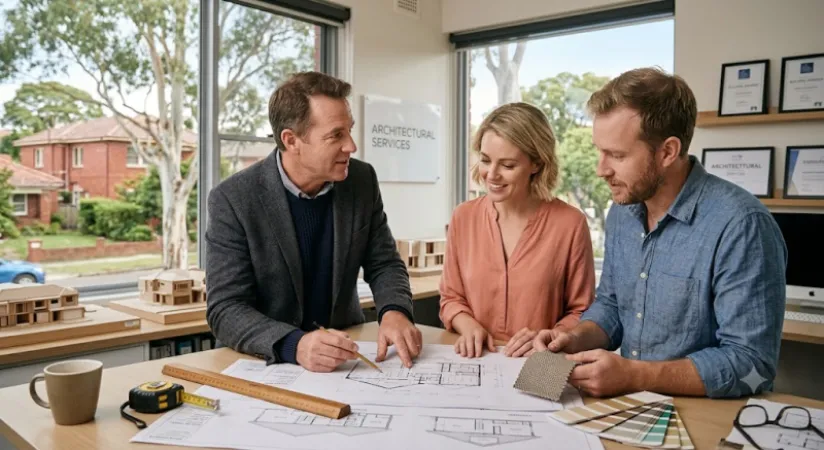
[ ] Engage a Draftsperson or Designer: Have a Draftsperson in Australia create site-specific architectural drawings meeting National Construction Code (NCC) standards.
-
[ ] Obtain Itemized Written Quotes: Ensure all excavation, utility connections, sub-metering, and certifier fees are fully transparent.
-
[ ] Consult a Tax Accountant: Review potential Capital Gains Tax (CGT) impacts and depreciation benefits prior to signing tenant leases.
Find Local Granny Flat Builders, Property Developers and Residential Advisory Services on AusLocaly
Unlocking the development potential of your residential property requires working with experienced, licensed local professionals who understand your area's council planning schemes, soil conditions, and rental demand. Whether you need a licensed builder, an accredited certifier, a town planner, or a property manager to lease your new space, choosing local expertise keeps your project compliant and on budget.
AusLocaly connects Australian property owners with trusted local builders, construction trades, and property specialists across the nation. Explore a wide array of specialized trades by visiting our comprehensive categories directory or connect with experienced local experts in major markets like Sydney, Melbourne, and Brisbane.
Transform your backyard into a valuable asset—find licensed builders, specialized designers, and local property advisors on AusLocaly today.
Related Topics & Tags
Brodie follows independent enterprises and the people who rely on their services. He enjoys exploring specialist businesses that may not receive much attention outside their local area. His writing focuses on business purpose, customer needs and service clarity. He contributes neutral articles for local discovery.