Buying Off-the-Plan Property in Australia: Contracts, Risks and Settlement
Understand off-the-plan property contracts in Australia. Learn about sunset clauses, valuation gaps, stamp duty rules, defects, and settlement steps.
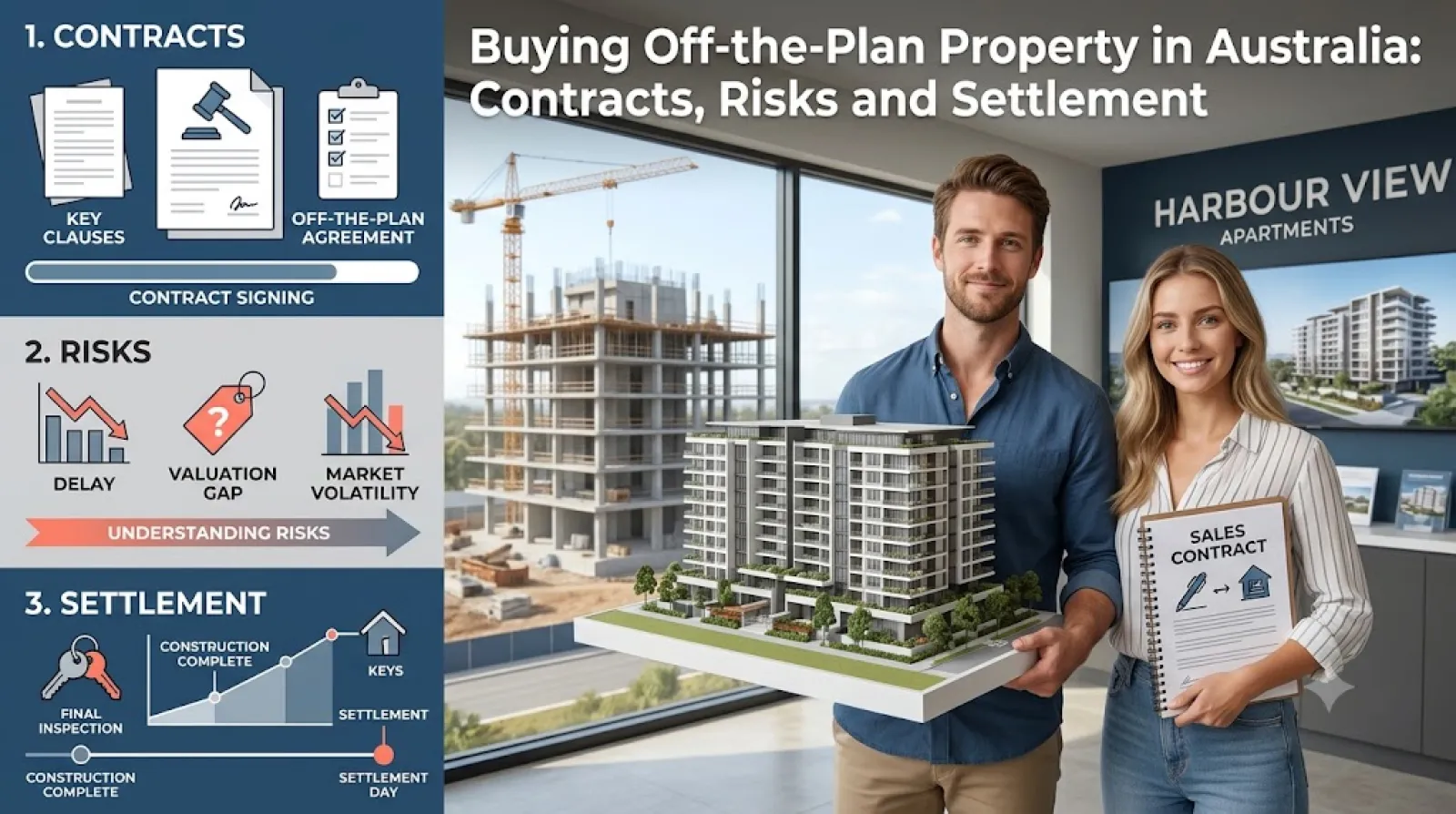
Entering into an off-the-plan property contract allows buyers to secure a residential house, townhouse, or apartment before physical construction is finished. While this purchasing method appeals to first-home buyers and property investors aiming to secure current market prices with a 10% deposit, off-the-plan transactions carry specific legal, financial, and contractual risks that differ from established home sales.
Engaging an experienced conveyancer in Australia or specialized property lawyer in Australia early in the transaction is essential for reviewing lengthy vendor disclosure statements, assessing sunset clauses, and managing pre-settlement inspections.
Whether you are looking at high-rise apartment developments in Sydney, master-planned housing estates in growth corridors around Melbourne, or coastal townhouses in Brisbane, this practical guide breaks down the off-the-plan purchasing journey from initial contract signing to final settlement.
How Buying Off-the-Plan Works in Australia
Purchasing off-the-plan means signing a contract to buy a property that has not yet been built, or is currently under construction. Instead of inspecting a finished building, buyers rely on architectural floor plans, schedules of finishes, display suites, and statutory disclosure documents.
Key Legal Clauses to Review in Off-the-Plan Contracts
Off-the-Plan property contracts in Australia are significantly longer than standard property agreements. They include detailed developer special conditions, draft strata plans, and builder warranty terms.
1. Sunset Clauses and Rescission Rights
A sunset clause sets a contractual deadline by which the developer must register the plan of subdivision and complete the building. If construction is not finished by this date, the contract may allow for rescission (cancellation), returning the deposit to the buyer.
State Protection Note: In states like New South Wales (NSW), Victoria (VIC), and Queensland (QLD), legislation prohibits developers from automatically rescinding off-the-plan contracts under sunset clauses without either buyer consent or a Supreme Court order. This prevents developers from intentionally delaying construction to re-sell units at higher market prices.
2. Design Variations and Tolerances
Contracts usually contain clauses allowing the developer a margin of tolerance (typically up to 5%) to alter floor area dimensions or change specified finishes if materials become unavailable. If a layout change significantly impacts the property's value or utility, state laws may grant the buyer rights to rescind the contract.
3. Strata By-Laws and Levy Estimates
For apartments and townhouses, the contract includes draft strata by-laws detailing pet policies, short-term letting rules, and projected body corporate (strata) levies. Ensure your legal representative reviews these draft budgets, as initial levy estimates provided by a selling real estate agent in Australia can increase once the strata scheme becomes active.
Financial Risks and Valuation Gaps at Settlement
The time gap between contract exchange and construction completion—which can range from 12 months to over three years—exposes buyers to distinct market and financial risks.
Main Financial Challenges
-
Valuation Shortfalls: Mortgage lenders do not issue unconditional loan approvals two years in advance. They perform a physical valuation right before settlement. If market values drop during construction, the bank may value the finished unit below the original contract price, requiring the buyer to make up the difference in cash.
-
Interest Rate Fluctuations: Borrowing capacity can change significantly over a multi-year build period if benchmark interest rates rise, impacting your ultimate borrowing capacity.
-
Deposit Guarantees vs. Cash Deposits: Deposit bonds or bank guarantees are sometimes accepted in place of cash. However, if the developer goes into administration, retrieving cash deposits held in a legal trust account follows strict statutory processes under relevant state property acts.
State-by-State Stamp Duty Rules and Concessions
Stamp duty (transfer duty) liabilities and payment timelines for off-the-plan purchases vary across Australian jurisdictions:
-
New South Wales (NSW): Owner-occupier buyers purchasing off-the-plan residential property can defer their transfer duty payment for up to 12 months from contract signing, or until settlement (whichever occurs first).
-
Victoria (VIC): Victoria offers an Off-the-Plan Stamp Duty Concession for eligible owner-occupiers and first-home buyers. This concession reduces assessable duty by deducting construction and refurbishment costs incurred after the contract date from the taxable property value.
-
Queensland (QLD): Concessions such as the First Home Vacant Land Concession or Homes Concession may apply depending on property thresholds and residency requirements. Duty is typically payable within 30 days of the contract becoming unconditional (or upon plan registration).
Building Quality, Defects, and Statutory Warranties
Prior to settling and paying the final balance, buyers have the legal right to conduct a pre-settlement inspection to identify unfinished work, cosmetic blemishes, or structural defects.
Statutory Warranty Frameworks
Australian builders must comply with statutory warranties governing residential construction:
-
NSW: Covered under the Home Building Act 1989 (2 years for general defects, 6 years for major structural defects).
-
Victoria: Regulated under the Domestic Building Contracts Act 1995 (up to 6 years for structural defects).
-
Queensland: Administered by the Queensland Building and Construction Commission (QBCC) statutory insurance scheme.
Consumer Checklist for Off-the-Plan Buyers
Use this practical checklist before placing a reservation fee or signing an off-the-plan contract:
-
[ ] Engage Legal Representation: Have a qualified property lawyer in Australia or conveyancer in Australia review the draft contract and disclosure documents before signing.
-
[ ] Verify Developer & Builder Track Record: Research completed projects to evaluate build quality, past defect history, and financial stability.
-
[ ] Confirm Finish Schedules: Ensure fixtures, finishes, and kitchen appliance brands are explicitly named in the contract schedule rather than noted as generic "equivalent quality".
-
[ ] Assess Finance Buffer: Maintain a financial cash buffer (10%–15%) to absorb potential bank valuation gaps at settlement.
-
[ ] Conduct Thorough Pre-Settlement Inspection: Hire an independent building inspector to complete a snagging report before transferring final settlement funds.
Find Local Property Professionals and Conveyancers on AusLocaly
Navigating an off-the-plan property purchase requires expert legal advice, thorough pre-settlement inspections, and local market insight. AusLocaly connects buyers, investors, and homeowners directly with registered property services across Australia.
Explore localized service listings by browsing the AusLocaly Categories directory. If you are searching for property services in major metropolitan centers, view tailored trade and legal listings via AusLocaly Sydney, AusLocaly Melbourne, and AusLocaly Brisbane.
Visit AusLocaly to research local businesses, connect with conveyancing professionals, and access practical resources for your property journey.
Related Topics & Tags
Sophie explores the relationship between local businesses and the people living around them. Her work covers neighbourhood retailers, hospitality venues and service providers. She is interested in the everyday reasons people choose local businesses. Her writing brings a community perspective to business discovery.