How to Dispute a Rental Bond Deduction Through Your State Tenancy Authority
Learn how to dispute a rental bond deduction through your state tenancy authority in Australia. Step-by-step guide on claims, evidence, and tribunal disputes.
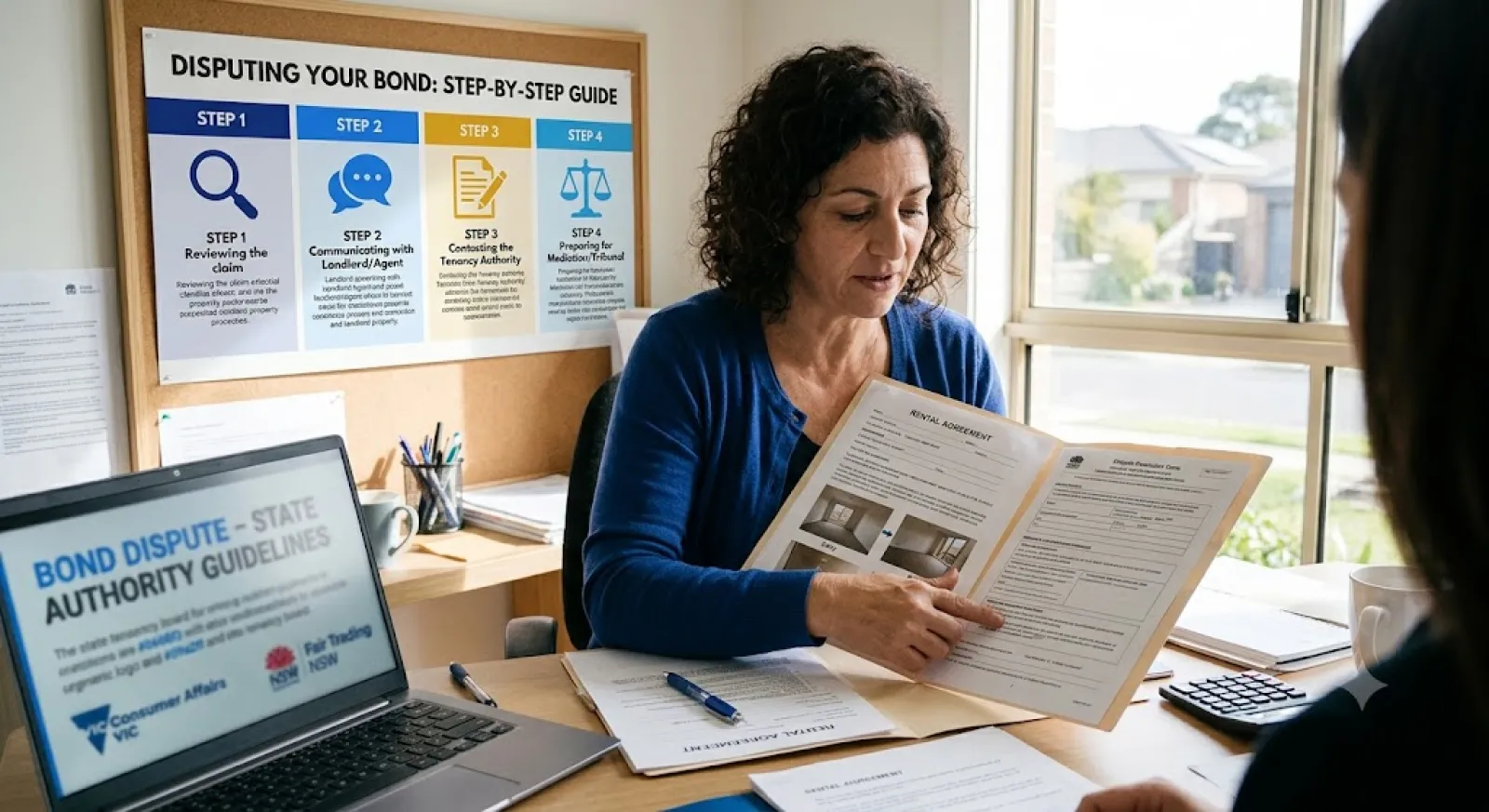
Moving out of a rental property in Australia can be a stressful transition, made worse when a property manager or landlord attempts to deduct money from your rental bond. Rental bonds are statutory security deposits lodged with government authorities—not personal slush funds for property owners. Under Australian residential tenancy laws, tenants are only responsible for intentional damage, negligence, or unpaid rent—never for fair wear and tear resulting from everyday living.
If your landlord or real estate agent proposes an unfair deduction for cleaning, painting, or minor damage, you do not have to accept their claim. Australian state and territory governments maintain strict dispute resolution processes managed by dedicated tenancy authorities and administrative tribunals.
Knowing how to initiate a bond refund claim first, gather conclusive evidence, and present your case through statutory channels ensures you protect your money and enforce your rights under local tenancy legislation.
Understanding Rental Bond Rules in Australia
When you commence a tenancy in Australia, your security deposit is legally required to be lodged with a statutory state authority—such as NSW Fair Trading, the Residential Tenancies Bond Authority (RTBA) in Victoria, or the Residential Tenancies Authority (RTA) in Queensland.
Fair Wear and Tear vs. Tenant Damage
The core of almost every bond dispute hinges on the legal distinction between normal degradation and tenant-caused damage:
-
Fair Wear and Tear (Landlord's Responsibility): Fading curtains due to sunlight exposure, worn carpet pile in high-traffic hallways, minor scuffs on walls from years of living, chipped paint on aged doorframes, or loose door handles.
-
Tenant Damage (Tenant's Responsibility): Stained or burned carpets, large holes kicked or punched into plasterboard, pet-inflicted scratch marks on timber doors, uncleaned ovens covered in baked-on grease, or unapproved structural modifications.
Step-by-Step: Disputing a Bond Deduction Through Your State Authority
Step 1: Claim Your Bond First (The "Race to Claim")
In almost every Australian state and territory, the party that lodges a bond refund request first puts the burden of proof on the other party. As soon as you hand back the keys and complete your final day of tenancy, log into your state's online bond portal and claim your refund in full directly to your bank account.
-
What Happens Next: The state bond authority notifies your landlord or property manager of your claim. The property manager is then given a strict statutory window—typically 14 calendar days—to either agree, negotiate, or file a formal dispute with supporting evidence.
-
If They Do Nothing: If the property manager fails to file a formal dispute within the 14-day window, the state authority automatically pays out 100% of the bond directly to your bank account.
Step 2: Compile Conclusive Evidence
If your landlord contests the claim or lodges a claim first, you must compile an evidence portfolio. Tribunals and conciliation officers evaluate claims objectively using primary documentation.
Ensure your portfolio includes:
-
The Ingoing Condition Report: The single most important document. If a mark, scuff, or stain was listed when you moved in, the landlord cannot hold you accountable when you leave.
-
The Outgoing Condition Report & Date-Stamped Photos: Comprehensive photographs or video walk-throughs taken on the day you hand back keys.
-
Professional Receipts: Invoices from a bond cleaner in Australia, carpet steam cleaners, or pest control operators showing you fulfilled your lease obligations.
-
Written Communication Logs: Emails, text messages, or portal maintenance logs proving you reported existing defects or maintenance issues during your tenancy.
Step 3: Enter Formal Conciliation or Dispute Resolution
If direct negotiations stall, the dispute proceeds to your state authority's free dispute resolution or conciliation service. A neutral conciliator facilitates a discussion between you and the property manager to reach a fair settlement based on tenancy law.
Step 4: Attend an Administrative Tribunal Hearing
If conciliation fails to resolve the dispute, the matter is referred to your state's administrative tribunal for a binding legal decision. Tribunal hearings are informal legal proceedings where a Tribunal Member reviews the evidence and makes a final ruling on how the bond money must be distributed.
State-by-State Rules and Dispute Authorities
Dispute procedures, electronic portals, and governing bodies vary across state and territory jurisdictions.
Practical Examples Across Australian Capital Cities
Scenario A: Disputing Carpet Depreciation in Sydney
-
The Case: A tenant moving out of an apartment in Sydney is faced with a property manager demanding $800 from the bond to replace bedroom carpet due to minor pile wear. The carpet was originally installed 9 years ago.
-
The Legal Fact: Under ATO asset depreciation schedules and tenancy guidelines, carpet has a useful life of approximately 10 years. Because the carpet was 90% depreciated, its remaining economic value was minimal.
-
The Outcome: The tenant submitted the bond claim first on Rental Bonds Online. When the agent attempted to dispute it at NCAT, the Tribunal Member dismissed the landlord's claim, noting fair wear and tear and full economic depreciation. The tenant received 100% of their bond refund.
Scenario B: Unreasonable Exit Clean Charges in Melbourne
-
The Case: Renters vacating a property in Melbourne hired professional cleaners to perform an exit clean. The property manager claimed $450 from the RTBA bond for "dust on skirtings and window tracks".
-
The Resolution: The renters provided their cleaner's tax invoice, receipt, and date-stamped outgoing photos to RDRV/VCAT conciliation. The conciliator advised the property manager that the property was left in a "reasonably clean" condition under the Residential Tenancies Act 1997 (VIC). The agent withdrew the claim, and the full bond was released via RTBA Online within 24 hours.
Hidden Risks and Common Mistakes to Avoid
-
Signing Blank Bond Release Forms: Never sign a blank or partially completed paper bond refund form. Always verify that the precise refund figures are written down before signing.
-
Failing to Update Contact Details: Ensure your email address, phone number, and bank details are updated in your state's online bond portal. If the bond authority cannot notify you of a landlord's claim, you could lose your right to dispute by default.
-
Relying on Verbal Agreements: Always conduct exit communications in writing. If a property manager verbally agrees that the house looks great, follow up immediately via email to record their confirmation in writing.
Consumer Checklist for Disputing a Bond Deduction
Use this operational checklist when vacating your rental property:
-
[ ] Log into State Bond Portal: Verify account access to Rental Bonds Online (NSW), RTBA (VIC), RTA Web Services (QLD), or your local equivalent.
-
[ ] Lodge Your Bond Claim First: Submit your online claim for 100% of the bond refund as soon as you hand back keys.
-
[ ] Cross-Reference Condition Reports: Compare ingoing and outgoing condition reports to confirm pre-existing damage.
-
[ ] Gather Exit Evidence: Organize high-resolution, date-stamped photos of every room, appliance, and outdoor space.
-
[ ] Keep Cleaning Receipts: Retain itemized tax invoices from your end of lease cleaner in Australia or steam cleaning service.
-
[ ] Track the 14-Day Statutory Timer: Monitor the response deadline closely once your claim is lodged.
-
[ ] Seek Advisory Assistance: If a dispute escalates, contact your state's Tenants' Union or Consumer Affairs body for advice.
Find Local Property Services and Australian Information on AusLocaly
Managing a tenancy transition, completing an outgoing clean, or restoring a rental property requires trusted local expertise. Sourcing qualified trade professionals and property services ensures your property meets all exit standards and protects your bond investment.
AusLocaly is an Australian directory platform designed to connect renters, property owners, and residents with verified local service providers across the nation.
You can use AusLocaly to:
-
Discover top-rated cleaning services, carpet specialists, and maintenance trades in your local area.
-
Connect with real estate specialists and local businesses across capital cities like Sydney, Melbourne, and Brisbane.
-
Research local expertise and access verified business profiles tailored to your suburb.
-
Explore a comprehensive range of industry options across our directory on the AusLocaly Categories page.
Visit AusLocaly today to connect with trusted local service providers and explore property resources in your area.
Related Topics & Tags
Kieran writes about technology businesses serving Australian consumers and organisations. His interests include IT support, web services, digital specialists and software related providers. He enjoys translating technical offerings into straightforward explanations. His articles focus on practical understanding rather than technology hype.