Easements on Property Titles Explained: What Australian Buyers Should Know
Understand property easements in Australia. Learn how drainage, right-of-way, and utility easements impact land use, building restrictions, and buying.
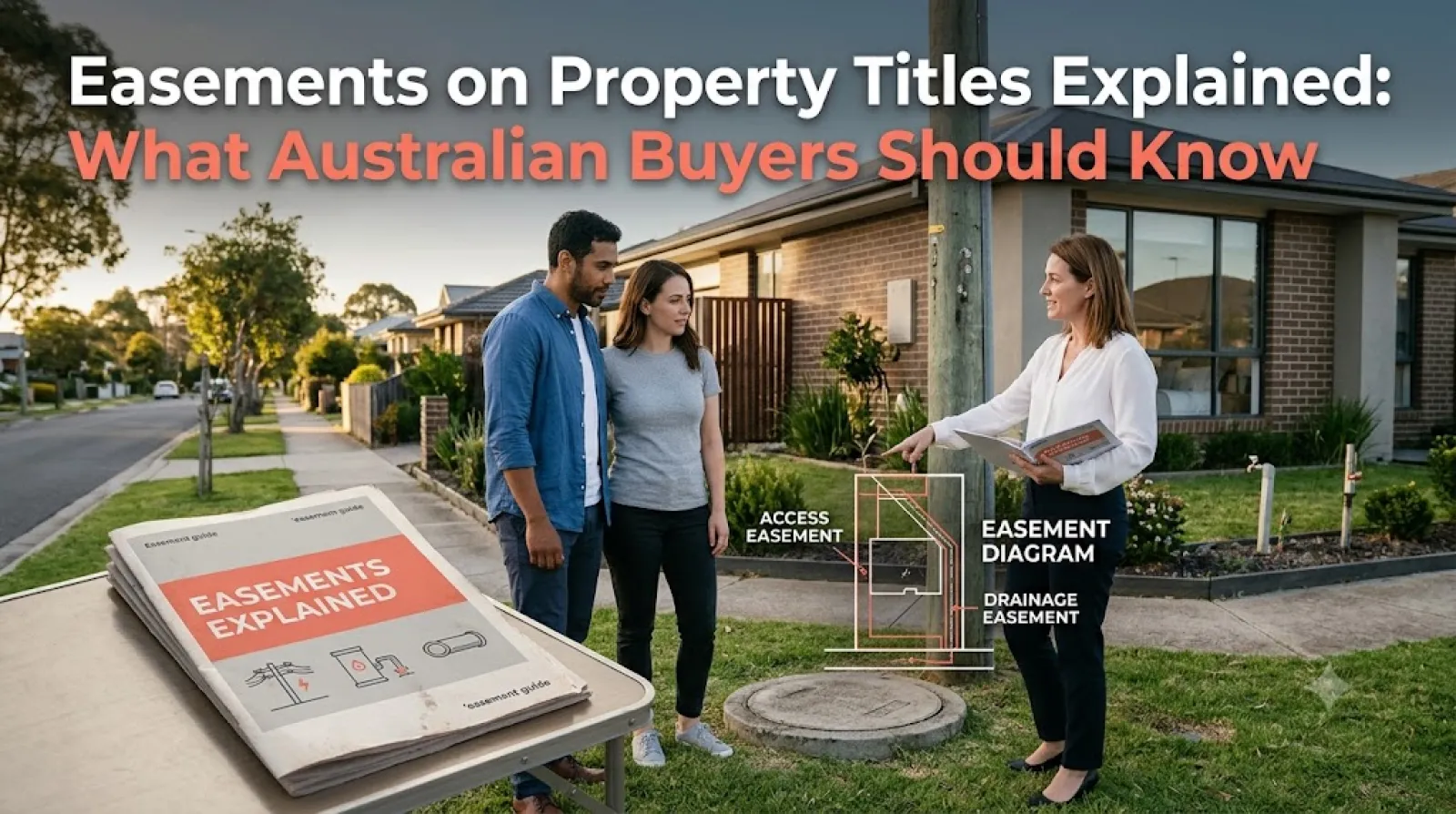
When purchasing residential or commercial land in Australia, reviewing the certificate of title is just as important as inspecting the physical building. Buried within land titles and deposited plans are legal encumbrances known as easements. An easement grants another party—such as a neighbor, local council, or utility provider—the legal right to use a specific portion of your land for a designated purpose without owning it.
Understanding how easements operate is crucial for prospective homeowners, first-home buyers, and property investors. Whether you are purchasing a character home in Melbourne, a suburban block in Brisbane, or a coastal property in Sydney, failing to identify an easement before exchange can severely restrict your future plans for a home extension, swimming pool, or garage build.
What Is a Property Easement and How Does It Work?
An easement creates a legal relationship between two distinct parcels of land, or between a landowner and a public authority:
-
Servient Tenement: The property that bears the burden of the easement (i.e., the land the easement runs across).
-
Dominant Tenement: The property (or public authority) that benefits from the easement. For example, a rear block that relies on a driveway running across your front yard for street access.
Common Types of Easements Found in Australia
Australian property titles feature several standard easement categories, each carrying distinct restrictions on construction and landscaping:
1. Drainage and Sewerage Easements
The most common type of easement across suburban residential estates. Local water authorities (such as Sydney Water, Melbourne Water, or Urban Utilities in Queensland) hold legal rights to underground stormwater drains, sewer mains, and inspection pits running through private land.
2. Right of Way (ROW) / Carriageway Easements
Grants an adjoining neighbor or the public the legal right to pass across a designated strip of your property. This is common in older inner-city suburbs featuring shared driveways or battle-axe blocks.
3. Service and Utility Easements
Allows electricity providers, telecommunication carriers, and gas distributors to install, maintain, and access overhead wires or underground conduits crossing the property boundary.
How Easements Impact Building, Renovation, and Land Use
Discovering an easement after purchasing a property can shatter renovation plans. State planning laws and local council regulations enforce strict rules regarding building over or near registered easements.
The "Build Over Easement" (BOE) Consent Process
If you wish to build a deck, carport, or concrete patio over a utility easement, you cannot simply proceed. You must apply for a Build Over Easement consent from your local water authority or council.
-
If approved, the authority grants conditional permission but retains the legal right to demolish your structure at your expense if emergency repairs to the sewer or drain become necessary.
-
If refused, you must redesign your architectural plans to maintain mandatory setback clearances.
Identifying Easements During the Conveyancing Process
In Australia, land ownership and encumbrances are registered electronically via state land registries (such as NSW Land Registry Services, Land Use Victoria, or Titles Queensland).
Before signing an unconditional contract, your legal representative—such as an independent conveyancer in Australia or specialized property lawyer in Australia—conducts crucial title searches:
-
Title Search: Reveals the legal owner, mortgage details, and lists all registered easement instruments and restrictive covenants associated with the lot.
-
Deposited Plan (DP) / Strata Plan (SP): Visual mapping diagrams showing the exact geographical location, width, and length dimensions of the easement across the property boundary.
-
Section 32 Statement (VIC) / Contract Disclosure (NSW/QLD): Vendor disclosure documents that legally must outline any registered easements affecting the land.
Typical Costs Associated with Easement Investigations and Approvals
While title search fees are standard components of property settlement disbursements, dealing with existing easements can introduce unexpected expenses:
Practical Consumer Checklist for Property Buyers
Use this checklist when evaluating a property title containing an easement:
-
[ ] Review the Deposited Plan: Ask your conveyancer to map out the exact location of the easement relative to the house and yard.
-
[ ] Check for Encroachments: Ensure existing sheds, pergolas, or fences do not illegally encroach onto a neighbor's right of way or council utility easement.
-
[ ] Verify Sewer Line Depths: Hire a qualified plumber to perform a CCTV scan if you suspect an aging earthenware sewer main runs directly beneath where you plan to build.
-
[ ] Confirm Local Council Rules: Consult your local municipal authority regarding local planning rules before submitting architectural renovation plans.
-
[ ] Consult Legal Representation: Have a qualified conveyancer in Australia review all title restrictions and covenant conditions before exchanging contracts.
Find Local Property Professionals and Conveyancers on AusLocaly
Navigating complex property titles, easements, and state conveyance laws requires trusted local expertise. AusLocaly connects buyers, homeowners, and investors directly with registered legal services and property professionals across Australia.
Explore localized service providers through the AusLocaly Categories directory. If you are purchasing property in major metropolitan centers, view tailored legal and trade listings via AusLocaly Sydney, AusLocaly Melbourne, and AusLocaly Brisbane.
Visit AusLocaly today to research local businesses, compare professional services, and access reliable resources for your next property transaction.
Related Topics & Tags
Sophie explores the relationship between local businesses and the people living around them. Her work covers neighbourhood retailers, hospitality venues and service providers. She is interested in the everyday reasons people choose local businesses. Her writing brings a community perspective to business discovery.