How Often Should You Get a Skin Check in Australia? Doctors Explain
Wondering how often to get a skin check in Australia? Learn medical recommendations, risk factors, Medicare costs, and self-examination tips from Aussie doctors.
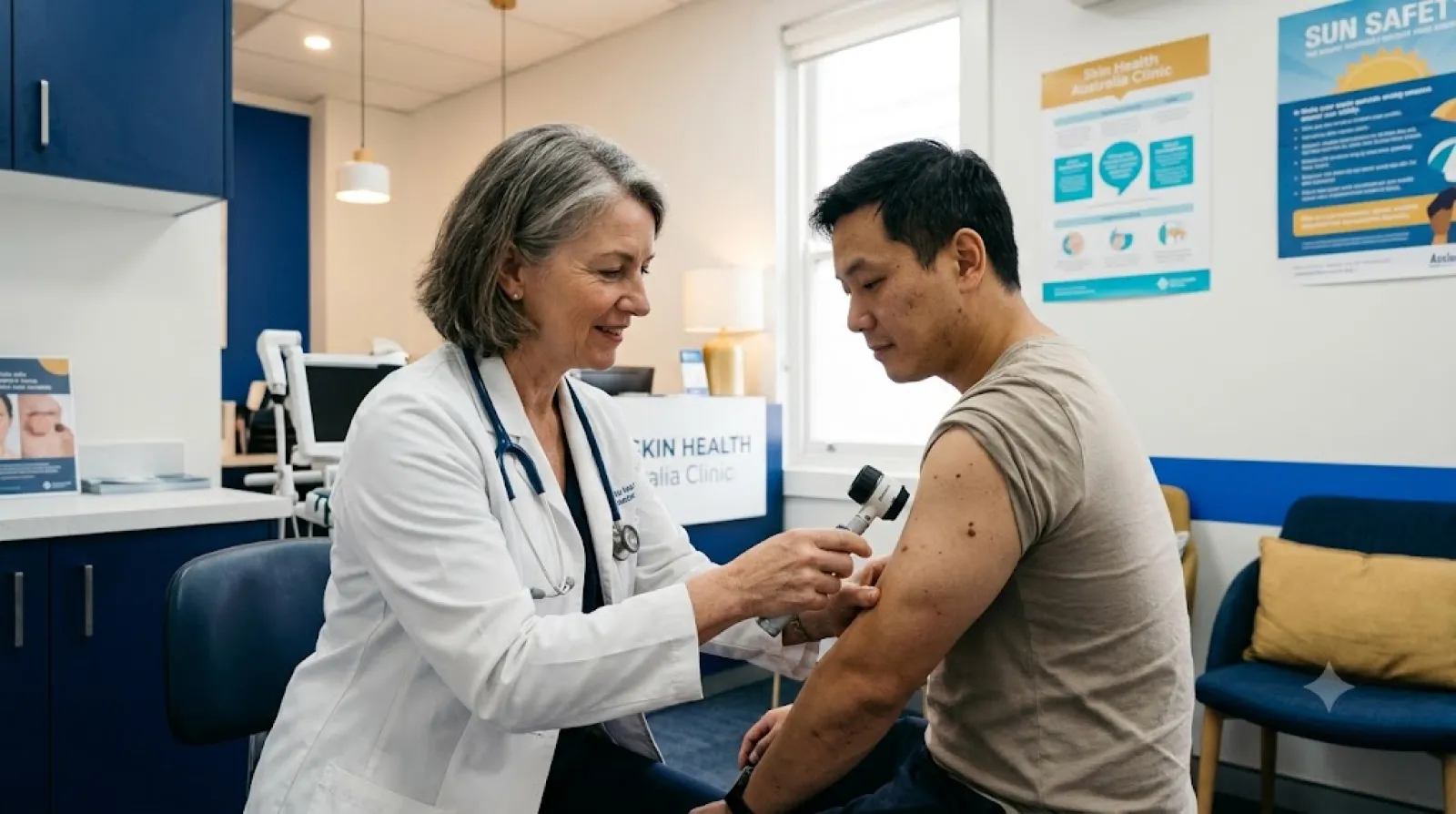
Australia holds the highest rate of skin cancer in the world. With two in three Australians diagnosed with a form of skin cancer by age 70, maintaining vigilance over mole changes, sunspots, and new skin spots is a standard part of living in the Australian climate. However, many Australians remain unsure how frequently they should visit a general practitioner, skin cancer clinic, or specialist for a full-body examination.
While public health messaging emphasizes sun protection—such as applying broad-spectrum sunscreen and checking UV index levels—guidelines regarding professional skin examination intervals depend heavily on individual risk profiles, personal medical history, and geographic exposure. Below, medical recommendations from leading Australian peak health bodies outline how often you should book a skin check, what happens during an assessment, typical Medicare coverage, and how to perform effective monthly self-checks at home.
What the Official Australian Guidelines Say
Unlike cervical, breast, or bowel screening, Australia does not operate a national, population-wide skin cancer screening program. Peak health advisory bodies, including the Cancer Council Australia and the Royal Australian College of General Practitioners (RACGP), advise against routine annual skin checks for low-risk, asymptomatic individuals.
Instead, Australian clinical guidelines recommend a risk-based clinical approach paired with regular personal self-examinations. Rather than booking an arbitrary yearly appointment regardless of skin type, doctors evaluate how often you should be examined based on your personal and family medical history, UV history, and physical traits.
Professional Skin Check Frequency Matrix
Determining how often you should visit a health practitioner depends on where you sit on the Australian skin cancer risk spectrum.
| Risk Category | Individual Profile Traits | Recommended Self-Check Frequency | Recommended Professional Skin Check Frequency |
| High Risk |
• Personal history of melanoma or non-melanoma skin cancer • Family history of melanoma (first-degree relative) • Very fair skin (Type 1), red or fair hair, freckles • More than 100 moles or multiple dysplastic (atypical) naevi • Immunocompromised state or age 45+ with fair skin |
Every 3 months | Every 6 to 12 months (or as directed by your doctor) |
| Moderate Risk |
• Fair skin that burns or tans slightly • History of multiple severe sunburns in childhood/adolescence • Outdoor occupations (e.g., construction, farming, landscaping) • History of solar keratoses (rough sunspots) |
Every 3 to 6 months | Every 2 to 5 years (or opportunistic GP check) |
| Low Risk |
• Darker skin tones that rarely burn • Few moles and minimal lifetime cumulative UV exposure • No personal or family history of skin cancer |
Every 6 to 12 months | One-off initial risk assessment; otherwise when a spot changes |
Medical Rule of Thumb: Regardless of your general risk category or when your last examination occurred, if you notice a new, changing, or non-healing spot, you should book an appointment with a Doctor in Australia immediately.
Main Types of Skin Cancers to Watch For
A professional assessment aims to detect suspicious lesions early, when treatment success rates are at their highest. Doctors categorise skin cancers into three primary types:
-
Melanoma: The most serious form of skin cancer, arising in the pigment-producing cells (melanocytes). It can rapidly spread to other organs if not caught early. Nodular melanoma grows vertically and requires prompt excision.
-
Basal Cell Carcinoma (BCC): The most common form of skin cancer in Australia. BCCs appear as pearly, pale, or red lumps or dry, scaly areas. They grow slowly and rarely metastasise, but cause localized tissue damage if left untreated.
-
Squamous Cell Carcinoma (SCC): A thickened, red, scaly spot that may bleed, crust, or ulcerate. SCCs grow over months and can spread to local lymph nodes if neglected.
How to Perform a Monthly Self-Examination at Home
Because you know your body best, personal monitoring forms the first line of defence against late detection. Australian doctors recommend dedicating 10 minutes each month to inspect your entire body in a well-lit room using a full-length mirror and hand mirror.
Step-by-Step Self-Check Routine
-
Head & Neck: Use a hairdryer and mirror to separate hair and inspect your scalp, ears, face, and back of the neck.
-
Torso & Arms: Check your chest, stomach, shoulders, and underarms. Inspect both sides of your arms, hands, palms, fingernails, and between your fingers.
-
Back & Buttocks: Stand with your back to a mirror and use a hand mirror to check your upper back, lower back, and buttocks.
-
Legs & Feet: Sit down to check the front and back of your thighs and calves, ankles, soles of your feet, toenails, and between all toes.
Look out for the "Ugly Duckling" sign—a mole or spot that looks distinctly different from every other mole on your body.
Where to Get Your Skin Checked in Australia
Australians have three primary clinical pathways for professional examinations:
1. General Practice (GP)
Your local GP is often the most accessible starting point. Many General Practitioners hold advanced certifications in dermoscopy and primary care skin cancer medicine. A General Practitioner in Australia can conduct total body examinations, take biopsies, and provide referrals for complex cases.
2. Specialized Skin Cancer Clinics
Dedicated skin clinics operate across all Australian states and territories. These facilities focus specifically on skin examinations, automated total-body photography (mole mapping), and minor surgical procedures. They are typically staffed by doctors with focused experience in skin cancer management.
3. Specialist Dermatologist
A Dermatologist in Australia is a medical specialist who completed extensive postgraduate training in skin conditions and complex skin cancers. Dermatologists handle high-risk patients, unclear biopsy results, and advanced surgical removals. Accessing a dermatologist requires a valid referral from a GP to access Medicare rebates.
Cost of a Skin Check in Australia & Medicare Coverage
Skin check costs vary depending on the provider, location, clinical technology used (e.g., standard dermoscopy vs automated total-body photography), and whether the clinic bulk-bills.
-
Medicare Rebates: Medicare provides rebates for medically necessary GP consultations (Item 23 or Item 36) and specialist consultations when referred by a doctor.
-
Biopsies and Procedures: If a doctor identifies a suspicious spot, taking a punch or shave biopsy or performing a surgical excision attracts additional Medicare rebate items.
-
Private Health Insurance: Extras cover generally does not cover outpatient GP or dermatologist consultation fees, as these fall under Medicare. However, private hospital insurance may apply if a major procedure requires day-surgery admission.
Regional & Occupational Factors Across Australian States
Ultraviolet (UV) radiation levels vary significantly depending on where you reside in Australia, influencing localized skin damage risks:
-
Queensland & Northern Territory: Tropical and sub-tropical regions experience high-to-extreme UV index levels year-round. Residents in cities like Brisbane, Townsville, and Darwin, as well as outdoor workers across regional Queensland, face elevated cumulative exposure requiring strict solar defense and regular surveillance.
-
New South Wales & Western Australia: Coastal lifestyle activities in Sydney, Perth, and regional hubs mean outdoor exposure is common. State workplace health and safety frameworks—such as SafeWork NSW and WorkSafe WA—require employers to provide adequate UV protection and PPE for outdoor workers.
-
Victoria, South Australia & Tasmania: While southern cities like Melbourne, Adelaide, and Hobart experience lower winter UV levels, summer UV rays regularly breach extreme thresholds. Periodic intense sun exposure during southern summer months can contribute to increased melanoma risk.
Consumer Checklist Before Booking a Skin Check
Use this practical checklist to prepare for your professional skin check:
-
[ ] Self-Audit: Identify any spots of concern using the ABCDE rule so you can point them out to your doctor.
-
[ ] Remove Makeup & Nail Polish: Avoid wearing foundation, tinted moisturizer, or nail polish, as skin cancers can form under nails or on the face.
-
[ ] Wear Easily Removable Clothing: Full-body checks require undressing down to underwear.
-
[ ] Confirm Qualifications: Ask whether the doctor has specific training or certifications in primary care skin cancer medicine or dermoscopy.
-
[ ] Verify Costs: Inquire whether the practice bulk-bills Medicare or charges a private out-of-pocket fee for consultation and potential biopsies.
-
[ ] Request Formal Reporting: If undergoing mole mapping or total-body photography, confirm if digital files are retained for future comparative visits.
Find Local Skin Cancer Clinics and Australian Information on AusLocaly
Navigating your personal health journey starts with finding trusted healthcare providers close to home. Whether you need a routine check-up, a detailed skin assessment, or a specialist consultation, connecting with local medical practitioners is essential for timely care.
AusLocaly helps Australians discover local healthcare services, general practices, and specialized medical clinics right across the country. You can explore a wide variety of service providers by browsing through our comprehensive categories directory or searching for location-tailored care in major urban areas including Sydney, Melbourne, and Brisbane.
Take charge of your health today by researching local doctors and finding qualified health professionals near you through AusLocaly.
Related Topics & Tags
Brodie follows independent enterprises and the people who rely on their services. He enjoys exploring specialist businesses that may not receive much attention outside their local area. His writing focuses on business purpose, customer needs and service clarity. He contributes neutral articles for local discovery.