Why Investors Get a Depreciation Schedule and What Quantity Surveyors Do
Learn why Australian property investors need a tax depreciation schedule and how Quantity Surveyors help maximise claims under ATO rules for Division 40 & 43.
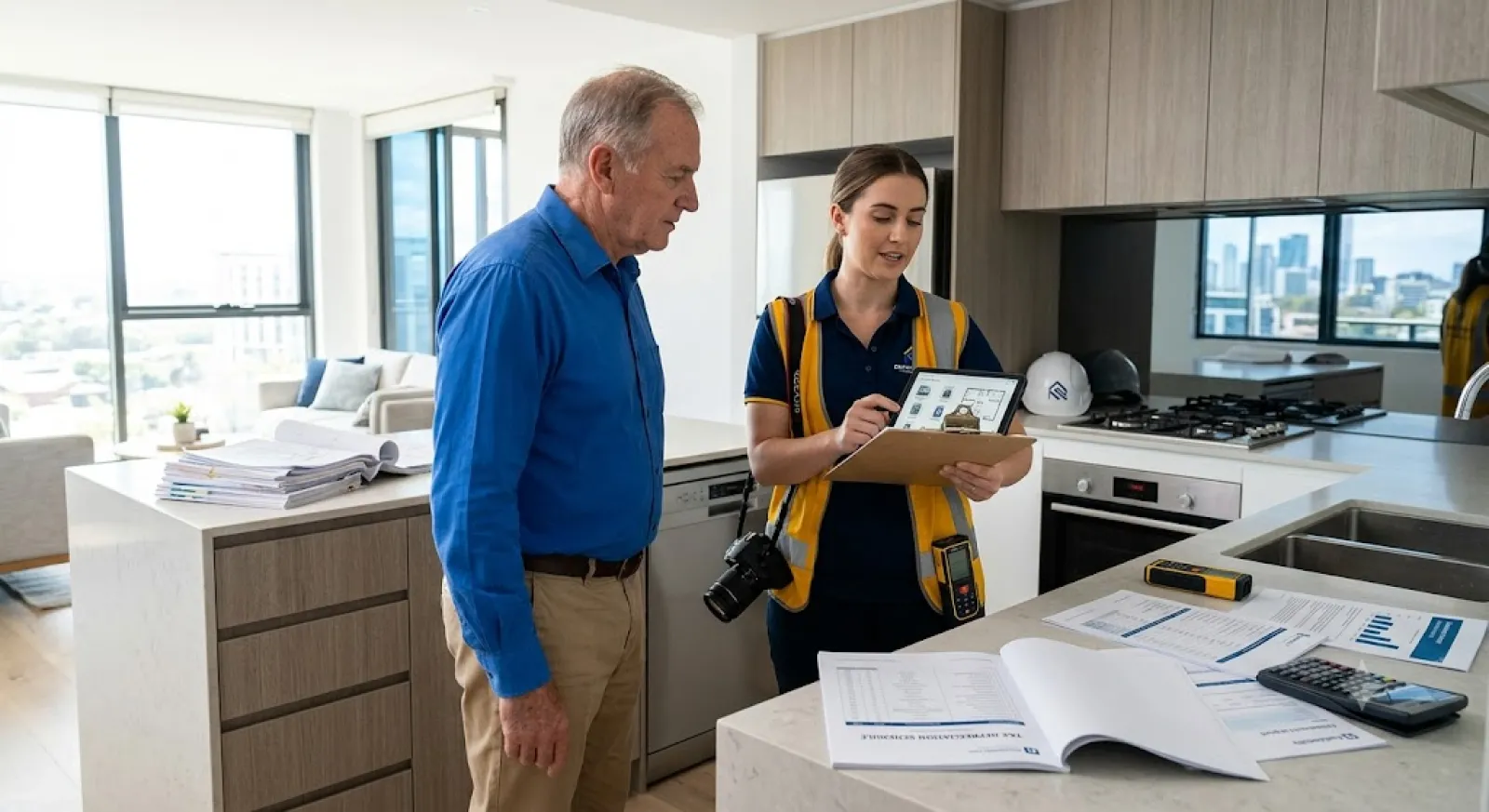
For Australian property investors, maximising annual cash flow is just as important as long-term capital growth. One of the most effective legally compliant tax strategies available to residential and commercial real estate owners is claiming tax depreciation. However, many real estate investors leave thousands of dollars unclaimed every year simply because they do not fully understand what a tax depreciation schedule is, how Australian Taxation Office (ATO) regulations govern property claims, or why a certified Quantity Surveyor in Australia is necessary to prepare one.
This guide breaks down the core fundamentals of tax depreciation, how a professional depreciation schedule works, the exact role of quantity surveyors, state-by-state variations, and practical strategies to maximize returns while remaining compliant with current ATO Tax Deductions, BAS & End-of-Year Compliance rules.
Understanding Property Tax Depreciation in Australia
Tax depreciation reflects the natural wear and tear of a physical building and its internal fittings over time. Under Australian tax law, property owners who generate assessable rental income can claim this decline in value as a paper loss against their income. Because depreciation is a non-cash deduction—meaning you do not have to spend ongoing money out-of-pocket to claim it—it acts as a direct tax offset against your taxable salary or rental profit.
The ATO divides property tax depreciation into two distinct categories:
-
Division 43: Capital Works Deductions (Building Structure)
Division 43 applies to the physical structural elements of a building and permanent fixed items. This includes brickwork, concrete slab foundations, roof framing, plasterboard walls, fixed tiles, embedded cabinetry, retaining walls, sealed driveways, and fences. Residential properties whose construction commenced after 15 September 1987 are generally eligible for a 2.5% per annum prime-cost write-off over a 40-year period. Certain commercial properties and short-term accommodation facilities may qualify for a 4.0% rate over 25 years depending on construction commencement dates.
-
Division 40: Plant and Equipment Depreciation (Removable Assets)
Division 40 covers mechanical, electrical, and removable fixtures within the premises. Examples include air-conditioning systems, carpets, hot water systems, blinds, ovens, cooktops, light fittings, and security hardware. These items are assigned a specific "effective life" by the ATO and depreciate much faster than the building structure itself.
Why Investors Get a Tax Depreciation Schedule
A Tax Depreciation Schedule is a comprehensive 40-year forecasting report prepared specifically for a residential or commercial property. It outlines every eligible asset and capital works item, projecting the exact allowable deduction dollar figure for every tax year.
Key benefits of obtaining a depreciation schedule include:
-
Substantial Cash Flow Improvement: By reducing assessable income, property investors reduce their income tax bill or increase their tax refund at end-of-year tax time.
-
Turning Negative Gearing into Positive Cash Flow: In many cases, non-cash depreciation claims tip a property from a negative post-tax cash position into a cashflow-positive investment.
-
One-Off Expense with 40-Year Value: A depreciation schedule is prepared once and typically covers up to 40 years of claims.
-
100% Tax-Deductible Fee: Under ATO Tax Office guidelines, the fee paid to a registered quantity surveyor or tax agent for preparing the report is fully deductible in the financial year incurred.
What Does a Quantity Surveyor Do?
While investors often consult a certified Tax Agent in Australia or a specialist Property Accountant in Australia to lodge their annual returns, these financial professionals are generally not permitted by the ATO to estimate construction costs.
Under Tax Ruling TR 97/25, the ATO explicitly states that where historical construction costs are unknown, only qualified professionals with real-world construction cost estimating experience—namely registered Quantity Surveyors—are recognized as capable of estimating building costs for Division 43 tax purposes.
Key Responsibilities of a Quantity Surveyor:
-
Physical or Desktop Site Inspections: Inspecting the property to measure spaces, assess structural upgrades, and identify every depreciable fixture and appliance.
-
Historical Cost Estimation: Reconstructing past construction expenses for older or renovated buildings where original receipts are long lost.
-
Asset Unbundling: Categorising items strictly into Division 40 (Plant & Equipment) versus Division 43 (Capital Works) to ensure compliance and avoid audit triggers.
-
Scrapping and Low-Value Pooling: Identifying written-off assets during renovations to claim residual values immediately.
-
Tax Agent Services Board (TASB) Compliance: Registering as recognized Tax Agents, ensuring reports are fully ATO-compliant.
ATO Regulatory Framework & Crucial Tax Rules
Understanding legislative updates is critical to avoid illegal claims and penalty notices.
1. The 2017 Plant and Equipment Legislation Change
In 2017, the Australian Federal Government amended legislation governing Division 40 plant and equipment claims for second-hand residential rental properties.
-
Second-Hand Residential Properties: Investors purchasing previously lived-in residential real estate cannot claim Division 40 depreciation on existing second-hand plant and equipment items. However, they can still claim Division 43 Capital Works on the original build and any brand-new plant and equipment items they personally purchase and install.
-
New Builds and Commercial Property: Investors who purchase brand-new off-the-plan residential builds, construct a new dwelling, or purchase commercial property are completely exempt from this restriction and can claim full Division 40 and Division 43 depreciation.
2. Immediate Write-Offs and Low-Value Pools
-
Immediate Write-off: Depreciating assets costing $300 or less purchased for non-business income properties can generally be written off in full during year one.
-
Low-Value Pool: Plant and equipment assets valued under $1,000 (or those that have depreciated under $1,000) can be placed in a low-value pool, allowing a higher accelerated depreciation rate of 18.75% in the first year and 37.5% in subsequent years.
Typical Costs of a Depreciation Schedule in Australia
Pricing for an ATO-compliant tax depreciation schedule varies depending on property type, location, and evaluation method.
| Property Type | Assessment Method | Typical Price Range (AUD) | Ideal For |
| Residential Unit / Townhouse | Desktop Assessment | $350 – $500 | Simple properties with full documentation |
| Residential House / Duplex | Full On-Site Inspection | $550 – $900 | Standard houses, unrecorded renovations |
| Commercial Premises / Retail | Full On-Site Inspection | $1,200 – $2,500+ | Warehouses, fitouts, office blocks |
Note: In almost all cases, quantity surveyors offer a guarantee that if they cannot identify at least twice their fee in tax deductions within the first full financial year, the report costs nothing.
Practical Examples: How Depreciation Works in Real Life
Scenario 1: The New Apartment Buyer in Brisbane, Queensland
An investor purchases a newly constructed apartment in South Brisbane for $650,000. Because it is a brand-new build, the investor is eligible for both Division 43 and Division 40 claims.
A registered quantity surveyor produces a schedule identifying $14,000 in deductions for the first year. Taxed at a marginal rate of 37%, the investor receives an extra $5,180 back in tax savings during year one alone. Over five years, total cumulative deductions top $55,000.
Scenario 2: The Renovated Heritage Home in Parramatta, New South Wales
An investor buys a 1970s house in Western Sydney. While the original construction yields modest Division 43 claims, a prior owner completed a $90,000 kitchen and bathroom overhaul in 2019.
The quantity surveyor inspects the property, uncovers unrecorded historical structural renovations, and calculates $2,250 per year in ongoing Division 43 claims. Additionally, when the current investor installs a brand-new $3,500 split-system air conditioner, it is added to the schedule for full Division 40 deduction benefits.
State and Territory Differences Across Australia
While Federal tax legislation applies universally, state-specific conditions impact construction and depreciation valuations:
-
New South Wales (NSW): High density, high-value apartment developments in metropolitan Sydney often feature complex shared infrastructure (elevators, central air plants, swimming pools), leading to higher initial Division 40 claims via body corporate apportionments.
-
Victoria (VIC): Strict heritage overlay requirements in inner-city Melbourne can make structural restorations costlier, increasing the overall Division 43 cost-base for landlords.
-
Queensland (QLD): Weather-exposed coastal properties in regional areas (e.g., Cairns or Townsville) may require frequent replacement of fixtures, leading to regular asset write-offs and scrapping claims.
-
Western Australia (WA) & South Australia (SA): Regional industrial and agricultural property leases frequently involve unique tenant fitout arrangements where leasehold improvements offer dedicated tax write-offs for lessees.
Consumer Checklist for Investor Depreciation Schedules
When engaging a quantity surveyor or preparing your tax affairs, check off the following items:
-
[ ] Verify Tax Agent Registration: Confirm the quantity surveyor is registered with the Tax Practitioners Board (TPB).
-
[ ] Check Inspection Policies: Confirm whether a physical site inspection or a certified desktop evaluation is required for your property age.
-
[ ] Provide Purchase Documents: Supply your settlement statement, contract of sale, and builder specs if available.
-
[ ] Gather Renovation Invoices: Compile receipts for any capital improvements, repairs, or additions made since settlement.
-
[ ] Send to Your Accountant: Ensure your property tax accountant receives the draft schedule prior to lodging end-of-year returns.
Find Local Accounting, Taxation, and Property Services on AusLocaly
Managing property investments and keeping up with ATO compliance requires the right local expertise. Whether you are looking for certified quantity surveyors, property accountants, or conveyancers, AusLocaly helps you discover trustworthy local businesses tailored to your needs.
Explore dedicated service providers across Australia by visiting the AusLocaly Categories directory, or connect directly with experts in major capital cities including Sydney, Melbourne, and Brisbane. Use AusLocaly today to find local professionals who can assist with your investment journey.
Related Topics & Tags
Kieran writes about technology businesses serving Australian consumers and organisations. His interests include IT support, web services, digital specialists and software related providers. He enjoys translating technical offerings into straightforward explanations. His articles focus on practical understanding rather than technology hype.