
What Is a Depreciating Asset in Property Investment and How Does It Work?
Understand depreciating assets in Australian property investment. Learn Division 40 vs 43 rules, effective life, tax deductions, and schedule costs.
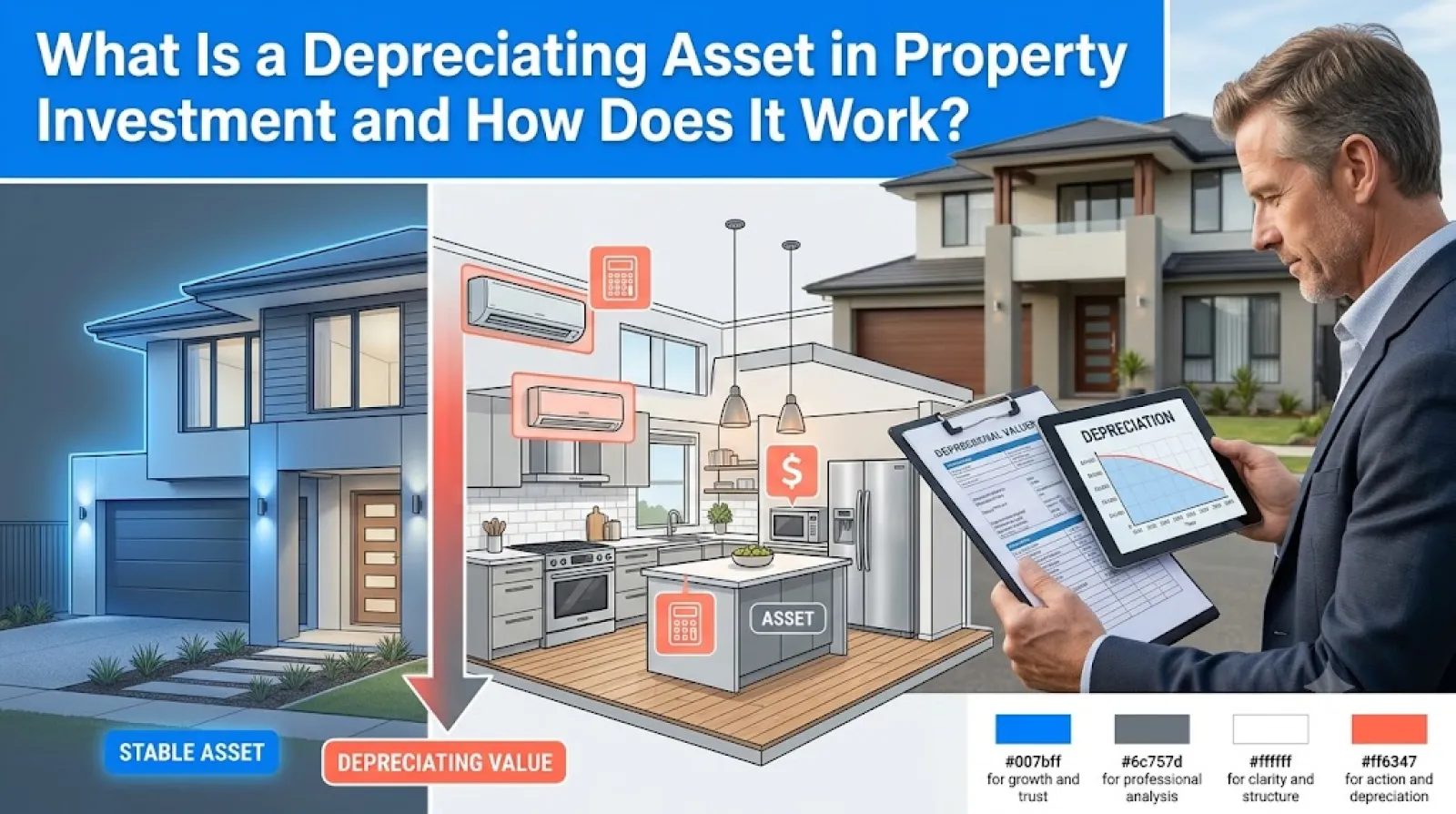
For property investors across Australia, tax depreciation represents one of the most effective ways to improve annual cash flow without spending additional out-of-pocket funds. The Australian Taxation Office (ATO) recognizes that physical items within an investment property wear out over time and drop in financial value.
To account for this decline, property owners can claim legitimate income tax deductions against their assessable rental income. A tax accountant in Australia or certified quantity surveyor in Australia helps investors separate building components into distinct categories to maximize legal tax write-offs each financial year.
Whether you hold an apartment unit in Sydney, a suburban house in Melbourne, or a regional rental asset in Queensland, understanding how a depreciating asset works is essential for optimizing your property returns.
Defining a Depreciating Asset Under ATO Rules
Under Australian tax law, a depreciating asset is an item that has a limited effective life and is expected to decline in value over time as a result of normal wear and tear.
In residential property investment, tax law separates building deductions into two main legal classifications:
-
Division 40 (Plant and Equipment Assets): Mechanical, electrical, or easily removable items within the property. Examples include split-system air conditioners, carpets, dishwashers, hot water units, and ceiling fans.
-
Division 43 (Capital Works Deductions): Structural components and permanent fixtures. Examples include concrete foundations, brick walls, timber framing, roof tiles, and built-in cabinetry.
Division 40 vs. Division 43: Key Differences
Understanding the structural differences between these two tax mechanisms ensures you claim deductions accurately without triggering ATO audit flags.
How Depreciation Is Calculated: Diminishing Value vs. Prime Cost
When claiming Division 40 plant and equipment assets, investors can select between two ATO-approved calculation methods:
Effective Life Rules
The Commissioner of Taxation publishes an annual ruling (TR 2023/4 and subsequent updates) determining the statutory effective life of everyday residential items. For example:
-
Air Conditioners (Split System): 10 years
-
Carpet: 8 years
-
Electric Hot Water Systems: 12 years
-
Ovens & Cooktops: 12 years
-
Window Blinds: 10 years
Crucial Law Changes: The 2017 Second-Hand Asset Rules
A major regulatory shift occurred under the Treasury Laws Amendment (Housing Tax Integrity) Act 2017. This legislation significantly changed how Division 40 plant and equipment deductions apply to residential property investors.
Second-Hand Residential Property Rules
If you purchased a residential investment property where the contract exchanged after 7:30 pm on 9 May 2017, you cannot claim Division 40 plant and equipment depreciation on pre-existing second-hand assets.
Important Exception: You can still claim full Division 40 depreciation if:
You purchased a brand new property directly from a developer.
You personally bought and installed brand new appliances or carpets in your existing rental home.
The property is held within a commercial enterprise or corporate structure.
Typical Tax Savings and Schedule Costs in Australia
To claim depreciation on an investment property, the ATO requires a comprehensive Tax Depreciation Schedule prepared by a qualified practitioner recognized under Tax Agent Services Regulations.
Typical Schedule Costs and Return Expectations
Tax Tip: The fee paid to a professional quantity surveyor in Australia to prepare a tax depreciation schedule is 100% tax-deductible under tax preparation expenses.
Investor Checklist for Claiming Depreciating Assets
Use this checklist to ensure compliance when setting up tax deductions for your investment property:
-
[ ] Engage an Accredited Practitioner: Ensure your schedule is prepared by an AIQS or RICS accredited quantity surveyor in Australia.
-
[ ] Separate Asset Categories: Confirm the schedule clearly distinguishes between Division 40 plant items and Division 43 structural elements.
-
[ ] Review Contract Exchange Dates: Check whether your settlement date falls before or after the 9 May 2017 second-hand asset rule boundary.
-
[ ] Track Capital Improvements: Keep itemized tax invoices for any new appliances, flooring, or structural work added during your ownership.
-
[ ] Consult a Tax Specialist: Provide the completed 40-year schedule to a registered tax accountant in Australia prior to lodging your annual return.
Find Local Accounting and Valuation Services on AusLocaly
Navigating property depreciation, ATO tax compliance, and asset valuations requires qualified local expertise. AusLocaly connects property owners and investors directly with registered accountants, tax agents, and property professionals across Australia.
Browse specialized service providers through the AusLocaly Categories directory. If you manage residential properties in capital cities, explore localized financial listings via AusLocaly Sydney, AusLocaly Melbourne, and AusLocaly Brisbane.
Visit AusLocaly to research local providers, access tax guides, and find experienced professionals to assist with your property investment portfolio.
Related Topics & Tags
Sophie explores the relationship between local businesses and the people living around them. Her work covers neighbourhood retailers, hospitality venues and service providers. She is interested in the everyday reasons people choose local businesses. Her writing brings a community perspective to business discovery.