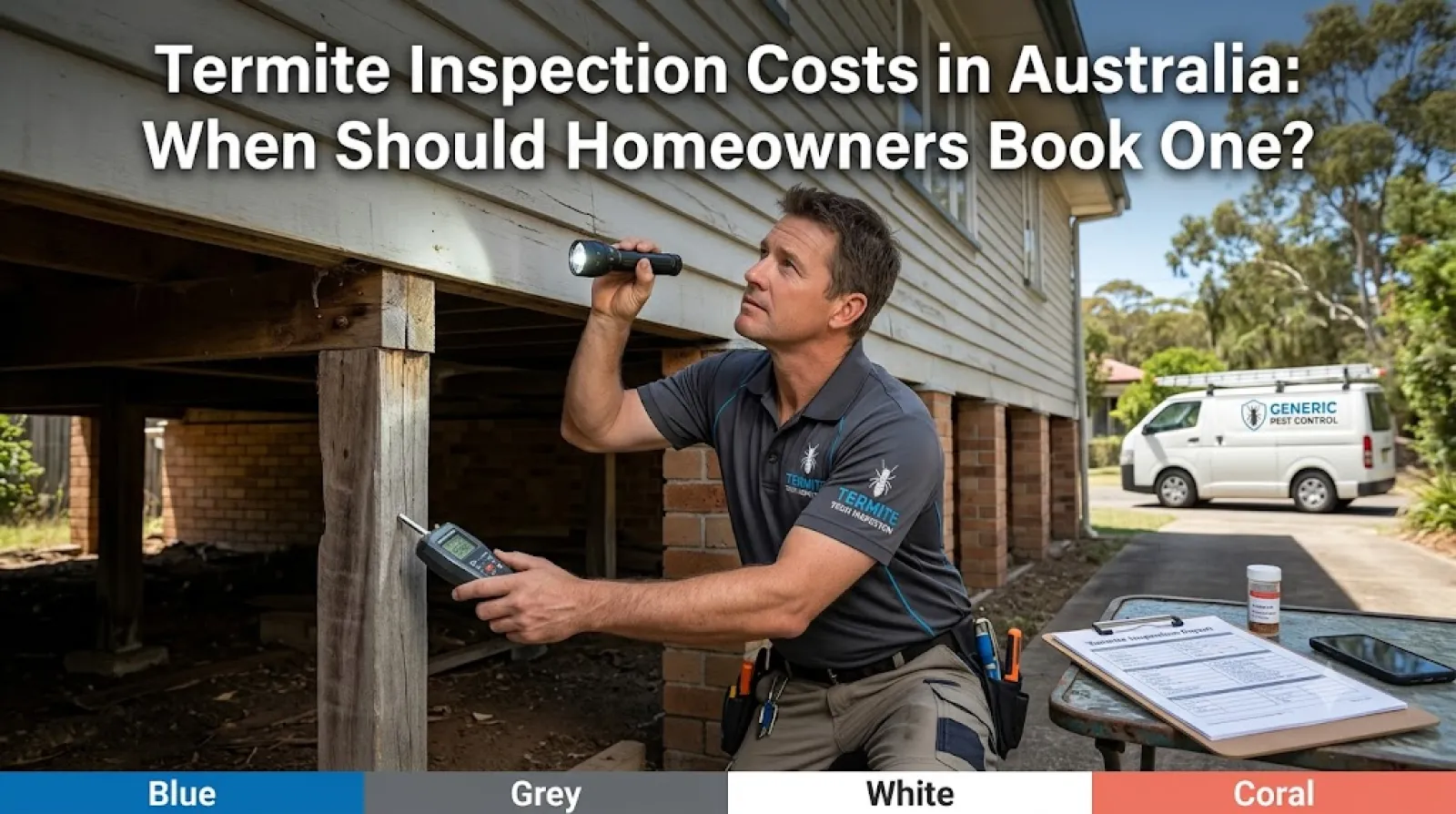
Termite Inspection Costs in Australia: When Should Homeowners Book One?
Discover termite inspection costs in Australia for 2026. Learn when to book, state compliance under AS 3660.2 & AS 4349.3, visual vs. thermal tools, and signs of activity.
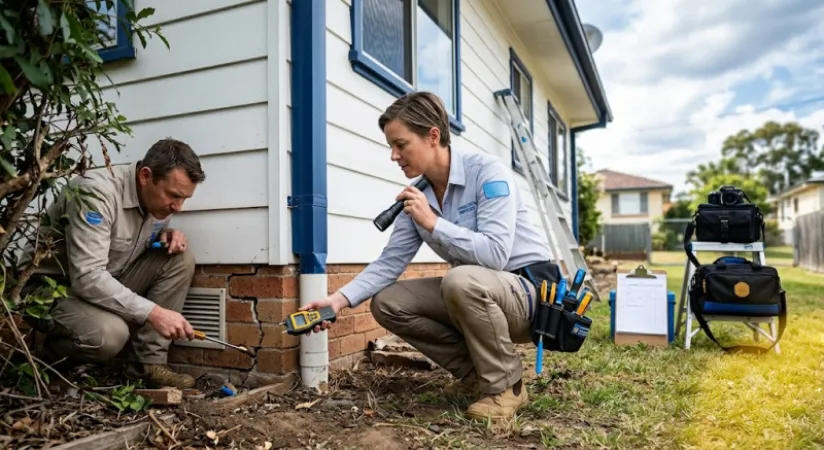
Subterranean termites—often referred to in colloquial Australian terms as "white ants"—cause hundreds of millions of dollars in structural damage to Australian homes every year. Because standard Australian home insurance policies explicitly exclude damage caused by timber-pests, the financial burden of a termite infestation falls entirely on the property owner.
Knowing when to schedule a professional assessment and understanding current termite inspection costs in Australia can protect your home's structural integrity and prevent unexpected repair bills. Whether you own a timber-framed Queenslander in Brisbane, a red-brick suburban home in Melbourne, or a coastal property in Sydney, maintaining a routine inspection schedule is vital to property maintenance.
Average Termite Inspection Costs in Australia
In Australia, the cost of a professional termite inspection typically ranges from $200 to $400 for a standard residential dwelling. Larger properties, multi-storey homes, or combined pre-purchase building and pest inspections usually command higher fees.
Cost Factors Breakdown
| Inspection Type | Average Cost Range (AUD) | Recommended For | Key Deliverables |
| Standard Visual Termite Inspection | $200 – $350 | Annual routine maintenance for established residential properties. | Visual assessment of accessible areas, written report compliant with AS 3660.2. |
| Advanced Thermal / Radar Inspection | $350 – $550 | Properties with high risk factors, dense wall cavity construction, or past activity. | Non-invasive wall cavity scans using moisture meters, FLIR thermal imaging, and Termatrac radar. |
| Pre-Purchase Building & Timber Pest Inspection | $400 – $650+ | Buyers making a real estate purchase or conditional auction offer. | Combined AS 4349.1 (building) and AS 4349.3 (timber pest) report detailing active/past damage. |
When Should Australian Homeowners Book a Termite Inspection?
While the Australian Standard AS 3660.2 recommends a professional timber pest inspection at least once every 12 months, specific triggers require booking an inspection immediately.
Australian Standards and Inspection Compliance
In Australia, a qualified pest inspector in Australia or termite technician in Australia must carry out assessments according to strict national frameworks:
-
AS 3660.2: Defines guidelines for termite management and inspections in and around existing buildings and structures.
-
AS 4349.3: Governs timber pest inspections for pre-purchase property evaluations.
What Areas Must Be Inspected?
Under standard reasonable access rules, the inspector must check four main zones:
-
Interior of the Building: Skirting boards, door jambs, window frames, architraves, fitted timber cabinetry, and moisture-prone wet areas (bathrooms and laundries).
-
Roof Void: Roof framing timbers, ceiling joists, and trusses (requires minimum crawl access space of $600\text{mm} \times 600\text{mm}$).
-
Subfloor Area: Bearers, joists, timber stumps, and floorboards beneath elevated homes (requires minimum crawl clearance of $400\text{mm}$).
-
External Property Grounds: Trees, timber retaining walls, garden beds, fences, outbuildings, and firewood stacks within 50 metres of the main residence.
Regulatory Compliance Note: In states like Queensland (QBCC) and New South Wales (NSW EPA / Fair Trading), pest management technicians must hold individual state pest control licences with specific timber pest endorsements to legally carry out inspections and chemical applications.
Key Warning Signs: When to Call a Technician Immediately
Homeowners should monitor their property for common indicators of subterranean termite activity:
-
Mud Trails and Shelter Tubes: Subterranean termites construct mud tunnels over concrete footings, brick piers, or external foundation walls to travel safely while staying protected from dry air.
-
Hollow-Sounding Timber: Tapping skirting boards or architraves that sound thin or hollow can indicate termites have eaten away the interior wood structure.
-
Blistered Wall Paint or Frass: Bubbling plasterboard or fine timber dust accumulation (frass) near structural joints.
-
Discarded Swarmer Wings: Finding small, translucent wings near window sills or doorways during warm spring evenings following rain.
-
Tight-Fitting Doors and Windows: Moisture introduced by termite workings causes timber door frames and window sashes to swell, making them difficult to open.
Regional Risk Variations Across Australian Cities
Termite pressure varies depending on climate, soil moisture, and local architectural designs:
-
Brisbane and Coastal Queensland: High risk year-round due to warm, humid sub-tropical conditions. Species like Coptotermes gestroi and Mastotermes darwiniensis (in North QLD) present aggressive threat levels.
-
Sydney and Coastal NSW: High activity levels driven by coastal rainfall. Subfloor moisture in older brick-veneer and timber cottage homes provides ideal nesting conditions.
-
Melbourne and Victoria: Moderate to high risk. While winter slows activity, species such as Coptotermes frenchi and Nasutitermes exitiosus cause extensive hidden structural damage in roof spaces and floor joists.
-
Adelaide and Perth: High risk in sandy soils, particularly where older slab-on-ground homes lack modern physical barriers along utility pipe penetrations.
Consumer Checklist Before Booking a Termite Inspection
Use this checklist when evaluating a local provider:
-
[ ] Verify State Licence Credentials: Check that the technician holds a valid state pest control licence (e.g., QBCC in QLD, NSW EPA licence).
-
[ ] Confirm Insurance Coverage: Ensure the inspector maintains valid Professional Indemnity (PI) and Public Liability Insurance.
-
[ ] Confirm Equipment Included: Ask whether thermal imaging cameras, moisture meters, and acoustic sounding tools are included in the quoted price.
-
[ ] Clear Access Areas: Ensure clear access to the roof manhole, subfloor trapdoor, and perimeter wall weep holes before the inspector arrives.
-
[ ] Request a Written Report: Ensure the provider supplies a written report aligned with AS 3660.2 or AS 4349.3 standards.
-
[ ] Request a Written Report: Ensure the provider supplies a written report aligned with AS 3660.2 or AS 4349.3 standards.
Find Local Pest Control and Inspection Services on AusLocaly
Protecting your Australian property from timber pests requires experienced local technicians and certified building inspectors. AusLocaly connects homeowners and investors directly with licensed services across Australia.
Browse qualified professionals using the AusLocaly Categories directory to compare local specialists. If you require inspection services in specific capital cities, view tailored trade listings via AusLocaly Sydney, AusLocaly Melbourne, and AusLocaly Brisbane.
Visit AusLocaly to explore local providers, compare service options, and schedule a professional timber pest inspection for your home.
Related Topics & Tags
Sophie explores the relationship between local businesses and the people living around them. Her work covers neighbourhood retailers, hospitality venues and service providers. She is interested in the everyday reasons people choose local businesses. Her writing brings a community perspective to business discovery.