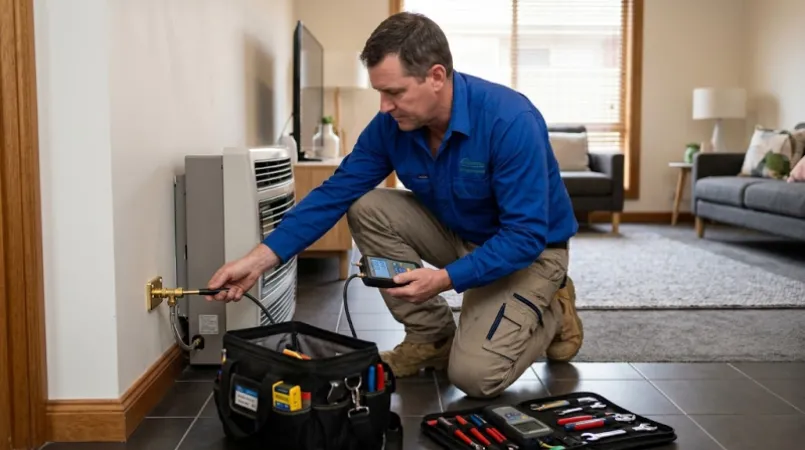
Sydney Plumber & Gas Fitter Prices: 2026 Honest Cost Report
Sydney’s Plumbing Economy in 2026: Why Your Quote Looks Nothing Like Your Neighbor’s Sydney, US is not a single market. It is a patchwork of housing stock, water chemistry, and municipal enforcement that makes plumbing...

Sydney’s Plumbing Economy in 2026: Why Your Quote Looks Nothing Like Your Neighbor’s
Sydney, US is not a single market. It is a patchwork of housing stock, water chemistry, and municipal enforcement that makes plumbing and gas fitting pricing wildly uneven from one street to the next. A repipe on a 1920s weatherboard cottage with galvanized steel supply lines in an older river-adjacent neighborhood is a fundamentally different job than swapping a thermostatic mixing valve in a 2018 townhouse development on the ridge. Any tradesperson quoting you a flat number without walking the property, checking the meter size, and confirming the flue configuration is guessing — and you will pay for that guess.
Three forces dominate the 2026 cost picture. First, copper and brass pricing remains volatile; wholesale copper has swung enough in the past 24 months that material allowances written into estimates in January are often stale by spring. Second, licensed gas fitting labor is genuinely scarce. In most US jurisdictions, a gas fitter endorsement sits on top of a master or journeyman plumbing license, which means the pool of qualified tradespeople is a fraction of the general plumbing pool — and that scarcity shows up directly in hourly billing. Third, municipal inspection backlogs have lengthened project timelines, and time is the single largest cost driver on any renovation-adjacent plumbing scope.
What most homeowners never see is the overhead structure behind the hourly rate. A licensed plumbing business in Sydney carries general liability insurance, a surety bond where the municipality requires it, workers' compensation for apprentices, a service vehicle with a stocked inventory, dispatch software, and continuing education hours for code updates. That overhead is typically 35% to 55% of the billed labor rate. When you see $145 per hour on an invoice, the technician's take-home portion is a fraction of it. Understanding this does not mean you should accept every number — it means you should negotiate on scope, materials, and scheduling rather than trying to grind a licensed professional down to unlicensed-handyman pricing.
Regional economics matter too. In Sydney, the cost of living index and local wage floors push labor rates above the national median, but they sit below the most expensive coastal metros. That places Sydney in a middle band: expensive enough that DIY mistakes are costly, but not so expensive that homeowners routinely fly in specialists from out of state. The practical result is a market where a good local licensed plumber is worth building a long-term relationship with, because emergency call-out premiums during a January freeze or a summer irrigation-line failure can double or triple the base rate.
The Four-Tier Sydney Plumbing & Gas Fitting Cost Matrix
The single most useful thing a homeowner can do before calling anyone is understand which tier their problem falls into. Tier determines not just price but the licensing required, the likelihood of a permit, and the realistic turnaround. The table below reflects 2026 Sydney market ranges for licensed work, assuming a standard residential property, reasonable access, and no concealed asbestos or structural surprises.
| Service Type | Labor Hours Required | Estimated Parts & Materials | Total Sydney Cost Range | Typical Turnaround |
|---|---|---|---|---|
| Tier 1 — Minor Diagnostics & Small Repairs Dripping mixer tap, running toilet flapper, leaking compression fitting, gas appliance pilot inspection, drain snake to 25 ft |
0.5 – 1.5 hrs | $15 – $85 (cartridges, washers, flappers, seals, small fittings) | $135 – $320 | Same day to 48 hrs |
| Tier 2 — Standard Service & Fixture Replacement Toilet replacement, kitchen faucet swap, garbage disposal install, pressure-reducing valve replacement, water heater element/thermostat service, gas range connection |
2 – 5 hrs | $120 – $650 (fixture, valve, disposal unit, flex connectors, gas cock) | $420 – $1,450 | 1 – 3 business days |
| Tier 3 — Complex Overhauls & Multi-Room Installations Tankless water heater conversion, full bathroom rough-in, sewer line spot repair, repipe of a wing, gas line extension to outdoor kitchen, backflow assembly installation |
8 – 40 hrs | $900 – $6,500 (tankless unit, PEX or copper, fittings, venting, backflow device, permit fees) | $2,200 – $11,800 | 3 – 10 business days |
| Tier 4 — Emergency After-Hours & Weekend Burst supply line, sewage backup, gas odor investigation, no-hot-water in winter, slab leak emergency isolation |
1 – 6 hrs (premium billed) | $60 – $900 (varies by failure; emergency isolation parts often minimal) | $380 – $2,600 | 2 – 6 hrs response |
Read that table carefully and you will notice something important: the gap between Tier 1 and Tier 4 is not primarily about difficulty. It is about timing and risk. A gas odor call at 11 p.m. on a Sunday involves a licensed gas fitter leaving a warm house, driving across Sydney with a combustible gas detector and a leak-detection solution, and accepting liability for a decision that could kill someone if wrong. That premium is not gouging — it is the price of competence under pressure.
The other pattern worth internalizing is that materials are rarely the dominant line item in Tier 1 and Tier 2 work, but they can exceed labor in Tier 3. A tankless water heater conversion, for example, may be 60% equipment and venting material and 40% labor. This matters because homeowners often try to negotiate the labor rate on a job where the real money is in the equipment spec. Choosing a mid-tier tankless unit over a premium brand can save $800 to $1,400 with minimal performance difference for a two-bathroom household.
Finally, note that Tier 3 work almost always triggers a permit in Sydney, and permitting adds both a fee and a delay. Budget for the inspection window as part of your project timeline, not as an afterthought. A rough-in that passes inspection on the first try is cheap; one that fails because the venting was undersized costs a re-inspection fee and another week.
Anatomy of a Real Sydney Plumbing Invoice, Line by Line
Most homeowners look at the bottom line and nothing else. That is a mistake, because the bottom line is the sum of line items you can legitimately question. Here is what a well-constructed invoice for a Tier 2 job — replacing a failed 50-gallon gas water heater — actually looks like when you break it down.
- Base service call / dispatch fee: $89 – $135. This covers the truck roll, the technician's first 15 to 30 minutes, and diagnostic time. Some Sydney-area companies waive it if you approve the repair on the spot. Ask.
- Master labor rate: $135 – $185 per hour for licensed plumbing; $165 – $215 per hour when a gas fitter endorsement is required. Emergency multipliers run 1.5x to 2.0x.
- Materials with markup: 15% to 30% over wholesale is standard and defensible. A water heater that costs the contractor $780 may appear on your invoice at $940 to $1,010. This markup covers warranty handling, returns, and inventory carrying cost.
- Permit filing fee: $75 – $250 depending on the municipality and whether gas and plumbing permits are filed separately. This should be a pass-through with the receipt available on request.
- Disposal / haul-away: $35 – $75 for removing the old unit. Legitimate, but ask whether it is included before you approve.
- Expansion tank, drain pan, and code-required upgrades: $90 – $180. These are frequently mandatory under current code even if your old installation lacked them. A good contractor explains this before starting, not after.
Two line items deserve special scrutiny. The first is the "miscellaneous fittings" or "shop supplies" charge. A modest shop-supply fee of $15 to $40 is normal; a vague $200 line item with no description is not. Ask for an itemization. The second is the trip charge for a return visit. If the contractor failed to bring a required part on the first visit, that return trip should not be billed to you.
If an invoice contains a line item the contractor cannot explain in plain language, that line item is negotiable — and often removable.
One more piece of practical advice: always request that the invoice separate labor from materials. This is not just for your records. It matters for warranty claims, for insurance reimbursement if a failure causes water damage, and for any future dispute. A lump-sum invoice with no breakdown gives you no leverage and no paper trail.
Flat-Rate Pricing vs. Time & Materials: Which Actually Protects You?
The pricing model a contractor uses tells you a great deal about how they run their business, and choosing the wrong model for your job can cost you hundreds of dollars in either direction. Neither model is inherently dishonest. They simply shift risk.
Flat-rate pricing means the contractor quotes a fixed price for a defined task — "replace this toilet, $X, all in." This model protects you from scope surprises within the defined task and makes budgeting simple. It is excellent for Tier 1 and Tier 2 work where the task is well-defined and the contractor has done it hundreds of times. The risk is that flat-rate pricing is built on averages: if your job turns out to be easier than average, you overpay, and the contractor pockets the difference. That is not fraud — it is how flat-rate books are constructed. The trade-off is that you also do not pay more when the job runs long.
Time and materials (T&M) means you pay for actual hours plus actual materials with markup. This model is fairer for genuinely uncertain work — chasing a slab leak, diagnosing an intermittent gas smell, or opening a wall to find out what is behind it. The risk is obvious: the meter runs while the technician works, and an inefficient or inexperienced tradesperson can turn a two-hour job into five. T&M also creates a subtle incentive problem, because the contractor earns more the longer the job takes.
The scope-creep trap appears in both models, but it looks different. In flat-rate work, watch for the "while we're in there" upsell — a contractor who quotes a competitive price for the headline task and then presents a series of add-ons that inflate the final bill by 40%. In T&M work, watch for the open-ended change order: a verbal "we found something, it'll be a bit more" with no written authorization. Never allow work to proceed beyond the original scope without a written change order specifying the additional cost and the reason.
My recommendation for Sydney homeowners: use flat-rate for anything predictable and T&M only for genuinely diagnostic work, and in the T&M case insist on a written not-to-exceed cap. A reputable contractor will agree to a cap and will call you before exceeding it. If they refuse, that refusal is itself information.
Permits, Inspections, and the Real Cost of Doing It by the Book in Sydney
Permitting is where homeowners most often try to save money and most often regret it. In Sydney, as in most US jurisdictions, plumbing and gas work above a defined threshold requires a permit issued by the municipal building authority, and the work must be inspected by a licensed code official before it is concealed or placed in service.
The thresholds vary, but the general rule is this: like-for-like replacement of an existing fixture in the same location often does not require a permit, while anything involving new pipe runs, relocated fixtures, water heater replacement, gas line work, or sewer repair almost always does. Gas work is the strictest category. In most jurisdictions, any new gas appliance connection, gas line extension, or appliance relocation requires both a permit and a pressure test witnessed by the inspector.
Typical 2026 fee ranges for Sydney-area residential permits:
- Water heater replacement permit: $75 – $180
- Gas line extension or new appliance connection: $95 – $220
- Bathroom or kitchen rough-in (plumbing + gas): $180 – $450
- Sewer line repair or replacement: $120 – $300
- Backflow assembly installation and testing: $85 – $200 plus annual test fee of $50 – $125
- Re-inspection fee (failed first inspection): $60 – $150
These fees are almost always passed through to the homeowner, and they should be. What you should not accept is a contractor who offers to skip the permit to "save you money." Unpermitted gas work is a genuine safety hazard, and unpermitted plumbing work can void your homeowner's insurance, complicate a future sale, and force you to tear out finished walls to make it legal. The savings are an illusion.
Ask your contractor for the permit number before work begins. A licensed professional will have it. If they cannot produce one, you are not hiring a licensed professional — you are hiring someone who is either unlicensed or cutting corners, and either way you are assuming the liability.
Five Questions That Separate an Honest Estimate from an Expensive Lesson
Negotiation in the trades is not about haggling. It is about removing ambiguity before money changes hands. These five questions, asked before you sign anything, will save most homeowners several hundred dollars and a great deal of frustration.
- "Is this a flat-rate quote or an estimate, and what is the maximum I could pay?" An estimate is not a contract price. Get the contractor to state, in writing, the ceiling. If the answer is vague, the final bill will be too.
- "What is included in the materials markup, and can I see the wholesale receipt?" A 15% to 30% markup is fair. A 60% markup is not. Asking for the receipt is not insulting — it is standard practice in commercial work and reputable contractors expect it.
- "Will you pull the permit, and is the permit fee included in this number?" Permits are frequently omitted from initial quotes and added later. Get it in writing up front.
- "What is your warranty on labor, and does it cover the parts you supply?" Labor warranties in Sydney typically run 90 days to one year; manufacturer parts warranties run longer but are voided by improper installation. Confirm both in writing.
- "If you find something unexpected once you open the wall, what happens?" The answer should be: work stops, you are notified, and a written change order is issued before anything continues. Any other answer is a red flag.
Ask these questions of two or three licensed contractors and you will quickly learn which ones are organized, transparent, and worth a long-term relationship. In a market like Sydney, where the best tradespeople are booked weeks out, that relationship is worth more than any single discount. The cheapest quote is rarely the cheapest job — and the most expensive quote is rarely the best one. What matters is clarity, licensing, and a written scope you can hold someone to.
Need a Top-Rated Plumber / Gas Fitter in Sydney?
Browse all verified local contractors, compare real hourly rates, check trade license credentials, and schedule instant appointments online.
Explore Sydney Plumber / Gas Fitter Directory Hub ⚡Evie develops and edits content about Australian businesses, services and local categories. She pays close attention to readability and the usefulness of information presented to consumers. Her editorial work avoids repetitive descriptions and unnecessary promotional wording. She contributes clean, reader friendly directory content.