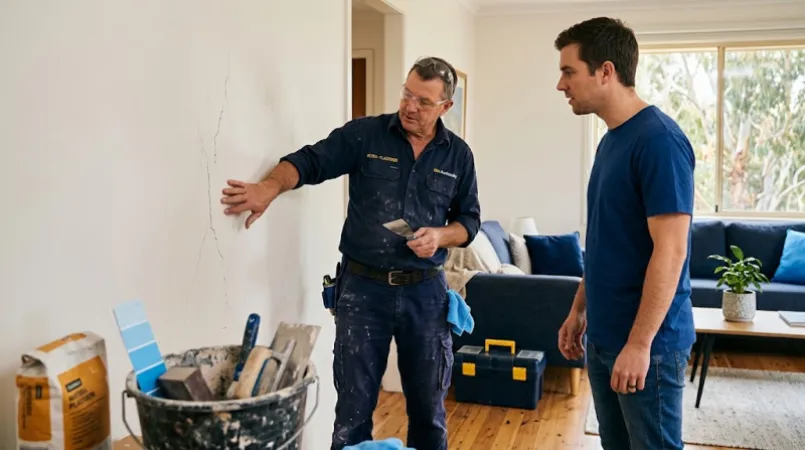
Interior vs Exterior House Painting What Most Quotes Get Wrong
Compare interior vs exterior painting quotes in Australia. Avoid hidden costs, understand AS/NZS 2311 standards, state licensing, and accurate trade pricing.
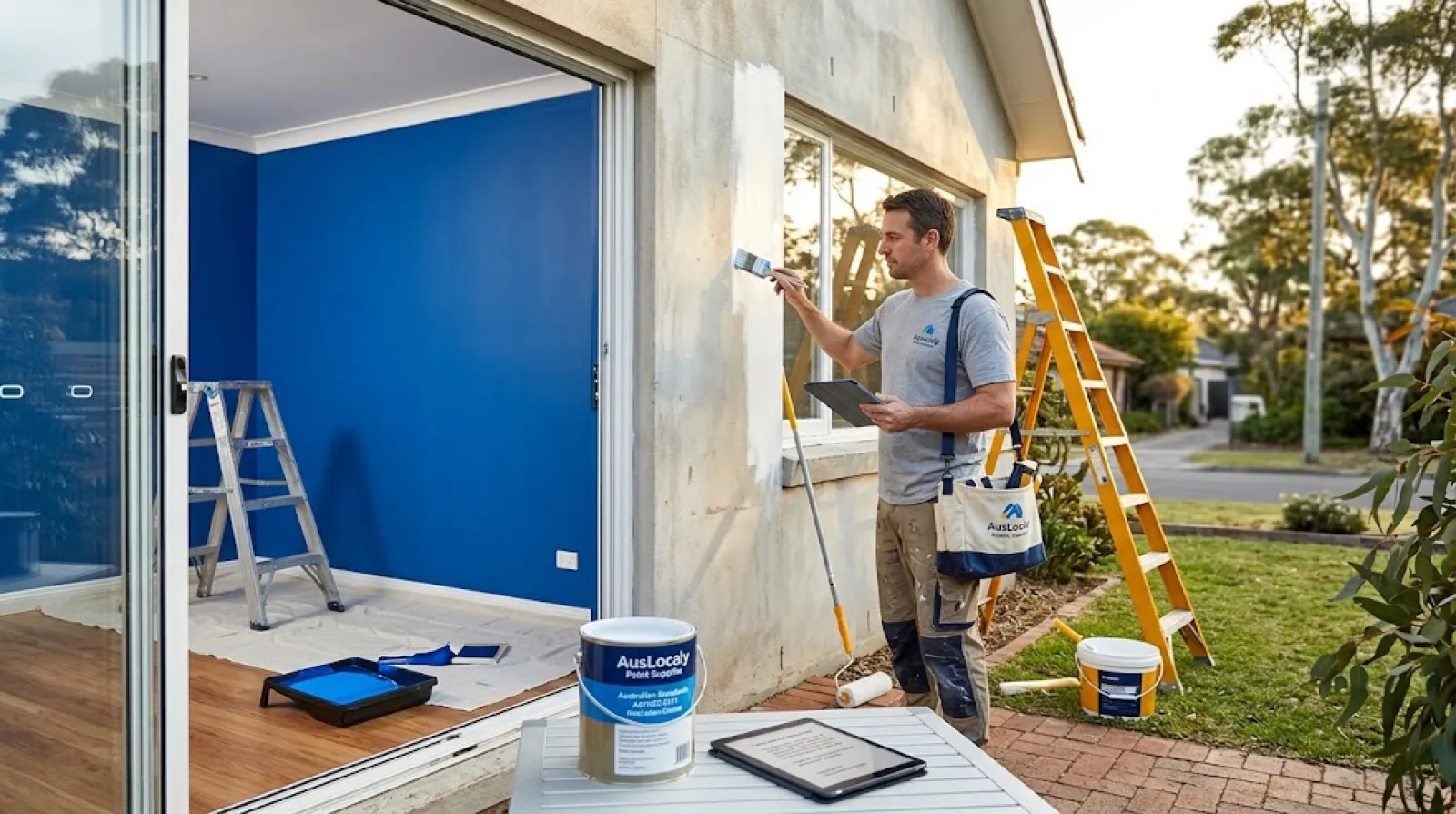
Obtaining trades quotes for residential property maintenance can often feel like comparing apples to oranges. When seeking estimates for repainting a home, property owners routinely receive figures that vary by thousands—sometimes tens of thousands—of dollars for what appears to be the exact same scope of work.
The primary cause of this vast pricing discrepancy lies in how trade estimates are structured, how surface preparation is specified, and the fundamental misunderstanding between interior and exterior coating requirements. A lowball quote frequently omits vital steps required by Australian Standards, leaving homeowners exposed to unexpected contract variations, peeling paint, or premature film failure.
Understanding the technical, structural, and regulatory distinctions between interior and exterior projects is essential before signing a trade agreement. Engaging qualified residentialpainters in Australia requires a clear understanding of line-item inclusions, substrate preparation, material grades, and state licensing laws to ensure your investment delivers a durable, compliant finish.
The Core Differences: Interior vs Exterior Coating Demands
While both interior and exterior painting share the goal of surface transformation, their performance requirements, substrate behaviors, and application techniques are fundamentally distinct.
Chemistry and Coating Performance
-
Interior Paints: Formulated primarily for aesthetic appeal, washability, and stain resistance. High-grade interior acrylics, such as Dulux Wash&Wear or Taubmans Endure, utilize tight resin structures that allow walls to be scrubbed without burnishing (creating shiny spots) or removing the pigment. They emphasize low Volatile Organic Compound (VOC) emissions to protect indoor air quality.
-
Exterior Paints: Engineered to withstand extreme atmospheric exposure. Products such as Dulux Weathershield or Haymes Solashield feature flexible acrylic polymers designed to expand and contract with underlying building materials during ambient temperature fluctuations. Exterior coatings incorporate specialized UV blockers, biocide additives to suppress mould and algae growth, and weatherproofing binders to prevent chalking and moisture ingress.
Environmental Stressors Across Australian Climates
Exterior paint systems must cope with some of the harshest environmental conditions in the world.
-
Coastal Regions (e.g., Sydney’s Northern Beaches, Perth’s Coastal Strip, Gold Coast): Airborne salt spray accelerates coating degradation and promotes timber rot or metal corrosion. Exterior quotes in these zones must include salt-decontaminating washes and anti-corrosive primers.
-
Tropical & Subtropical Climates (e.g., Brisbane, Cairns, Darwin): High humidity and intense rain cycles require specialized anti-mould formulations and extended drying windows between coats.
-
Temperate & Variable Climates (e.g., Melbourne, Adelaide, Canberra): Severe diurnal temperature shifts cause rapid expansion and contraction in timber weatherboards and render, demanding maximum paint film elasticity.
Interior environments, by contrast, are climate-controlled but subject to localized mechanical wear, impact, grease accumulation in kitchens, and moisture exposure in wet areas (bathrooms and laundries).
The 7 Critical Pitfalls Most House Painting Quotes Get Wrong
When comparing trade quotes, the lowest figure rarely represents the best value. Unscrupulous or inexperienced operators often win tenders by omitting essential labor steps from their initial estimate, only to reintroduce them later as expensive contract variations.
1. Vague or Non-Existent Surface Preparation Specs
Surface preparation accounts for up to 70% to 80% of total labor time on a professional painting job. A quote that simply states "prep walls and apply two coats" is a major red flag.
-
Exterior Prep Deficiencies: Failing to pressure-wash chalked paint, neglecting to scrape back flaking edges to a sound margin, or skipping spot-priming on exposed timber and bare masonry. On timber weatherboards, failing to rake out dried putty or treat fungal spores before painting guarantees film failure within 12 to 24 months.
-
Interior Prep Deficiencies: Skipping the mandatory Sugar Soap wash to remove body oils and grease, failing to sand smooth previous high-gloss surfaces, or omitting fine fill-and-sanding on drywall joint compound.
2. The "Two Coats" Deception vs Australian Standards
The joint Australian/New Zealand Standard AS/NZS 2311:2017 (Guide to the painting of buildings) outlines strict coat requirements for various substrates:
-
Unpainted / Bare Substrates: Require a minimum 3-coat system consisting of one coat of specialized primer/undercoat/sealer (binder) followed by two full topcoats.
-
Misleading Quotes: Cheap quotes often treat the primer as "Coat 1" and apply only a single topcoat, resulting in poor opacity, patchy sheen levels, and inadequate film thickness (measured in dry film thickness, or DFT). Alternatively, painters may attempt a "one-coat coverage" over drastically different background colors without applying a high-hide sealer binder.
3. Scope Exclusions (Trims, Fixtures, and Detail Work)
Exterior and interior scopes frequently suffer from deliberate or accidental omissions:
-
Interior Omissions: Architraves, skirtings, doors, window sashes, picture rails, inside walk-in robes, and linen cupboards are frequently left out of base quotes. Painting detailed timber trims requires meticulous masking and hand-brush work, which incurs significantly higher hourly labor costs than rolling open plasterboard walls.
-
Exterior Omissions: Fascia boards, soffits/eaves, downpipes, gutters, window sills, staircases, and gables. A quote that covers "exterior walls" may omit the weatherboard eaves and window frames entirely.
4. Height Access and Safety Equipment Omissions
Exterior house painting often requires working at heights. Work Health and Safety (WHS) legislation across all Australian states and territories mandates adequate fall protection.
-
Lowball quotes frequently ignore the cost of scaffolding, boom lifts, or mobile aluminum tower hire.
-
If a contractor arrives on-site and realizes they cannot safely reach a second-storey gable using simple extension ladders, the homeowner is hit with an unexpected $1,500 to $5,000+ access variation fee, or the job is executed unsafely, exposing the property owner to vicarious liability.
5. Material Grade Misrepresentation
Not all paint tins marked with a major brand name contain the same grade of coating:
-
Trade vs Premium Lines: Paint manufacturers produce lower-cost "trade" or "builder's choice" product lines alongside their flagship premium consumer ranges. Trade lines generally contain lower acrylic resin solids, offering reduced durability, lower washability, and inferior UV resistance.
-
A professional quote should explicitly list the exact brand, line, and sheen level for each surface (e.g., Dulux Wash&Wear Low Sheen on interior walls, Dulux Ceiling White on ceilings, Dulux Aquanamel Gloss on trims, Dulux Weathershield Low Sheen on exterior weatherboards).
6. Ignoring Hazardous Materials (Lead Paint and Asbestos)
Australian homes built prior to 1970 frequently feature paint systems containing high levels of lead. Homes built prior to 1990 may also incorporate asbestos cement cladding (FC sheet or weatherboard lookalikes).
-
Standard dry sanding of lead paint violates environmental and health safety regulations, creating hazardous lead dust throughout the home or neighborhood.
-
A competent quote for an older property must account for lead testing (in accordance with AS 4361.2: Guide to lead paint management), chemical stripping, HEPA vacuum containment, or wet-sanding techniques.
7. Fixed-Price Contracts vs Provisional Sum Estimates
Quotes that contain broad "Provisional Sums" (PS) or "Prime Cost" (PC) allowances leave homeowners vulnerable to open-ended cost overruns. While rot repairs on old weatherboard homes cannot always be fully quantified prior to paint removal, the contract should clearly specify the fixed hourly labor rate and material markup percentage for any required timber repairs or underlying substrate rectification.
Australian Regulations, Standards, and State Licensing Requirements
House painting in Australia is a regulated trade. Homeowners who hire unlicensed operators risk invalidating their home insurance, forfeiting statutory warranty protections, and receiving substandard work.
Key Regulatory Frameworks by State
New South Wales (NSW)
-
Licensing Body: NSW Fair Trading.
-
Requirement: Tradespeople performing specialist painting work where the total cost of labor and materials exceeds $5,000 (inc GST) must hold a valid Painter’s Licence or Qualified Supervisor Certificate.
-
Home Building Compensation (HBC) Cover: Mandatory for residential building and painting work valued over $20,000 (inc GST). Contractors must provide proof of insurance before taking deposits or commencing work.
Queensland (QLD)
-
Licensing Body: Queensland Building and Construction Commission (QBCC).
-
Requirement: A QBCC Painting and Decorating licence is legally required for any painting work valued at more than $3,300 (inc GST).
-
QBCC Home Warranty Scheme: Painting projects over $3,300 performed as part of residential building work must be registered under the state insurance scheme, protecting consumers against structural or non-structural defects and contractor default.
Western Australia (WA)
-
Licensing Body: Building and Energy (Department of Energy, Mines, Industry Regulation and Safety).
-
Requirement: Painting Practitioner Registration is required for any painter carrying out work valued at more than $1,000 within designated state areas.
-
Registration Types: Contractors must hold both individual registration (Painting Practitioner) and business registration (Painting Contractor).
Victoria (VIC)
-
Regulatory Oversight: Victorian Building Authority (VBA) and Consumer Affairs Victoria (CAV).
-
Requirement: While general painting does not always require a specific VBA registration unless part of major structural work, any domestic painting contract exceeding $10,000 requires a formal Major Domestic Building Contract under the Domestic Building Contracts Act 1995. Domestic Building Insurance (DBI) is mandatory for work over $16,000.
South Australia (SA)
-
Licensing Body: Consumer and Business Services (CBS).
-
Requirement: Painters must hold a Building Work Contractor Licence with a specific restriction for Painting and Decorating.
Australian Standard AS/NZS 2311:2017
All professional quotes should explicitly state that work will be executed in accordance with AS/NZS 2311:2017. This standard defines:
-
Acceptable surface preparation protocols for timber, masonry, metals, and plasterboard.
-
Recommended coating systems for specific ambient exposure zones.
-
Spreading rates and dry film thickness (DFT) targets.
-
Level of Finish standards for interior plasterboard walls (Levels 1 to 5), ensuring critical light reflection does not reveal minor surface flaws.
Typical Australian Costs: Interior vs Exterior (2026 Benchmarks)
Painting costs in Australia are dictated by house size, story height, substrate condition, trim complexity, and regional market labor rates. Experienced house painting contractors in Australia generally quote either on a square metre ($/m²) basis or via a detailed site-measured flat rate.
Average Cost Ranges by Property Type
| Property Type / Scope | Interior Only Range (AUD) | Exterior Only Range (AUD) | Whole House (Combined) |
|
2-Bed Apartment / Unit |
$2,500 – $5,500 |
$1,500 – $4,000 (Balcony/Facade) |
$3,800 – $8,500 |
|
3-Bed Single-Storey Brick Home |
$4,500 – $9,000 |
$4,000 – $12,000 |
$8,500 – $19,500 |
|
4-Bed Double-Storey Home |
$7,500 – $15,000 |
$12,000 – $28,000 |
$18,500 – $38,000+ |
|
Period / Weatherboard Home (High Prep) |
$8,500 – $18,000 |
$15,000 – $35,000+ |
$22,000 – $50,000+ |
Average Hourly and Rates Per Square Metre
In Australia, typical painting trade rates generally range from $50–$85 + GST per hour for a qualified painter. Interior painting of walls with minimal preparation usually costs around $12–$22 per m², while painting walls, ceilings and trims typically ranges from $20–$40 per m². For exterior surfaces, brickwork or render generally costs $18–$38 per m², while timber weatherboards or fascia can cost approximately $25–$65+ per m².
Capital City Pricing Dynamics
-
Sydney & Melbourne: Trade labor rates generally start at $55 to $85+ per hour. Higher overheads, parking fees, congestion, and high demand push double-storey exterior costs toward the upper tier ($25,000 – $35,000+).
-
Brisbane & Gold Coast: Rates average $50 to $75 per hour. Subtropical exterior maintenance cycles mean demand for weatherproofing and mould-resistant coatings remains exceptionally high.
-
Perth & Adelaide: Rates average $48 to $70 per hour. Lower masonry prep costs on single-storey double-brick homes can keep exterior repainting more economical than timber-heavy eastern seaboard properties.
-
Regional Australia: Labor rates may be slightly lower ($45 – $65/hr), but additional travel allowances, freight surcharges on materials, and localized trade shortages can offset labor savings.
Practical Australian Scenarios: Where Quotes Go Wrong
Case Study 1: The Double-Storey Victorian Weatherboard in Brunswick, VIC
The Situation: Homeowner Sarah sought three quotes to repaint the exterior of her two-storey 1890s weatherboard home in inner Melbourne.
The Outcome: Sarah initially considered Contractor A. However, upon reviewing the scope, she realized Contractor A had not factored in scaffolding (mandatory under WorkSafe Victoria guidelines for two-storey work), had omitted window sashes, and failed to test for lead paint on the original timber.
Had she accepted Contractor A's quote, she would have faced mandatory variation costs exceeding $8,000 for scaffolding and lead safety containment once work began. Contractor B was awarded the job, completing it safely without a single price adjustment.
Case Study 2: The Modern 4-Bedroom Brick Home Interior in Chermside, QLD
The Situation: Investor Mark needed the interior of a tenant-vacated 4-bedroom home in suburban Brisbane painted prior to listing it for sale.
-
Quote 1 ($3,200): Stated "Paint interior 2 coats white."
-
Quote 2 ($7,800): Provided a line-item schedule: Sugar Soap wash to ceiling and walls, patch 14 drywall door-handle dings, apply 1 coat Dulux Sealer Binder over patched areas, 2 topcoats of Dulux Wash&Wear Low Sheen on walls, 2 coats Dulux Ceiling White, and brush-apply Dulux Aquanamel Semi-Gloss to 18 doors, architraves, and skirtings.
The Lesson: Quote 1 was an incomplete estimate covering walls only using cheap contractor-grade flat paint applied directly over dirty plasterboard. Quote 2 represented a full restoration scope capable of enduring high-traffic tenancy while meeting Queensland buyer expectations.
How to Audit a House Painting Quote: Step-by-Step
Before accepting any residential painting estimate, follow this systematic auditing framework to ensure complete financial and technical protection.
Step 1: Validate Surface Preparation Specifications
Check that the written document explicitly details prep methods:
-
Is pressure washing included for exterior masonry and weatherboards?
-
Are scraping, sanding, feathering, and spot-priming clearly itemized?
-
Is gap-sealing (e.g., Sikaflex or Selleys No More Gaps) specified for trim joints and weatherboard overlaps?
-
Are drop sheets, plastic floor protection, and furniture masking covered in writing?
Step 2: Verify Product Specifications and System Structure
Ensure the quote details:
-
The exact paint brand (e.g., Dulux, Taubmans, Haymes, Wattyl, Porters).
-
The specific product sub-range (e.g., Wash&Wear, Weathershield, SunProof).
-
Sheen levels specified per room/surface (Flat for ceilings, Low Sheen for living areas, Semi-Gloss/Gloss for trims, Kitchen & Bathroom specialized anti-mould formulations for wet areas).
-
The number of coats: Confirmation of a 3-coat system for bare/repaired surfaces, or a 2-coat topcoat system over pre-painted sound substrates.
Step 3: Confirm Access, Licensing, and Safety Provisions
-
Is height access equipment (scaffolding, cherry picker, mobile tower) included in the total price?
-
Is the trade licence number displayed on the quote document? (Verify this number via your state regulator's online portal, such as NSW Fair Trading Licence Check or QBCC Licence Search).
-
Is a valid Certificate of Currency for Public Liability Insurance (minimum $5M to $10M) attached?
Find Local Painting Services and Australian Information on AusLocaly
Navigating home maintenance, comparing trade quotes, and hiring reliable local contractors requires transparent, location-specific information. Whether you are repainting a heritage weatherboard home, updating an investment apartment, or undertaking a complete residential overhaul, finding qualified local tradespeople is critical to achieving a high-quality, long-lasting finish.
AusLocaly serves as a comprehensive directory and local information resource designed to help Australian homeowners, buyers, renters, and property managers connect with trade professionals across Australia.
By utilizing localized trade directories and verifying licensing, scope details, and material specifications, Australian property owners can confidently secure competitive, accurate house painting quotes that deliver exceptional value without surprise variations.