
How to Find an Accredited Dietitian in Australia and What to Ask
Looking for a dietitian in Australia? Learn how Accredited Practising Dietitians differ from nutritionists, typical costs, Medicare rebates, and top questions.
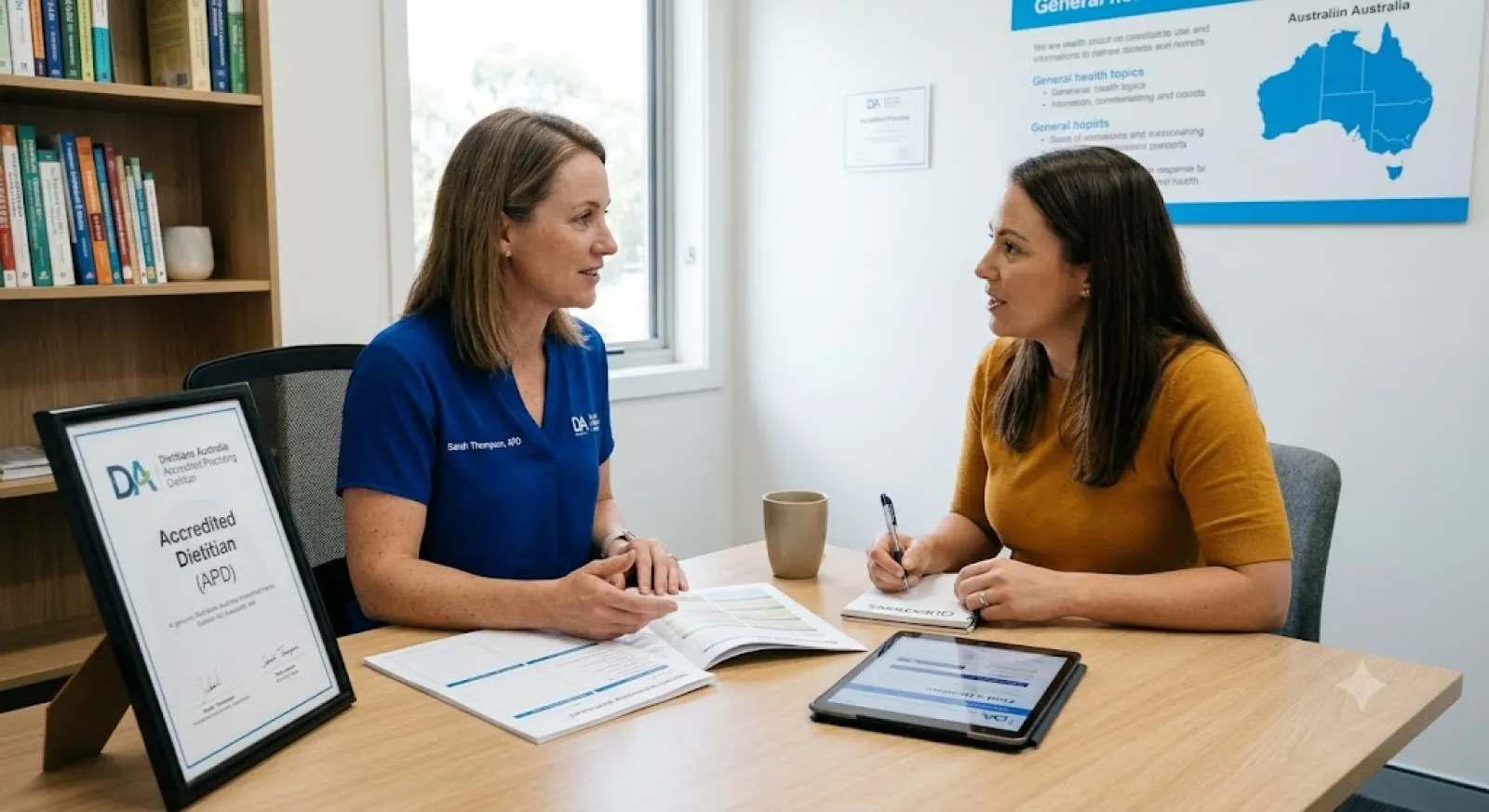
Navigating dietary advice in Australia can be overwhelming. With thousands of wellness influencers, self-titled nutrition gurus, and conflicting diet trends online, finding evidence-based medical nutrition therapy is essential for managing your health safely. Whether you are managing Type 2 diabetes, irritable bowel syndrome (IBS), food allergies, sports performance, or heart health, working with a qualified practitioner ensures your meal plans and lifestyle changes are backed by scientific research.
In Australia, the gold standard for clinical nutritional care is an Accredited Practising Dietitian (APD). Understanding how dietitians differ from general nutritionists, how to verify credentials, what fees to expect, and how to access Medicare rebates or NDIS funding will help you make informed decisions about your long-term wellness.
Dietitian vs Nutritionist: What Is the Difference in Australia?
One of the most common points of confusion for patients across Sydney, Melbourne, Brisbane, and regional Australia is the difference between a dietitian and a nutritionist. Under Australian law, the two titles carry vastly different regulatory standings and educational requirements.
Accredited Practising Dietitian (APD)
An Accredited Practising Dietitian in Australia is a university-qualified Allied Health Professional in Australia who has completed an accredited four-year Bachelor degree or a postgraduate Master’s degree in dietetics. APDs undergo rigorous supervised clinical hospital placements and must be registered with Dietitians Australia (the national peak professional body).
APDs are legally bound by a strict code of conduct, must undertake continuous professional development (CPD), and are the only nutrition professionals recognized by Medicare, the Department of Veterans' Affairs (DVA), and major private health funds for clinical care rebates.
Registered Nutritionist
While many nutritionists hold university degrees in nutrition science, the term "nutritionist" is not a protected title in Australia. Anyone—regardless of whether they completed a 3-year university degree or an unaccredited weekend online course—can call themselves a nutritionist. Nutritionists generally focus on population health, community education, or general wellness advice, but they are not qualified to provide clinical medical nutrition therapy for complex health conditions.
What Medical Conditions Does a Dietitian Treat?
Dietitians apply the science of human nutrition to manage medical conditions, prevent disease, and optimize physical performance.
Step-by-Step Guide: How to Find an Accredited Dietitian Near You
Finding a qualified practitioner tailored to your specific health concern is straightforward when using official professional channels.
1. Search the Official Dietitians Australia Register
The safest way to verify a practitioner's credentials is via the Dietitians Australia public register at dietitiansaustralia.org.au.
-
Use their "Find an APD" search tool.
-
Filter by geographic location (e.g., suburban Perth, Adelaide, or Canberra), appointment type (in-clinic or telehealth), and clinical area of specialty (such as oncology, paediatrics, or sports nutrition).
2. Consult Your Local General Practitioner
If you have a chronic health condition, your General Practitioner in Australia can recommend local private clinics or hospital-based dietitians. Your GP can also assess whether you qualify for government-subsidised referral pathways.
3. Sports Dietitians Australia (SDA) Directory
If your goals revolve around competitive athletics, endurance sports, body composition, or strength training, search the Sports Dietitians Australia register to find a qualified Sports Dietitian in Australia who holds specialized postgraduate accreditation in sports nutrition.
Medicare Rebates, NDIS, and Health Insurance Funding
Private dietetic fees can be partially or fully offset through several Australian government programs and private health policies.
1. Medicare Chronic Disease Management (CDM) Plan
If you have a chronic medical condition (such as diabetes, cardiovascular disease, or kidney disease) that has been present for at least six months, your GP can construct a Chronic Disease Management Plan.
-
This provides a rebate for up to 5 allied health consultations per calendar year.
-
The current Medicare rebate provides approximately $58 to $63 per session. You pay the difference between the dietitian’s fee and the Medicare rebate (the gap fee).
2. Medicare Eating Disorder Management Plan (EDP)
For patients diagnosed with an eligible eating disorder (such as Anorexia Nervosa, Bulimia Nervosa, or Binge Eating Disorder), a GP or psychiatrist can issue an EDP. This unlocks up to 20 Medicare-rebatable dietetic sessions within a 12-month period.
Typical Costs of Dietitian Consultations in Australia
Private dietitian fees vary based on clinic location, session length, and specialized testing requirements.
Fee Structure Table
| Appointment Type | Average Cost Range (AUD) | Out-of-Pocket Cost (With Medicare CDM Rebate) |
| Initial Consultation (45–60 mins) | $140 – $220 | ~$80 – $160 gap fee |
| Standard Review Consultation (30 mins) | $80 – $130 | ~$20 – $70 gap fee |
| Complex FODMAP / Allergy Setup (60 mins) | $160 – $240 | ~$100 – $180 gap fee |
| Body Composition (DEXA / InBody Scan + Review) | $120 – $200 | Varies by clinic setup |
10 Key Questions to Ask Your Dietitian During Your First Visit
To ensure your practitioner is a great fit for your health goals, ask these practical questions during your initial consultation:
-
"Are you an Accredited Practising Dietitian (APD) with Dietitians Australia?"
Confirms professional accreditation and eligibility for Medicare/private health rebates.
-
"Do you specialize in my specific health condition?"
Ensures the dietitian has deep clinical experience in your area (e.g., gut health, diabetes, or sports performance).
-
"Do you take a restrictive diet approach or a sustainable lifestyle approach?"
Helps align their clinical philosophy with your personal preferences and lifestyle.
-
"How many consultations do patients with my condition typically require?"
Provides a clear idea of your long-term commitment and total investment.
-
"Do you work alongside my GP or medical specialist?"
Confirms they will send clinical summary letters to your treating doctor to ensure coordinated care.
-
"Can you help me adapt recommendations to my cultural food preferences and family budget?"
Ensures meal plans respect your personal background, dietary restrictions, and household grocery costs.
-
"What diagnostic testing (e.g., breath tests, stool tests, blood work) do you recommend, if any?"
Helps you understand whether extra testing is medically necessary or optional.
-
"Do you provide customized meal ideas, recipes, or shopping lists?"
Clarifies what tangible resources you will receive after your consultation.
-
"How do you measure progress beyond weight changes on a scale?"
Focuses on holistic health metrics, such as energy levels, blood glucose control, gut symptom scores, or athletic performance.
-
"What is your cancellation and booking policy?"
Protects you from unexpected late cancellation charges.
Regional vs City Differences Across Australia
-
Capital Cities (Sydney, Melbourne, Brisbane): Inner-city clinics often feature specialized multi-disciplinary team practices, co-located with endocrinologists, gastroenterologists, or sports medicine doctors. Telehealth appointments are widely offered for home convenience.
-
Regional & Rural Communities: In regional centers across regional New South Wales, Victoria, or Queensland, dietitians often work out of community health centers or provide visiting services to multiple regional towns. Utilizing telehealth dietetic services is a practical way for regional residents to access niche specialists without travelling long distances.
Consumer Checklist Before Booking a Dietitian
-
[ ] Verify APD Registration: Check the practitioner on the official Dietitians Australia directory.
-
[ ] Consult Your GP First: Ask if you are eligible for a Medicare CDM or EDP referral plan to receive session rebates.
-
[ ] Check Private Health Extras: Call your insurer to confirm your annual allied health limit for dietitian visits (item numbers 500 & 600).
-
[ ] Keep a 3-Day Food & Symptom Diary: Record what you eat, drink, and any digestive or energy symptoms for 3 days leading up to your appointment.
-
[ ] Bring Recent Medical Records: Bring recent blood test results, cholesterol panels, HbA1c reports, or GP referral letters to your initial session.
Find Local Health and Dietetic Services on AusLocaly
Accessing professional nutrition advice, finding accredited dietitians, and managing your family's health is simplified with the right directory tools. AusLocaly connects Australian residents, families, and active individuals with local health categories, verified providers, and community resources across every state and territory.
Whether you are looking for local dietitians, general practice clinics, allied health specialists, or sports nutritionists in Sydney, Melbourne, Brisbane, Perth, or Adelaide, AusLocaly provides organized business listings and regional guides to support your search.
-
Explore Medical & Allied Health Categories: Connect with accredited dietitians and local clinics at AusLocaly Categories.
-
Browse Major Metropolitan Hubs: Find local healthcare providers and city guides via AusLocaly Sydney, AusLocaly Melbourne, and AusLocaly Brisbane.
To research local healthcare providers, compare allied health services, and access regional health information in your area, visit AusLocaly today.
Related Topics & Tags
Elliot's work centres on making business information clearer, more consistent and easier to navigate. He is particularly interested in service descriptions and category definitions. His editorial style removes unnecessary jargon while retaining useful detail. He contributes polished content for readers comparing local business options.