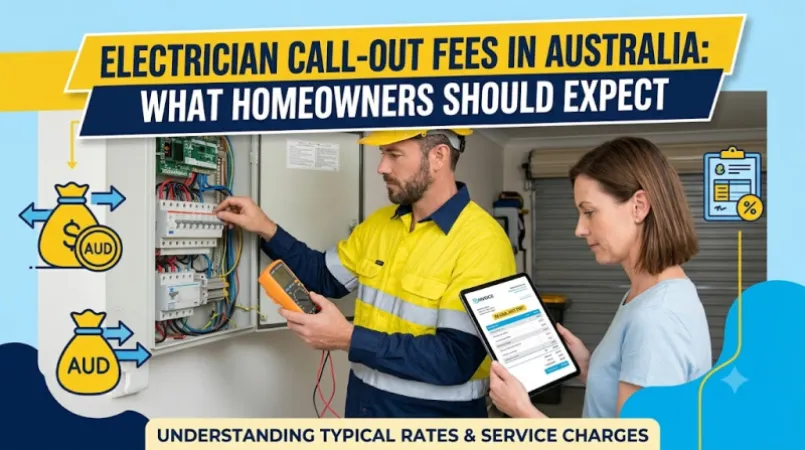
How to Find a Licensed Electrician in Australia Without Overpaying
Navigating trade quotes in Australia can be daunting. Discover standard hourly rates ($80–$130/hr), state licence verification steps, and practical tips to avoid hidden fees when hiring a licensed electrician .
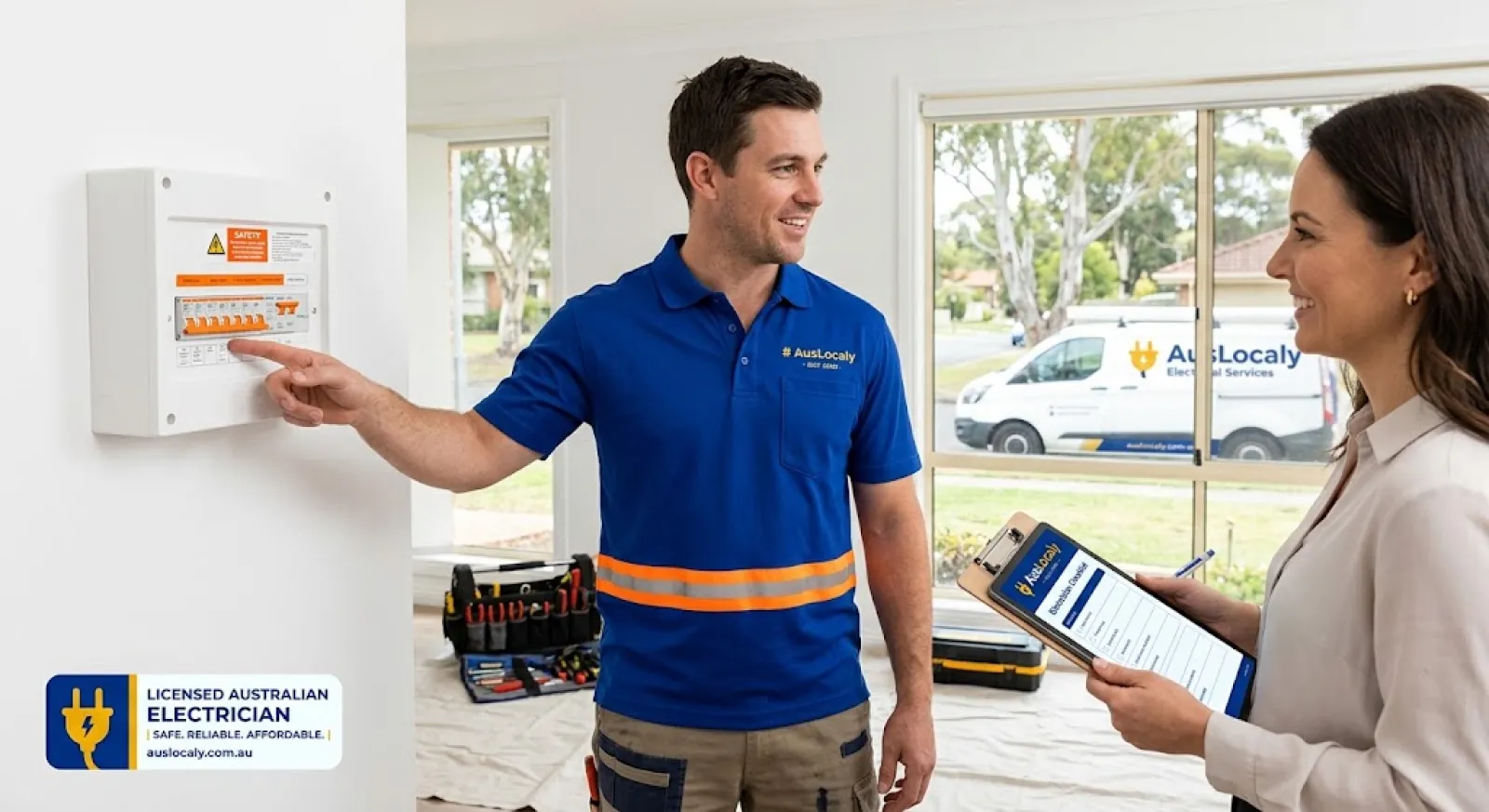
Finding a reliable, fully licensed electrician in Australia is one of the most critical maintenance tasks a homeowner, investor, or renter will face.Whether you are installing EV chargers, upgrading an outdated switchboard, or simply fixing faulty LED downlights, electrical work comes with strict statutory compliance requirements and significant cost variability.In 2026, typical trade labour rates across metro and regional Australia range from $80 to $130 per hour, excluding service call-out fees, materials, and emergency premiums.
The Australian trade landscape requires absolute regulatory compliance. DIY electrical work is strictly illegal across every state and territory under legislation such as the NSW Electricity Safety Act and Victoria’s Electricity Safety Act. Unlicensed electrical work carries severe penalties—fines can exceed $22,000 for individuals—and automatically voids home insurance policies if a fire or property damage occurs. Consequently, cutting costs by hiring unlicensed operators or unverified handy-workers poses extreme financial and legal risks.
However, paying for official compliance does not mean you have to overpay. Trade quotes vary significantly based on contract structures, travel surcharges, billing increments, and material markups. By understanding local licensing registers, pricing models, and scope definitions, property owners and occupiers can secure qualified, fully insured trade professionals while keeping project expenses transparent and manageable.
Understanding Electrical Work and Licensing Laws in Australia
In Australia, electrical work is strictly regulated to protect public safety. An "Electrical Contractor" holds a business licence allowing them to contract work out to the public, maintain public liability insurance, and issue legal certificates of compliance. A qualified "Electrician" holds a personal trade licence (or registration) allowing them to perform the work under a licensed contractor's supervision or business entity.
Before booking any trade service, property owners must understand four foundational trade mechanics:
-
Licence Verification: Every state and territory maintains an online public register where consumers can verify a contractor's licence status, restrictions, and business registration details.
-
Call-out Fees vs. Hourly Rates: Most trade businesses charge a service call-out fee ($80 to $150) covering initial travel and the first 30 minutes on-site, followed by hourly rates billed in 15-minute or 30-minute increments.
-
Certificates of Electrical Safety: Upon completion of prescribed or non-prescribed electrical installations, the contractor must legally issue an official certificate (e.g., CCEW in NSW, COES in Victoria). This document proves the installation meets AS/NZS 3000 standards and is vital for insurance claims.
-
Scope and Specifications: High quote variations usually stem from vague task descriptions. Providing clear scope details—such as wall materials, accessibility, ceiling space heights, and specific fitting models—prevents mid-job variation fees.
Australia-Wide Cost Comparison: Capital Cities vs. Regional Areas
Trade rates vary nationwide due to localized labor demand, cost-of-living adjustments, and trade availability.The table below outlines typical hourly rates, service fee expectations, and operational trade-offs across major Australian regions.
| Location | Typical Hourly Rate (AUD) | Average Service Call-out Fee | Key Advantage | Main Trade-Off |
| Sydney Metro (NSW) | $90 – $130 / hr | $100 – $160 | Dense contractor network; quick response times | Higher parking, toll, and transit surcharges |
| Regional NSW | $90 – $120 / hr | $90 – $140 | Consistent pricing across established local firms | Potential travel time charges for rural properties |
| Melbourne Metro (VIC) | $85 – $130 / hr | $95 – $150 | Competitive market for residential renovations | High demand during peak winter heating upgrades |
| Regional Victoria | $85 – $120 / hr | $90 – $130 | Lower base overheads among local contractors | Longer booking wait times during peak periods |
| Brisbane (QLD) | $75 – $110 / hr | $85 – $130 | Lower average hourly rates than southern metros | High summer air-conditioning demand surges |
| Perth (WA) | $90 – $105 / hr | $95 – $140 | Moderate urban rates across outer suburbs | Heavy competition for skilled labor from mining sectors |
| Adelaide (SA) | $80 – $100 / hr | $80 – $120 | Steady, transparent residential pricing | Smaller pool of specialized smart-home technicians |
| Hobart (TAS) | $75 – $95 / hr | $80 – $110 | Lower standard rates for basic maintenance | Limited availability for rapid emergency call-outs |
| Darwin (NT) | $80 – $110 / hr (Metro) | $110 – $180 | Specialized local expertise in tropical weather specs | Regional/remote travel costs up to 150/hr |
State and Territory Licensing Registers & Regulations
Navigating electrical regulations requires referencing the specific state or territory consumer protection and safety authority responsible for trade licensing.
New South Wales
-
Licensing Body: NSW Fair Trading.
-
Verification Tool: NSW Public Register.
-
Requirements: Contractors must hold an Electrical Contractor licence to quote and contract jobs directly. Work over $5,000 requires Home Building Compensation Fund (HBCF) insurance cover.
Victoria
-
Licensing Body: Energy Safe Victoria (ESV).
-
Verification Tool: ESV Online Public Register.
-
Requirements: Registered Electrical Contractors (RECs) must execute all contracting work and lodge a Certificate of Electrical Safety (COES) within 30 days of completing any electrical installation.
Queensland
-
Licensing Body: Electrical Safety Office (ESO) Queensland.
-
Verification Tool: WorkSafe QLD Licence Search.
-
Requirements: Contractors must display their Electrical Contractor Licence number on all advertising and invoices. Safety switches are legally required on all power point circuits in residential properties.
South Australia
-
Licensing Body: Consumer and Business Services (CBS).
-
Verification Tool: SA CBS Public Register.
-
Requirements: Contractors must maintain an active Electrical Contractor licence and provide clear itemized job records for all safety audit compliance.
Western Australia
-
Licensing Body: Building and Energy (Department of Mines, Industry Regulation and Safety).
-
Verification Tool: WA EnergySafety Register.
-
Requirements: Electrical contractors must hold an EC licence number. An official Notice of Completion must be submitted to the network operator (e.g., Western Power) for major electrical work.
Tasmania
-
Licensing Body: WorkSafe Tasmania / Consumer, Building and Occupational Services (CBOS).
-
Verification Tool: CBOS Licence Register.
-
Requirements: Electrical practitioners must hold an active licence endorsement to perform self-certified installations.
Northern Territory
-
Licensing Body: Electrical Workers and Contractors Licensing Board (NT WorkSafe).
-
Verification Tool: NT WorkSafe Licence Search.
-
Requirements: Strict compliance with tropical climate building standards and isolation requirements during monsoon seasons.
Australian Capital Territory
-
Licensing Body: Access Canberra.
-
Verification Tool: ACT Public Register of Licences.
-
Requirements: Mandatory compliance inspections apply to high-risk electrical work, with safety certificates lodged through the Access Canberra portal.
Hidden Costs, Price Drivers, and Risk Factors
When budgeting for electrical installations or repairs, total invoice costs frequently exceed basic hourly estimates due to secondary factors.
-
After-Hours and Emergency Surcharges: Standard hours generally run 7:00 AM to 4:00 PM weekdays. Emergency call-outs during nights, weekends, or public holidays often incur elevated call-out fees ($150–$250) and double time hourly rates.
-
Switchboard and Wiring Capacity Upgrades: Installing modern high-draw appliances (such as induction cooktops, ducted air conditioning, or 7kW/22kW EV chargers) frequently reveals outdated switchboards. Upgrading an old ceramic fuse box to a modern circuit breaker panel with residual current devices (RCDs) adds $500 to $1,800 to the job total.
-
Property Accessibility and Infrastructure: Double-brick walls, flat metal roofs, suspended concrete slabs, or sub-floor spaces with minimal clearance slow down cable routing, increasing labour time.
-
Disposal and Material Markups: Standard quotes may exclude supply costs for premium switches, heavy-duty cabling, or core-drilling equipment. Always verify whether materials are quoted at trade cost or retail retail markup.
-
Travel and Parking Tolls: In inner-city Sydney, Melbourne, and Brisbane, trade vehicles face substantial parking fees and toll charges, which are routinely passed on to clients if not clarified upfront.
Practical Household Scenarios and Cost Examples
To demonstrate how these variables affect household budgets, consider these realistic project estimates based on typical 2026 trade rates:
Scenario A: The Apartment Renter or Student (Minor Repair)
-
Job: Replacing two faulty light switches and fixing a tripping power circuit in a Brisbane unit.
-
Cost Estimate:
-
Call-out fee (includes 1st 30 mins): $110
-
Additional 30 mins labour: $45
-
Materials (standard switch plates): $25
-
Total Estimated Cost: $180 AUD
-
Scenario B: The First-Home Buyer (Downlight & Safety Upgrade)
-
Job: Replacing 15 halogen ceiling lights with LED downlights and installing 2 extra double power points in a suburban Melbourne house.
-
Cost Estimate:
-
LED downlights supply & install (15 x $60–$90): $1,050
-
Power points installation: $320
-
Electrical safety certificate: $55
-
Total Estimated Cost: $1,425 AUD
-
Scenario C: The Suburban Family or EV Owner (Major Upgrade)
-
Job: Upgrading an outdated single-phase switchboard to handle a newly installed 7.4kW wall-mounted EV charger in suburban Sydney.
-
Cost Estimate:
-
Switchboard upgrade (RCBO protection): $1,200
-
Dedicated EV charger circuit installation: $750
-
CCEW Certificate submission & compliance testing: $80
-
Total Estimated Cost: $2,030 AUD
-
Consumer Checklist: Questions to Ask Before Hiring
Before engaging a trade contractor, go through these practical steps to confirm licensing and control expenses:
-
Is the contractor licensed? Ask for their Electrical Contractor licence number and cross-check it against your state’s online register.
-
Are they insured? Ensure they maintain active Public Liability Insurance.
-
How is the job billed?Ask whether the quote is a fixed flat rate or an hourly rate. If hourly, ask for their minimum charge duration and 15/30-minute billing increments.
-
What is included in the call-out fee? Confirm if the service call fee covers the initial diagnostic period or merely travel time.
-
Will a safety certificate be issued? Verify that a Certificate of Electrical Safety will be provided upon job completion.
-
Are materials included?Clarify whether you can supply your own approved fittings (e.g., light fixtures) or if the electrician must supply them.
-
Are there potential extra costs? Ask if your property’s existing switchboard capacity is sufficient for the requested installation.
Finding Quality Trade Services Within Budget
Securing a licensed electrician without overpaying comes down to research, clear scope definition, and comparing multiple quotes. Avoiding illegal DIY fixes protects your safety, property value, and insurance coverage. By checking state licence registers, understanding local hourly benchmarks ($80–$130/hr), and requesting itemized written quotes upfront, Australian residents and investors can ensure their electrical projects are completed safely, legally, and cost-effectively.
Find Local Services and Australian Information on AusLocaly
When planning home maintenance, property updates, or routine service repairs, having access to accurate local details simplifies the entire process. To discover verified service providers, community resources, and practical guides tailored to your area, explore AusLocaly. Whether you need to find a licensed electrician in Australia, locate local businesses, or access city-specific information, AusLocaly offers a streamlined platform to help you connect with essential services across your suburb or region.