Do You Need Council Approval to Remove a Tree in Australia?
Learn if you need council approval to remove a tree on private property in Australia. Explore state rules, exemptions, arborist fees, and permit processes.
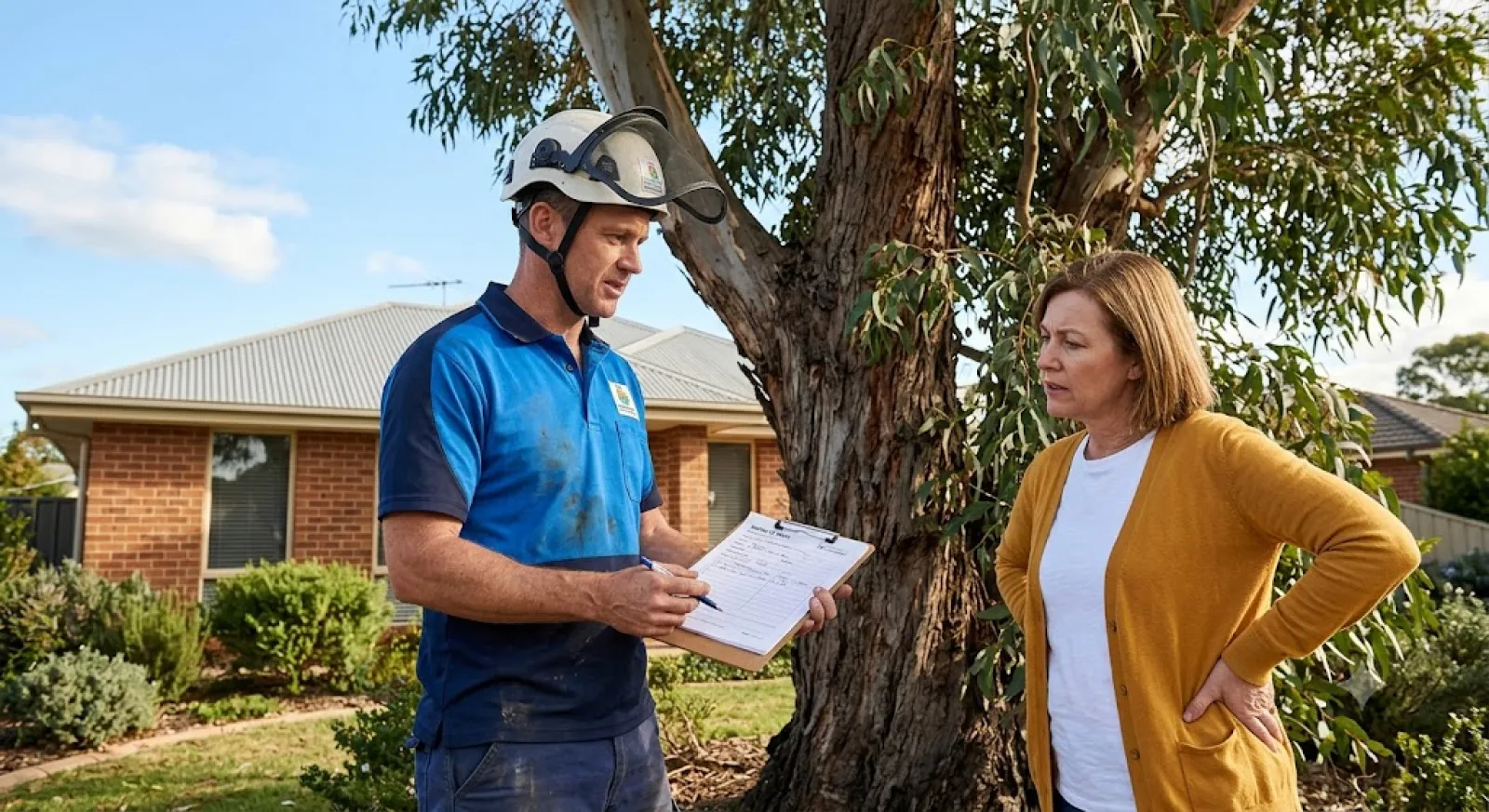
Removing a tree from your private property in Australia might feel like a straightforward maintenance task, but legally, it can be a minefield. In most urban, suburban, and peri-urban areas across Australia, cutting down, lopping, or heavily pruning a tree without checking local regulations can lead to severe financial penalties and legal enforcement action.
Whether you need council approval depends on your specific Local Government Area (LGA), tree species, trunk size, overall height, heritage overlay, environmental protections, and proximity to buildings or power lines. While some trees can be removed without permission under strict exemptions, many require a formal permit and an assessment by a qualified arborist.
This practical guide breaks down everything Australian property owners, buyers, landlords, and property managers need to know about tree removal regulations, state-by-state rules, council permit processes, typical costs, and exemption criteria.
Do You Need Permission?
In the vast majority of Australian suburbs and townships, yes, you often need local council approval to remove or significantly prune a tree on private property, unless the tree meets specific exemption criteria set out by your local council or state legislation.
Local councils regulate trees through tools such as:
-
Tree Preservation Orders (TPOs)
-
Development Control Plans (DCPs)
-
Vegetation Protection Overlays (VPOs)
-
Environmental Protection Zones
-
Significant or Heritage Tree Registers
Removing a protected tree without an approved permit can result in court action and on-the-spot fines ranging from $1,000 to over $100,000 for individuals, with even higher penalties for corporations under relevant planning and environmental laws.
Why Australian Local Councils Protect Trees
Australian municipalities actively manage the urban forest canopy to maintain biodiversity, cool urban environments, manage stormwater runoff, protect native fauna habitats, and preserve neighbourhood aesthetics.
Because tree preservation rules are created and administered at the local government level, rules differ significantly between neighbouring councils—even within the same city. For instance, what is allowed in one suburb may be illegal in the adjacent suburb under a different council jurisdiction.
State and Territory Frameworks: How Tree Rules Vary Across Australia
While local councils enforce tree management, their authority is derived from state and territory planning legislation. Understanding your state’s overarching planning framework helps clarify why rules exist and when exemptions apply.
1. New South Wales (NSW)
In NSW, tree removal is regulated under local council Development Control Plans (DCPs) and the State Environmental Planning Policy (Vegetation in Non-Rural Areas) 2017.
-
10/50 Vegetation Clearing Scheme: Properties located in designated 10/50 bushfire entitlement areas may clear vegetation within 10 metres of an external house wall and underlying search vegetation within 50 metres without council approval, subject to specific mapping rules.
-
Proximity Rules: Many NSW councils allow tree removal without a permit if the trunk is within 3 metres of an approved residential structure, though this distance varies by LGA.
-
Arborist Requirements: A Level 5 Arborist report is frequently required when applying to remove mature native trees in metropolitan areas such as Sydney.
2. Victoria (VIC)
Victorian councils manage urban trees through municipal planning schemes using overlays:
-
Vegetation Protection Overlay (VPO): Protects areas of significant vegetation.
-
Environmental Significance Overlay (ESO): Limits vegetation clearing in sensitive ecosystems.
-
Heritage Overlay (HO): Protects historic or culturally significant trees.
-
10/30 & 10/50 Bushfire Rules: Under Clause 52.12 of Victorian planning schemes, homeowners in designated bushfire prone areas can clear trees within 10 metres of a home constructed before specific dates without a planning permit.
3. Queensland (QLD)
In Queensland, local councils protect trees through local vegetation laws and planning schemes, particularly around coastal regions and waterways.
-
Protected Vegetation Maps: Councils like Brisbane City Council maintain interactive mapping tools showing whether a property contains protected vegetation.
-
Nuisance and Encroachment: The Neighbourhood Disputes (Dividing Fences and Trees) Act 2011 allows neighbours to address branches overhanging boundaries or trees causing structural damage.
4. Western Australia (WA)
In Western Australia, tree preservation is controlled through local planning schemes and state clearing regulations administered by the Department of Water and Environmental Regulation (DWER).
-
Urban Canopy Targets: Many metropolitan Perth councils have introduced strict urban canopy protection policies requiring permits for removing trees above specific height or canopy diameter thresholds.
-
Native Vegetation Permits: Clearing native bushland on private rural or semi-rural land generally requires a state-level clearing permit unless a specific exemption applies.
5. South Australia (SA)
South Australia operates under a distinct regulatory system defined by the Planning, Development and Infrastructure Act 2016:
-
Regulated Trees: A tree with a trunk circumference of 2 metres or more (measured 1 metre above ground level) is classified as a regulated tree.
-
Significant Trees: A tree with a trunk circumference of 3 metres or more is classified as a significant tree.
-
Approval Mandate: Removing or damaging a regulated or significant tree requires formal development approval, requiring extensive justification and, typically, an arborist report.
6. Australian Capital Territory (ACT)
In the ACT, tree protection is governed by the Urban Forest Act 2023 (which replaced the Tree Protection Act 2005):
-
Regulated Trees: On leased land, protected trees include those 8 metres or taller, or with a canopy width of 8 metres or more, or a trunk circumference of 1 metre or more at 1 metre above ground.
-
Tree Protection Zone (TPZ): Any work within the canopy dripline or root zone of a protected tree requires an approval or tree management plan.
Common Exemptions: When Council Approval Is NOT Needed
While every council maintains its own exemption list, several common scenarios across Australia generally do not require a formal permit:
1. Dead or Imminently Dangerous Trees
If a tree is dead, dying, or poses an immediate risk to life or property (such as a split trunk after a severe storm), most councils allow immediate removal or emergency pruning.
-
Crucial Requirement: You must gather clear evidence prior to removal. This includes high-resolution photos from multiple angles, written statements, and, in many LGAs, an emergency assessment from a qualified Level 3 or Level 5 arborist.
2. Declared Environmental Weed Species
Trees listed as invasive species or environmental weeds under local council policies or state biosecurity legislation are usually exempt from protection. Common examples include:
-
Camphor Laurel (Cinnamomum camphora)
-
Privet (Ligustrum spp.)
-
Coral Tree (Erythrina x sykesii)
-
African Olive (Olea europaea subsp. cuspidata)
-
Box Elder (Acer negundo)
Note: Always verify your council's current declared weed list, as a species considered an invasive weed in one state or LGA may be protected in another.
3. Trees Below Specific Size Thresholds
Most council Tree Preservation Orders set minimum dimension thresholds. Trees below these dimensions can typically be removed without permission. For example:
-
Height under 3 metres to 4 metres
-
Canopy spread under 3 metres
-
Trunk circumference under 0.5 metres measured at 1 metre above ground level
4. Proximity to Buildings and Structures
Many councils permit the removal of non-protected trees located within a specific distance (e.g., 3 metres) of an approved residential dwelling, garage, or swimming pool. The measurement is usually taken from the base of the trunk to the external wall of the structure.
Step-by-Step Process to Obtain Council Approval
If your tree is protected and does not meet any exemption criteria, you must follow the formal application process:
Step 1: Identify Your Council and Zoning
Visit your local council's website and check their online mapping tool or planning portal to see if your property is covered by a Tree Preservation Order, Heritage Overlay, or Vegetation Protection Overlay.
Step 2: Engage an AQF Level 5 Arborist
If the tree is near structures, appears diseased, or is a mature native, hire a qualified consulting arborist (AQF Level 5) to inspect the tree and write a comprehensive arborist report.
Step 3: Submit the Application
Fill out the council's Tree Removal / Pruning Permit Application form. Include:
-
Property boundary diagram showing tree location
-
Clear photos of the tree and any visible structural defects or damage
-
Formal Arborist Assessment Report (if required)
-
Application fee payment
Step 4: Council Assessment and Site Visit
A council vegetation officer or municipal arborist will review the paperwork and may conduct an on-site inspection. Assessment periods typically take between 2 and 6 weeks.
Step 5: Decision and Conditions
Council will issue a written Notice of Determination:
-
Approved: Permission granted, often subject to conditions (e.g., planting replacement native species).
-
Approved for Pruning Only: Removal denied, but crown thinning or deadwooding allowed.
-
Refused: Permission denied. You may appeal the decision or submit revised documentation.
Typical Costs Involved in Australian Tree Removal
When budgeting for tree removal in Australia, you must account for both administrative permit costs and physical tree work fees.
1. Administrative & Professional Fees
| Expense Item | Average AUD Cost Range | Description / Purpose |
|
Council Application Fee |
$50 – $350 |
Non-refundable fee paid to local council to process permit |
|
AQF Level 5 Arborist Report |
$400 – $1,200 |
Formal diagnostic report required for protected or disputed trees |
|
Replacement Tree Planting |
$50 – $200 per tree |
Often mandated by council permit conditions post-removal |
2. Operational Tree Removal Fees
Physical tree removal pricing depends on tree height, canopy spread, trunk diameter, location access, proximity to powerlines or structures, and hazard level.
| Tree Size Category | Approximate Height | Estimated AUD Price Range | Key Factors Impacting Cost |
|
Small Tree |
Up to 6 metres |
$300 – $900 |
Easy ground access, simple drop |
|
Medium Tree |
6 to 12 metres |
$900 – $2,200 |
Requires climbing, rigging, or chipper |
|
Large Tree |
12 to 20 metres |
$2,200 – $5,000 |
Complex rigging, crane hire, traffic control |
|
Extra Large / Complex |
20+ metres or hazardous |
$5,000 – $12,000+ |
Powerline clearance, tight access, crane required |
Finding licensed arborists in Australia helps ensure you receive accurate quotes reflecting realistic site conditions and safety requirements.
Hidden Costs, Risks, and Common Pitfalls
Ignoring tree protection laws or hiring unverified contractors can lead to significant unexpected expenses and legal trouble.
1. Severe Legal Fines
Councils actively investigate unauthorized tree removals using high-resolution aerial imagery and neighbor reports. Fines for illegal tree removal can reach tens of thousands of dollars under municipal local laws, and up to hundreds of thousands in state land and environment courts.
2. Property Damage and Uninsured Contractors
Tree removal is high-risk work. If an uninsured contractor damages your roof, fence, or neighboring property, or suffers an injury on your land, you could be held financially liable. Always verify that your contractor holds valid Public Liability Insurance (minimum $10 million to $20 million) and Workers' Compensation coverage.
3. Tree Stumps and Root Systems
Quotes often cover cutting the tree down to ground level but exclude stump grinding or root removal. Leaving a stump can lead to pest infestations (such as termites or fungal decay) or root suckering. Always clarify whether stump grinding is included in your written quote.
4. Overhanging Neighbor Boundaries
Under Australian common law and neighborhood dispute legislation, you generally have the right to trim branches overhanging your boundary line back to the fence line. However:
-
You cannot cross the boundary line to enter your neighbor's property without permission.
-
You must not cause severe damage, imbalance, or death to the tree.
-
You must still comply with local council Tree Preservation Orders.
How to Choose the Right Local Arborist in Australia
To ensure compliance with local laws and safe execution, follow these practical criteria when hiring tree specialists:
-
Verify Qualifications:
-
AQF Level 3 Arborist: Minimum qualification required for tree pruning, climbing, and operational removal work.
-
AQF Level 5 Arborist: Minimum qualification required for formal hazard assessments, tree health reports, and council development applications.
-
-
Check Insurance Coverage:
-
Request a Certificate of Currency for Public Liability Insurance (minimum $10M–$20M).
-
Confirm Workers' Compensation insurance for all team members on site.
-
-
Request Detailed Written Quotes:
-
Ensure quotes explicitly list scope of work, green waste disposal, stump grinding, traffic control, and GST.
-
-
Confirm Permit Status:
-
Reputable arborists will ask to see your approved council permit before commencing work on protected trees.
-
Whether you live in major metropolitan hubs like Sydney, Melbourne, or Brisbane, engaging qualified local professionals protects both your property and your wallet.
Practical Consumer Checklist for Australian Tree Removal
Use this practical checklist before removing or pruning any tree on your property:
-
Identify the Tree Species: Determine whether it is native, exotic, or an exempt weed species.
-
Measure the Dimensions: Record tree height, canopy width, and trunk circumference at 1 metre above ground.
-
Check Local Council Overlays: Visit your local council's online mapping tool or call the planning department to confirm TPO, VPO, or Heritage status.
-
Review Exemption Criteria: Check if the tree qualifies under dead/dying rules, proximity limits, or bushfire clearing rules (e.g. 10/50 in NSW or 10/30 in VIC).
-
Engage an Arborist: Hire an AQF Level 5 Arborist if a formal assessment report is required by council.
-
Submit Permit Application: Lodge the application with required diagrams, photos, and fees, then wait for written approval.
-
Obtain Multiple Written Quotes: Get comprehensive quotes covering removal, waste disposal, and stump grinding.
-
Verify Credentials: Check Public Liability Insurance ($10M+) and AQF Level 3/5 qualifications.
-
Notify Neighbors: Inform adjacent neighbors as a courtesy, especially if access near boundary lines is required.
-
Retain Documentation: Keep council permit approvals and arborist reports on file for future property sales or council audits.
Find Local Tree Services and Australian Information on AusLocaly
Navigating local council regulations, finding qualified arborists, and maintaining property safety requires reliable local information. Whether you need tree trimming, complete removal, stump grinding, or an expert arborist report, sourcing verified local professionals makes the process straightforward.
You can use AusLocaly to:
-
Discover qualified service providers across hundreds of Australian suburbs.
-
Explore relevant service options in the AusLocaly Categories Directory.
-
Access localized information tailored to major metropolitan areas, including Sydney, Melbourne, and Brisbane.
-
Connect with trusted local businesses that understand regional council requirements and Australian safety standards.
Explore AusLocaly today to research local service specialists and find the right professionals for your property needs anywhere in Australia.