
Melbourne Engineering and DevOps Summit 2026
Advancing AI Driven Engineering and Modern DevOps
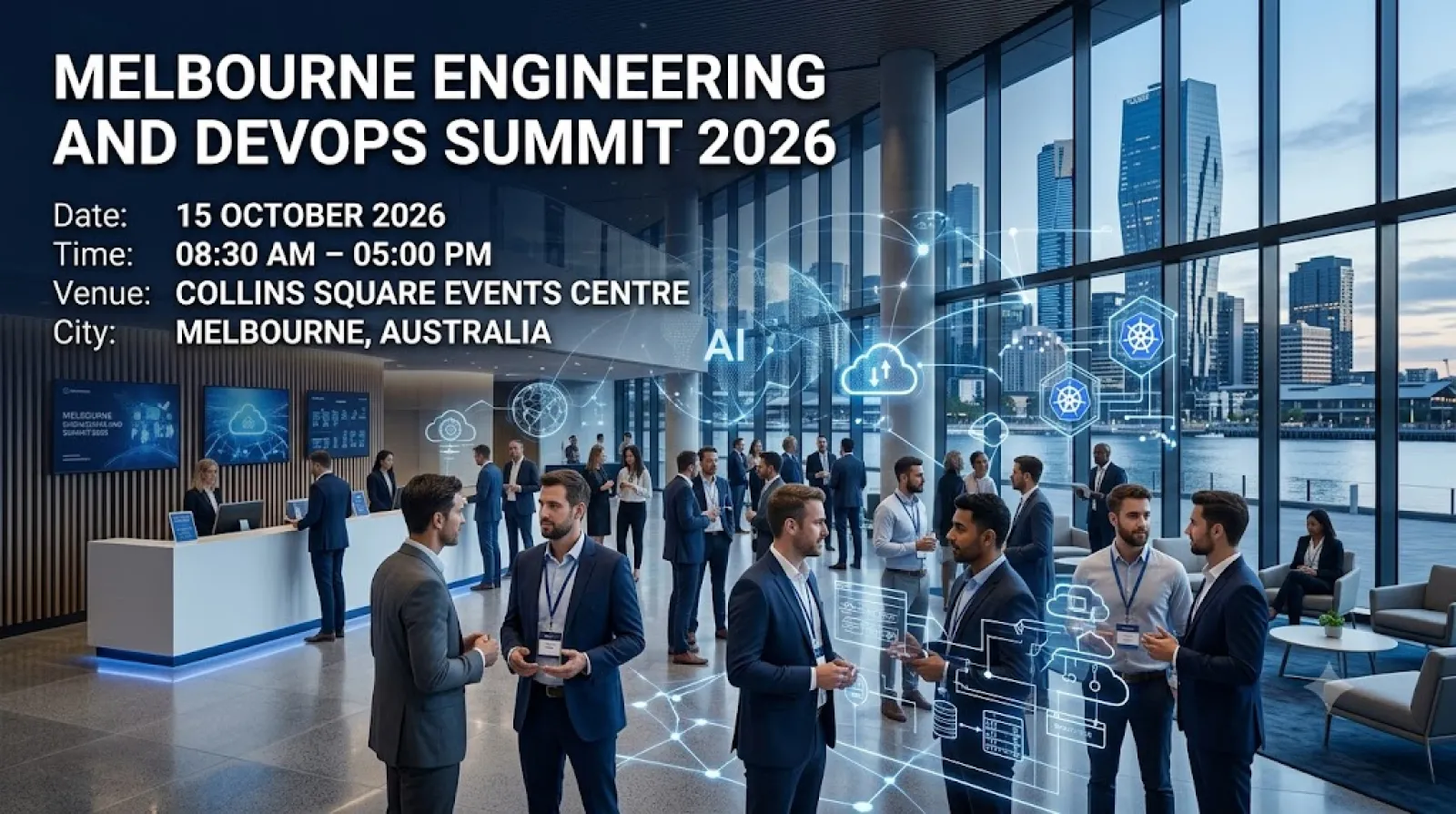
About This Event
The Melbourne Engineering and DevOps Summit 2026 is a professional technology conference bringing together software engineers, engineering managers, platform specialists and technology leaders in Melbourne, Australia. Organised by Clutch Events, the summit explores how modern engineering practices, artificial intelligence and cloud-native technologies are changing the way organisations build, deploy and operate software.
Scheduled for 15 October 2026 at Collins Square Events Centre in Docklands, the event offers an opportunity for technology professionals to exchange knowledge, learn from practical industry experiences and discuss solutions to complex engineering challenges.
The summit is particularly relevant to organisations seeking to accelerate software delivery, improve system reliability and create engineering environments that can adapt to changing business requirements.
AI Driven Software EngineeringArtificial intelligence is transforming software development, from code generation and testing to developer productivity and engineering team structures. However, adopting AI tools effectively requires more than introducing new software. Organisations must also consider quality assurance, accountability, security and the impact on existing workflows.
The summit explores how engineering teams can integrate AI into their development processes while maintaining reliable delivery standards. Discussions around AI accelerated engineering can help participants consider how automation may reduce repetitive work, improve development efficiency and support better use of engineering resources.
Attendees can gain perspectives on evaluating AI tools, establishing suitable review processes and identifying areas where human expertise remains essential to building dependable software.
Kubernetes and Cloud Native TechnologiesCloud-native architecture has become an important foundation for organisations developing scalable digital products. Kubernetes, containerisation and modern deployment platforms enable teams to manage application workloads across complex infrastructure environments.
The event provides a setting for examining the practical challenges of operating cloud-native applications, including deployment consistency, infrastructure management, scalability and operational complexity.
Participants can explore approaches to managing Kubernetes environments, improving platform reliability and creating repeatable deployment processes. These discussions are relevant to teams modernising application infrastructure or seeking greater flexibility as business demands evolve.
Platform Engineering and Developer ExperiencePlatform engineering focuses on providing development teams with reliable, reusable tools and services that simplify the software delivery process. Well-designed internal platforms can reduce unnecessary complexity, encourage consistent practices and help developers concentrate on delivering business value.
At the summit, platform engineering is a key area of interest for professionals looking to improve developer experience and streamline engineering workflows.
Relevant discussions include treating internal platforms as products, developing self-service capabilities, standardising development environments and balancing flexibility with governance. Participants can consider how platform teams can support engineering productivity without creating additional operational burdens.
Cloud Cost OptimisationAs cloud environments grow, technology teams must manage infrastructure expenditure while maintaining performance, scalability and availability. Uncontrolled resource consumption, inefficient workloads and limited cost visibility can make cloud spending difficult to predict.
The summit addresses cloud cost optimisation as an important consideration for modern engineering organisations. Attendees can explore ways to improve resource utilisation, evaluate infrastructure choices and connect engineering decisions with financial outcomes.
Effective cost management requires collaboration between engineering, finance and technology leadership. By sharing practical experiences, participants can develop a clearer understanding of how cost efficiency can support sustainable digital growth.
Legacy System ModernisationMany organisations continue to depend on legacy applications that support essential business operations. Modernising these systems can be challenging because of technical debt, integration requirements, limited documentation and the risks associated with changing established infrastructure.
The conference provides an opportunity to examine approaches to application modernisation and the gradual adoption of more flexible architectures.
Topics may include improving existing systems, breaking down tightly coupled applications, adopting microservices where appropriate and creating migration strategies that minimise disruption. The objective is to help engineering teams assess modernisation options in the context of business needs rather than pursuing architectural change without a clear purpose.
Reliability, Observability and Engineering CultureReliable software depends on effective monitoring, clear operational responsibilities and a culture that learns from incidents. Observability helps teams understand system behaviour, identify performance issues and investigate problems across distributed applications.
Engineering leaders must also establish practices that encourage collaboration, continuous improvement and accountability. The summit provides a relevant environment for discussing the relationship between technical reliability, engineering processes and organisational culture.
Professionals can consider how monitoring, incident response, testing and communication contribute to more resilient software services.
Networking and Knowledge SharingBeyond technical sessions, the Melbourne Engineering and DevOps Summit offers opportunities for professionals to connect with peers facing similar engineering challenges.
Networking and collaborative discussions can help attendees exchange ideas about implementation strategies, compare experiences and build relationships across the technology community. These connections may support future collaboration and provide fresh perspectives on common problems.
The event is suitable for professionals interested in practical insights rather than technology discussions alone, particularly those responsible for translating engineering improvements into measurable business outcomes.
Who Should AttendThe summit is relevant to software engineers, engineering managers, heads of engineering, DevOps professionals, site reliability engineers, cloud engineers, platform engineering teams and technology executives.
It may also benefit enterprise architects, infrastructure specialists, technical product leaders and professionals involved in AI adoption or application modernisation.
Attendees should review the official registration requirements and eligibility conditions before booking. The organiser's website should be consulted for the latest agenda, speaker information and participation details.
Venue and Event InformationThe event is scheduled to take place at Collins Square Events Centre, Level 5, Tower 2, 727 Collins Street, Docklands, Melbourne, Victoria 3008, Australia.
The central Docklands location provides a business-oriented setting for a professional technology conference. Visitors should confirm their travel arrangements, check the final programme and consult the organiser for any schedule changes before attending.
The Melbourne Engineering and DevOps Summit 2026 brings attention to the engineering practices shaping modern software delivery. With its focus on AI-assisted development, Kubernetes, platform engineering, cloud cost optimisation and legacy modernisation, the event provides a valuable setting for exploring current challenges and emerging opportunities.
For engineering professionals and technology leaders, the summit offers an opportunity to learn from industry experience, strengthen professional connections and discover approaches to building more efficient, scalable and reliable software systems.
The article is original promotional copy based on the organiser's event description. Specific themes are drawn from the published event page; the article does not imply that every section represents a separate scheduled session.
Event Photos & Gallery
Venue & Location
Clutch Events
Clutch Events is a business conference organiser focused on producing specialised industry events that bring together technology professionals, engineering leaders and decision makers. Its conferences are designed to encourage practical knowledge sharing, professional collaboration and discussions around emerging technologies and business challenges. Through its engineering and technology events, Clutch Events creates opportunities for participants to learn from experienced practitioners, explore real-world case studies and exchange perspectives on software development, platform engineering, cloud infrastructure and modern engineering practices. The Melbourne Engineering and DevOps Summit brings together software engineers, engineering managers, technology executives and platform specialists to examine how organisations can build, deploy and operate software more effectively. The programme focuses on practical engineering challenges, AI adoption, Kubernetes, platform engineering, cloud cost optimisation and the modernisation of legacy systems.