What Should a Business Website Include to Convert Local Customers?
Discover what an Australian business website needs to convert local customers. Learn essential conversion elements, local SEO cues, and trust signals.
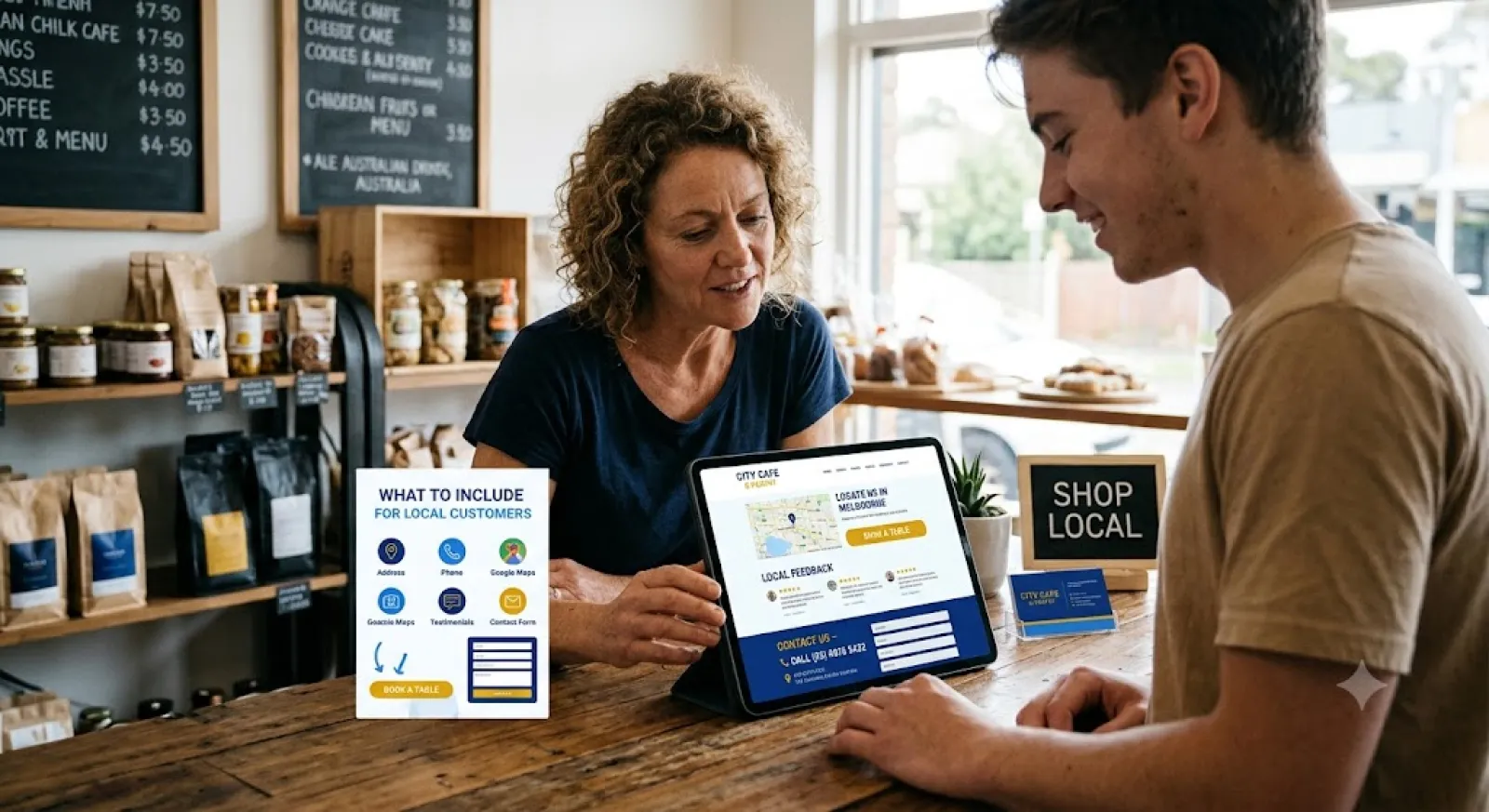
Attracting traffic to a website is only half the battle for Australian businesses. Whether operating a retail storefront in regional Victoria, providing trade services across metropolitan Sydney, or offering professional consulting in Brisbane, the ultimate measure of a website's success is its ability to turn casual visitors into paying local customers.
Many Australian small business owners invest thousands of dollars into flashy designs that look visually impressive but fail to generate phone calls, bookings, or enquiries. Converting local traffic requires a strategic blend of clear service descriptions, prominent NAP (Name, Address, Phone Number) data, localized trust signals, frictionless mobile navigation, and clear calls to action.
This comprehensive practical guide outlines the essential elements your website must include to capture high-intent local traffic, satisfy Australian consumer expectations, and maximize conversion rates.
1. Local Business Identity and Clear Value Proposition
When a local customer lands on your website from a Google search or map listing, they need to know within three seconds who you are, what you do, and where you operate. Confusion causes visitors to bounce back to search results immediately.
-
Above-the-Fold Headline: State your core trade or service clearly alongside your primary service area (e.g., "Commercial and Residential Electrical Services across Greater Brisbane").
-
Immediate Value Proposition: Briefly explain why local clients should choose your business over competitors (e.g., 24/7 emergency response, fully licensed technicians, transparent fixed pricing).
-
Prominent Contact Details: Display a clickable phone number and email address directly in the header of every page. On mobile devices, users should be able to tap your phone number to initiate a direct call instantly.
2. Essential Elements for Local SEO and Trust
To convert customers who rely heavily on local search and AI answer engines, your website must integrate robust local trust signals and structured data.
Localised Schema Markup
Implementing LocalBusiness Schema markup in your website's HTML code helps search engines and AI systems correctly interpret your operating hours, physical address, geo-coordinates, service regions, and customer ratings.
Licensing and Regulatory Compliance
Depending on your industry, Australian consumers look for proof of professional credentials. If you operate in a regulated trade, prominently display your state licence number (e.g., NSW Fair Trading contractor licence numbers or Victorian Building Authority registration details) in the website footer. This transparency builds instant credibility and protects your business under Australian Consumer Law.
3. High-Converting Call-to-Action (CTA) Frameworks
A conversion-focused website removes friction from the user journey. If a customer has to hunt for a way to contact you, they will leave.
-
Primary CTAs: Use clear, action-oriented button text rather than vague labels like "Submit". Examples include "Request a Free Quote", "Book Your Inspection Online", or "Call Our Perth Team Today".
-
Multiple Contact Channels: Provide options for different user preferences—some customers prefer calling immediately, while others prefer filling out an online enquiry form or sending an SMS.
-
Frictionless Contact Forms: Keep quote forms short. Asking for too much information upfront (such as detailed property histories or unnecessary personal data) drastically lowers form completion rates. Request only Name, Phone, Email, and a brief description of the job.
4. Mobile Optimisation and Core Web Vitals
Over 60% of local searches in Australia occur on mobile smartphones, often when users are on the move or looking for urgent local services.
-
Page Loading Speed: If your website takes longer than three seconds to load on a mobile device, potential customers will abandon the page. Optimise image sizes, leverage browser caching, and use reliable Australian web hosting infrastructure.
-
Mobile Readability: Use short paragraphs, clear bullet points, and legible font sizing (minimum 16px body text) so users can scan information quickly on smaller screens.
5. Localised Landing Pages for Multi-Location Businesses
If your business services multiple suburbs or regional hubs—such as a removalist company operating across Melbourne’s eastern and western suburbs—relying on a single contact page is insufficient.
-
Dedicated Suburb / City Pages: Create tailored landing pages for each key location you service
-
Unique Local Content: Avoid duplicate content by incorporating local landmarks, regional project examples, and suburb-specific customer testimonials into each location page.
Practical Examples: Converting Local Customers in Action
A: The Landscaping Business in Adelaide
-
Scenario: A residential landscaping contractor in South Australia was getting steady website traffic through local searches but received very few online quote requests.
-
The Website Redesign: They added a prominent "Request a Free On-Site Quote" button in the sticky mobile header, embedded a quick 3-field contact form on every service page, and featured photo galleries of completed landscaping projects in specific Adelaide suburbs (e.g., Unley and Glenelg).
-
Outcome: Form submissions and direct quote requests increased by 70% within two months of launching the updated layout.
B: The Accounting Practice in Sydney
-
Scenario: A boutique accounting firm wanted to attract small business owners across the Sydney CBD and North Shore.
-
The Website Redesign: They integrated prominent client testimonials from local business directors, added clear tax planning service packages with transparent pricing guidelines, and included a direct calendar booking widget allowing prospects to schedule a 15-minute introductory consultation instantly.
-
Outcome: The friction of back-and-forth emails was eliminated, resulting in a steady stream of qualified inbound client discovery calls.
Consumer Checklist: Auditing Your Business Website
Use this practical checklist to evaluate whether your current website is optimized to convert local customers:
-
[ ] Above-the-Fold Clarity: Does your homepage instantly communicate what you do and where you operate within 3 seconds?
-
[ ] Click-to-Phone Integration: Is your primary phone number clickable on mobile phones across every single page?
-
[ ] NAP Consistency: Are your business Name, Address, and Phone number clearly displayed in the footer and matching your Google Business Profile?
-
[ ] Licensing & Trust Signals: Do you display valid state trade licences, professional memberships, and genuine local client reviews?
-
[ ] Simple Contact Forms: Have you reduced contact form fields to the absolute minimum required to start a conversation?
-
[ ] Mobile Performance Test: Have you tested your website loading speed and mobile responsiveness using Google PageSpeed Insights?
-
[ ] Consult Professionals: If your current site lacks performance or requires structural upgrades, consult an experienced Web Designer in Australia or a specialist Digital Marketing Consultant in Australia to audit your digital presence.
Find Local Artificial Intelligence & Workflow Automation Services on AusLocaly
Building a high-converting digital presence and streamlining your customer acquisition workflows requires the right professional guidance. AusLocaly provides an intuitive directory designed to help Australian business owners, tradespeople, and service providers connect with verified local digital experts.
Whether you are looking for web designers and digital specialists in major metropolitan hubs like Sydney, Melbourne, or Brisbane, or seeking professional services across regional Australia, explore our comprehensive categories page to discover trusted local service providers near you.
Related Topics & Tags
Sophie explores the relationship between local businesses and the people living around them. Her work covers neighbourhood retailers, hospitality venues and service providers. She is interested in the everyday reasons people choose local businesses. Her writing brings a community perspective to business discovery.