Public vs Private School - What the Real Cost Difference Looks Like
Compare real Australian public, Catholic, and independent school costs from Prep to Year 12. Uncover total fees, hidden extras, state differences, and smart savings strategies.
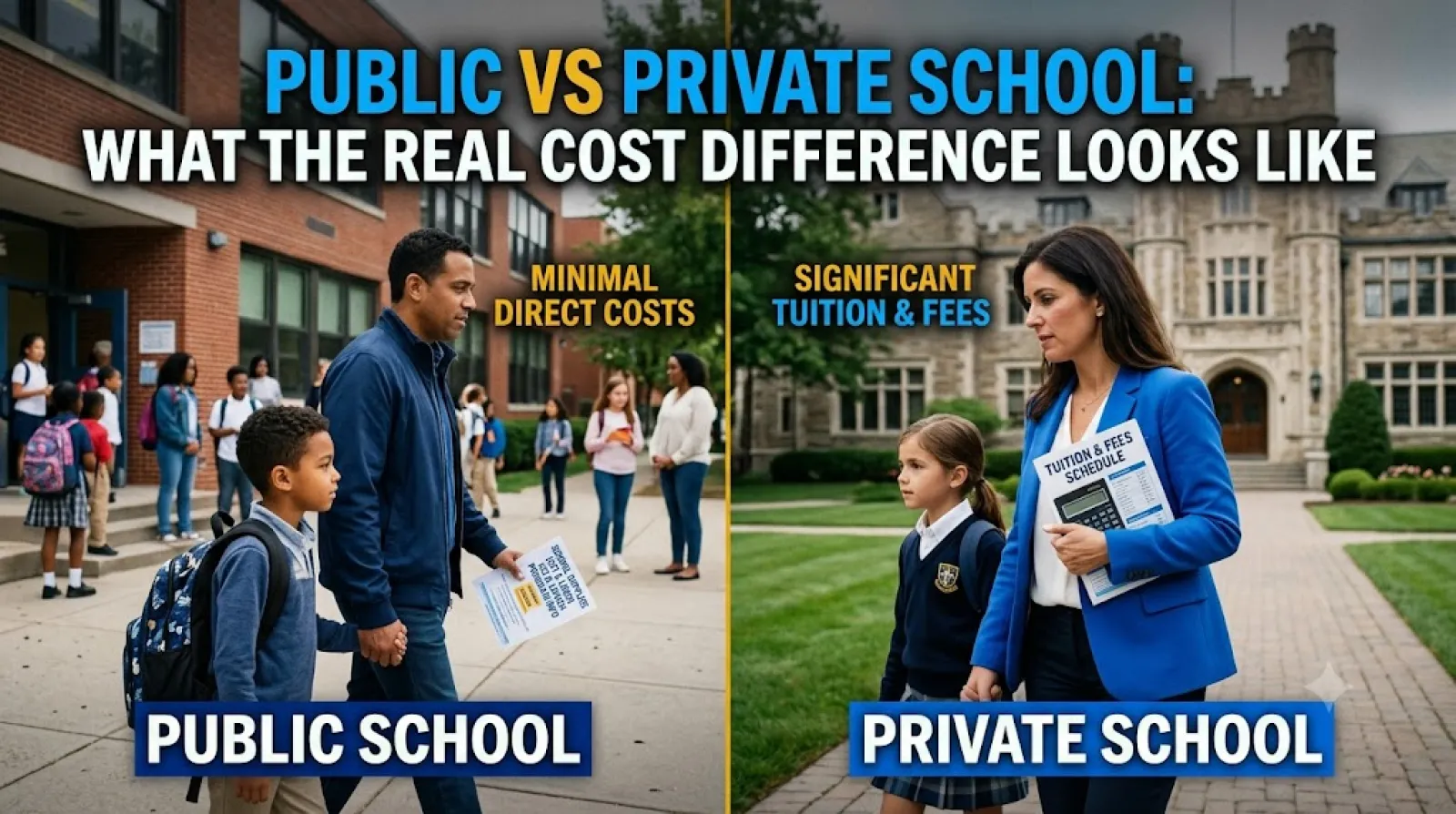
Choosing between public and private education is one of the most significant financial decisions an Australian household will ever make. While the educational debate often focuses on academic outcomes, class sizes, facilities, and extracurricular offerings, the financial reality remains stark: the out-of-pocket variance between a government school and a top-tier independent school can exceed $300,000 to $400,000 per child over a 13-year schooling lifecycle (Prep/Kindergarten to Year 12).
However, comparing school costs isn't as simple as checking published tuition fees. Many families enrolling in the public system are surprised by ancillary costs, while private school parents frequently face hidden extras like technology levies, mandatory building fund donations, uniform requirements, and specialized subject fees.
Consulting an experienced Education Financial Planner in Australia can help families navigate these long-term financial commitments. This comprehensive guide breaks down the true cost of public, Catholic systemic, and independent private schooling across Australia, providing a realistic assessment of tuition, out-of-pocket extras, state-by-state variations, and practical budgeting strategies.
The Three Schooling Sectors in Australia Explained
Australia’s schooling landscape is divided into three primary administrative sectors, each funded through a combination of federal government grants, state government funding, and private parental contributions.
1. Government (Public) Schools
Government schools are established and operated by state and territory education departments (such as NSW Department of Education, Victorian Department of Education, or Queensland Department of Education). Under Australian law, tuition at government schools is free for Australian citizens and permanent residents. However, schools request voluntary financial contributions, and parents remain responsible for essential materials, uniforms, technology, and camps.
2. Catholic Systemic Schools
Catholic systemic schools operate as a coordinated network managed by diocesan Catholic education offices (e.g., Sydney Catholic Schools or Catholic Education Melbourne). They receive government funding but charge moderate tuition fees to cover operational overheads, religious instruction, and infrastructure. They sit firmly in the mid-tier cost bracket.
3. Independent (Private) Schools
Independent schools encompass non-systemic religious schools (Anglican, Grammar, Christian, Islamic, Jewish) as well as secular non-government schools, Montessori, and Steiner institutions. They receive variable government funding based on the Capacity to Contribute (CTC) score of their student demographic, relying heavily on tuition fees to fund operations, facilities, and staff salaries. A Secondary School Teacher in Australia working across these sectors delivers the national or state curriculum, but school resources and facilities differ considerably.
13-Year Cost Breakdown: Public vs Catholic vs Independent
Data from national education cost indices, including the Futurity Investment Group Cost of Education Report, reveals the true lifetime cost of educating a child across Australia. These figures reflect not just tuition fees, but the total out-of-pocket expenditure including uniforms, devices, camps, transport, and extra-curricular activities over 13 years (Prep to Year 12).
| Education Sector | Estimated 13-Year National Average | Estimated 13-Year Metro Average (e.g., Sydney/Melbourne) | Primary Cost Drivers |
| Government (Public) | $90,000 – $102,000 | $100,000 – $121,000 | Devices, uniforms, camps, tuition fees for electives, outside tutoring |
| Catholic Systemic | $190,000 – $224,000 | $210,000 – $273,000 | Annual tuition fees, building levies, subject charges, uniforms |
| Independent (Private) | $300,000 – $435,000+ | $350,000 – $550,000+ | High annual tuition fees, capital building funds, specialist sport/music |
Note: Figures represent total projected out-of-pocket expenses across 13 years of education and vary significantly by state and individual school fees.
Annual Fee Comparison by School Level
Tuition fees scale up as children progress from primary to senior secondary school. Below is a realistic look at average annual costs per child at different educational milestones.
Primary School (Prep / Kindergarten to Year 6)
In government primary schools, fees are limited to voluntary contributions ($50–$200/year) plus uniforms, booklists, and excursion costs. Catholic primary schools typically charge $1,500 to $4,500 per year in base tuition. Independent primary fees range widely from $6,000 per year for community religious schools to over $25,000 per year at premier metropolitan independent colleges. A dedicated Primary School Teacher in Australia delivers foundational learning across all these environments.
Senior Secondary School (Years 11 and 12)
Senior high school represents the peak expenditure years. Government senior high school costs rise due to specialised VCE/HSC/QCE subject materials, digital devices, and graduation events. Elite independent schools in major capital cities frequently exceed $40,000 to $50,000 per child per year for Years 11 and 12 tuition alone.
Capital City vs Regional Cost Differences
Where you live in Australia dramatically impacts the cost difference between public and private education. Metropolitan markets—particularly Sydney and Melbourne—command higher private school tuition fees due to property values, operational costs, and local demand.
Regional centers such as Ballarat, Geelong, Toowoomba, and Newcastle offer mid-tier independent and faith-based schooling options at significantly lower fee tiers than capital city equivalents, making private education more accessible to local families.
The Hidden Costs of Education: Beyond Tuition
When budgeting for education, tuition fees are only part of the equation. Families across all sectors must account for additional expenses that aggregate over time.
1. Uniforms and Attire
-
Public: $300 – $600 for initial winter, summer, and sports uniforms.
-
Private: $1,000 – $2,500+ for complete branded kit including blazers, hats, ties, sports bags, and specialized athletic attire.
2. Technology and Bring Your Own Device (BYOD)
Most Australian high schools enforce BYOD policies. High-spec laptops or iPads, required software licences, and IT maintenance levies add $1,200 to $2,500 every 3 to 4 years.
3. Excursions, Camps, and Overseas Tours
Mandatory outdoor education camps cost between $300 and $1,500 per year depending on duration and location. High-end private schools frequently offer optional international sports tours, language immersion trips, or service trips costing $5,000 to $12,000+ per event.
4. Voluntary Building Funds and Subject Levies
While voluntary building fund contributions ($500–$3,000/year at private schools) are tax-deductible under Australian Taxation Office (ATO) guidelines, they are often practically expected by school communities. Subject levies for senior chemistry, art, design, or vocational subjects also add hundreds to annual accounts.
Tax Considerations and Financial Strategies for Parents
Navigating the financial commitment of non-government schooling requires structured long-term planning.
Education Bonds and Managed Funds
Specialised tax-effective investment vehicles, such as Education Bonds offered by mutual organisations, allow parents and grandparents to save for future school fees. Earnings inside these bonds are taxed at a maximum rate of 30%, and withdrawals used for compliant education expenses can yield tax rebates.
Grandparent Capital Contributions
Many Australian families rely on intergenerational wealth transfers to fund private education. Gifting money or paying school fees directly can have implications for Services Australia (Centrelink) Age Pension asset test rules. It is advisable to consult a registered financial planner or tax accountant before making large direct tuition transfers.
Sinking Funds vs Mortgage Offset Accounts
Holding school fee savings inside a home loan mortgage offset account often yields a guaranteed tax-free return equal to your home loan interest rate, providing flexibility and liquidity when quarterly fee invoices arrive.
Consumer Checklist: Evaluating School Costs
Before enrolling your child in any Australian school, complete this financial and operational checklist:
-
[ ] Request the Full Schedule of Fees: Ask for the current year's complete fee document, ensuring you review compulsory levies, building fees, and IT charges.
-
[ ] Factor in Annual Fee Inflation: Private school fees historically increase by 3% to 7% annually—factor this compound growth into your 6-to-12-year budget.
-
[ ] Check Sibling Discounts: Most non-government schools offer 5% to 20% tuition discounts for second and subsequent children enrolled concurrently.
-
[ ] Inquire About Scholarship Opportunities: Research academic, music, sporting, or equity scholarships (typically offered for entry in Year 7 and Year 10 via ACER testing).
-
[ ] Audit Total Ancillary Costs: Clarify expectations around mandatory camps, music instrument hire, transport passes, and sports uniforms.
-
[ ] Review Payment Term Discounts: Confirm whether the school offers a 2% to 5% discount for paying the full year's tuition upfront before Term 1.
Find Local Education, Accounting, and Family Services on AusLocaly
Making informed decisions about your child’s schooling and managing long-term household finances requires access to local expertise and community networks. Whether you are searching for qualified tutors, financial advisers to structure education bonds, or local family support services, AusLocaly connects you with reliable Australian businesses across every state and territory.
Explore local service providers, browse business categories, and access regional resources tailored to your family's needs:
-
Browse Australian Business Categories: Discover local professional services, tax accountants, and education specialists at AusLocaly Categories.
-
Find Local Services in Capital Cities:
Visit AusLocaly today to search local listings and connect with trusted service providers in your neighborhood.
Related Topics & Tags
Elliot's work centres on making business information clearer, more consistent and easier to navigate. He is particularly interested in service descriptions and category definitions. His editorial style removes unnecessary jargon while retaining useful detail. He contributes polished content for readers comparing local business options.