
Locked Out at Midnight? What a Locksmith Will Actually Do and Charge
Locked out late at night in Australia? Learn what an emergency locksmith actually does, standard midnight call-out fees, hourly rates, and how to avoid scams.
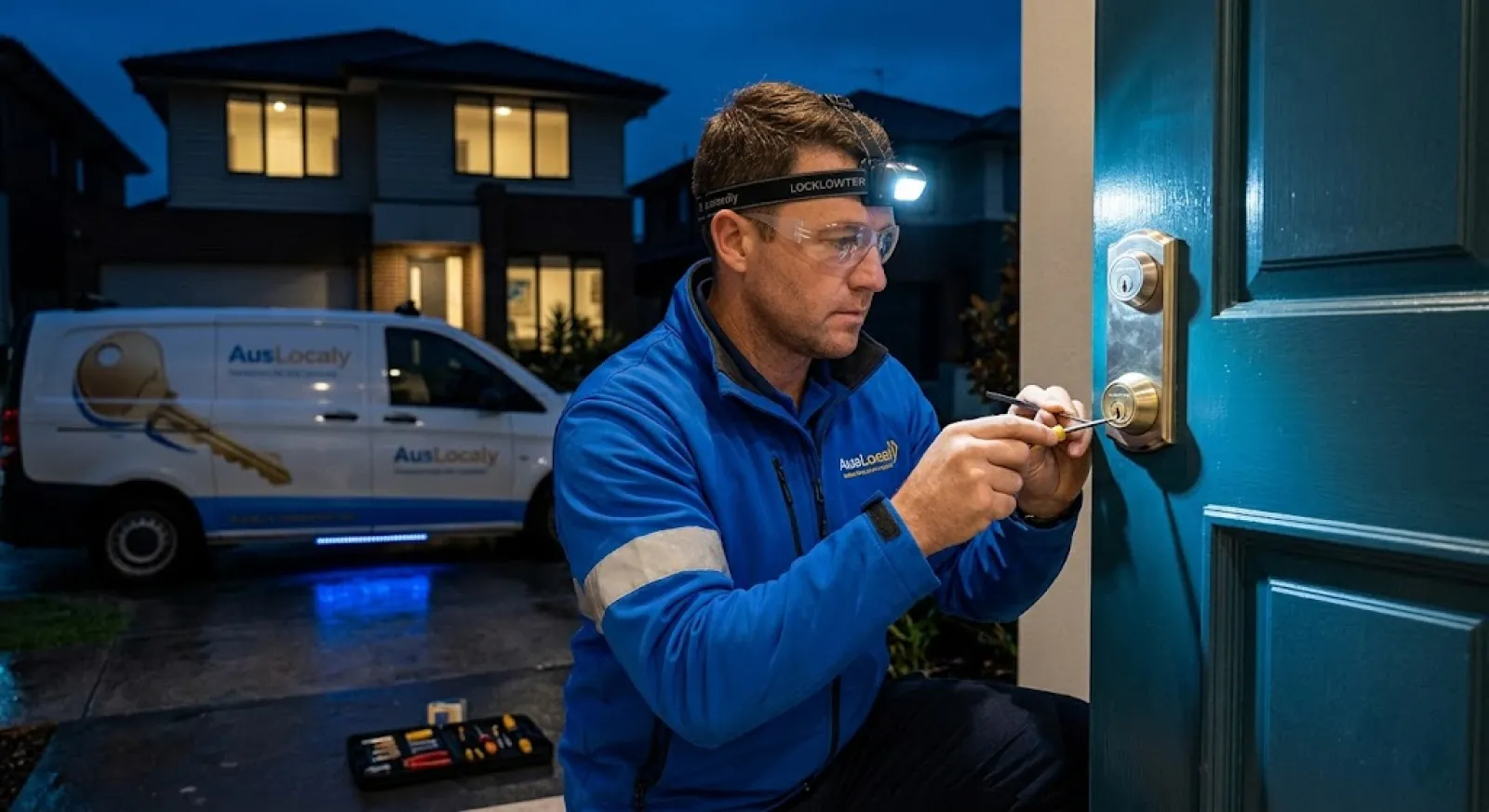
Finding yourself locked out of your home, apartment, or vehicle at midnight is one of the most frustrating and unsettling experiences a resident can face. Whether your keys were lost during a night out, locked inside on the kitchen bench, or broken inside the lock cylinder, late-night lockouts require immediate, practical action.
When standing on a dimly lit porch or balcony at 12:00 AM, most Australians have two urgent questions: "How quickly can someone get here to open this door?" and "How much is this going to cost me?"
Navigating emergency locksmith services late at night can feel confusing. Surcharges apply, pricing structures vary between capital cities and regional towns, and online search results can occasionally include unregistered operators.
This comprehensive Australian guide breaks down exactly what happens when you call an after-hours technician, what tools and techniques they use to regain entry, state-by-state licensing regulations, realistic pricing breakdowns, and essential steps to protect yourself against overcharging.
The Reality of a Midnight Lockout in Australia
Late-night lockouts happen thousands of times across Australian suburbs every week. From inner-city apartments in Sydney and Melbourne to suburban freestanding houses in Brisbane, Perth, or Adelaide, lock hardware varies significantly, but the emergency response procedure remains grounded in industry standards.
When you call an emergency locksmith service at midnight, you are engaging a specialised mobile service operating outside standard trading hours. Unlike a retail workshop, a mobile emergency locksmith operates a purpose-fitted vehicle loaded with key-cutting machinery, lock cylinders, bypass tools, pick sets, and diagnostic software.
Common Midnight Scenarios
-
The "Slam Lock" Incident: Deadlatches or knob locks that lock automatically when the door shuts behind you while taking out the rubbish or stepping outside.
-
Snapped Key in Cylinder: Keys fatigue over time, especially brass keys exposed to coastal weather or worn lock barrels. Turning a key forcefully at night can snap the blade inside the keyway.
-
Lost or Stolen Keys: Keys mislaid on public transport, inside rideshare vehicles, or during social outings.
-
Electronic / Smart Lock Failure: Flat batteries in keyless digital deadbolts without a physical bypass key handy.
-
Attempted Break-In Damage: Damaged lock mechanisms or jammed cylinders resulting from forced entry attempts.
What a Locksmith Will Actually Do When They Arrive
A qualified, professional locksmith does not simply arrive and drill out your lock. In the Australian locksmithing trade, non-destructive entry is always the primary objective. Drilling a lock cylinder is a last resort, reserved only for damaged, high-security, or compromised locks.
Here is the step-by-step professional process an emergency technician follows at midnight:
Step 1: Proof of Identity and Ownership Verification
Before touching a lock, a licensed technician must verify that you have the legal right to enter the property. This is a strict legal and regulatory requirement designed to prevent break-ins and unauthorized access.
You will typically be asked to show:
-
A driver's licence or proof of age card with the matching street address.
-
A utility bill (digital or paper), tenancy agreement, or council rate notice showing your name and address.
-
If your ID is locked inside the property, the locksmith will usually agree to inspect your ID immediately upon opening the door.
Step 2: Assessing the Door and Lock Mechanism
Locks in Australian residential properties generally fall into four main categories:
-
Screen Door / Security Door Locks: Whitco or Austral triple-point locks fitted to crimsafe or mesh screen doors.
-
Timber Door Deadlatches: Surface-mounted rim locks (often branded Lockwood 001 or similar).
-
Mortice Locks & Deadbolts: Heavy-duty locks recessed into the core of the timber or aluminum frame.
-
Keyless / Smart Locks: Electronic pin-pad, Bluetooth, or biometric deadbolts.
Step 3: Attempting Non-Destructive Entry
The tradesperson will select specialised bypass instruments based on the lock grade:
-
Manual or Electric Lock Picks: Used to set individual tumbler pins inside the cylinder to the shear line, simulating a key insertion.
-
Bypass Shims & Air Wedges: Used on certain latch locks or internal timber doors where latch clearance permits.
-
Decoder Wheels / Tension Tools: For tubular locks, padlocks, or older secondary security fittings.
In the vast majority of standard domestic lockouts (80% to 90%), an experienced locksmith can open standard lock cylinders non-destructively within 5 to 15 minutes.
Step 4: Destructive Entry (When Necessary)
If the lock is faulty, jammed internally, deadlocked with a restricted keyway, or ultra-high security anti-pick cylinders (such as commercial restricted key systems), destructive entry may be required.
The technician will use a targeted drill bit to shear the brass pins within the cylinder core without damaging the surrounding timber, frame, or multi-point locking mechanism. Once drilled, the door opens, and the technician replaces the internal barrel/cylinder with a new component on the spot.
Australian Emergency Locksmith Pricing: What to Expect
Pricing for late-night mobile services is governed by standard market rates for urgent trade call-outs in Australia. Because midnight services require rostered technicians, fuel, mobile inventory, and active commercial insurance outside normal hours, emergency fees carry a surcharge.
Prices in Australia include Goods and Services Tax (GST) when charged by GST-registered trades, though some emergency quotes break down the base price plus GST. Always clarify whether a verbal quote includes GST.
Breakdown of Emergency Fees
An after-hours bill comprises three main components:
-
Emergency Call-Out Fee: The flat fee charged for dispatching the technician and vehicle to your location late at night.
-
Labour Charge: The fee for the time spent on-site picking, bypassing, or removing the lock.
-
Hardware / Materials (If Applicable): Cost of replacement keys, barrels, cylinder re-keys, or new deadlatches if the lock required replacement.
Standard Pricing Ranges in Major Australian Capital Cities (AUD)
| Fee Component | Standard Business Hours (8 AM - 5 PM) | After-Hours / Evening (5 PM - 10 PM) | Midnight / Late Night (10 PM - 6 AM) |
|
Emergency Call-Out Fee |
$80 - $140 |
$130 - $220 |
$180 - $350 |
|
Hourly / Job Labour Fee |
$90 - $150 |
$120 - $200 |
$150 - $260 |
|
Standard Cylinder Replacement |
$60 - $120 |
$70 - $140 |
$80 - $160 |
|
Deadbolt / Rim Lock Replacement |
$120 - $280 |
$140 - $300 |
$160 - $350 |
|
Estimated Total Minimum Cost |
$170 - $290 |
$250 - $420 |
$330 - $610+ |
Factors That Influence Your Final Bill
Understanding why one midnight lockout costs $350 while another costs $550 comes down to clear technical variables.
A. Type of Lock Hardware
-
Standard Cylinders (Pin Tumbler): Fast to pick; minimal labor involved.
-
Restricted Keyways / High-Security Systems: Designed specifically to resist picking. Replacing or drilling these barrels requires specialized stock.
-
Digital & Smart Deadbolts: Hardwired or electronic systems may require specific diagnostic bypasses or physical override keys.
B. Property Access and Location
-
High-Rise Apartments: Parking difficulties, building swipe-card security access, and elevator clearance in dense CBD areas (such as inner-city Sydney or Melbourne) can add complexity.
-
Outer Suburban & Regional Areas: Travel distances in outer metropolitan growth corridors or regional hubs mean higher transit fees or extended call-out charges.
C. State of the Lock
If a key has snapped deep inside the cylinder or if the keyway has been glued, damaged, or tampered with, extraction requires additional specialized tools and time before the door can even be unlocked.
Australian Laws, Licensing, and State Security Regulations
In Australia, security equipment installers and locksmiths operate under strict regulatory frameworks enforced by state and territory police services or fair trading departments. Understanding these regulations protects you from hiring unlicensed operators who lack police background checks.
State-by-State Regulatory Frameworks
-
New South Wales (NSW): Locksmiths who work on commercial or residential security systems must hold a valid Security Licence issued by the Security Licensing & Enforcement Directorate (SLED) under the Security Industry Act 1997.
-
Victoria (VIC): Tradespeople installing, maintaining, or repairing security equipment must be registered or licensed with the Victoria Police Licensing and Regulation Division (LRD) under the Private Security Act 2004.
-
Queensland (QLD): Security equipment installers and locksmiths are regulated under the Security Providers Act 1993 administered by the Office of Fair Trading. Operators carry security provider licences.
-
Western Australia (WA): Regulated by the WA Police Security Licensing Enforcement Unit under the Security Activities (Control) Act 1996.
-
South Australia (SA): Regulated through Consumer and Business Services (CBS) under the Security and Investigation Industry Act 1995.
Professional Industry Associations
Reputable tradespeople often belong to recognized professional bodies that mandate strict ethical guidelines and insurance standards:
-
Master Locksmiths Association of Australasia (MLAA): Members are vetted, police-checked, fully insured, and required to adhere to a code of ethics.
-
Locksmiths Guild of Australia (LGA): Represents qualified tradespeople across all states and territories.
When calling an emergency provider at midnight, asking for their Security Licence Number or confirming MLAA membership ensures you are allowing a verified, police-checked professional onto your property.
How to Spot Emergency Locksmith Scams in Australia
While most Australian locksmiths are highly reputable, emergency call-outs can attract predatory call-centre aggregators operating online. Knowing how to spot these schemes saves you hundreds of dollars.
When hiring a locksmith, there are several red flags to watch out for. Be cautious of unrealistically low advertised prices, such as “locks opened from $45,” especially when the final cost is not clearly explained. Avoid providers whose call-centre operators refuse to provide a fixed call-out rate before the technician arrives. An unmarked vehicle without clear business signage or required state licence information may also warrant additional verification. Be careful if a locksmith immediately insists on drilling the lock without first attempting other appropriate entry methods. Finally, be cautious of cash-only payment demands, particularly when the provider is unwilling to issue a proper tax invoice showing GST where applicable.
The "Bait-and-Switch" Tactic
-
The Pitch: An online advertisement claims "Emergency Locksmiths - Call Out From $45!".
-
The Reality: Upon arrival at midnight, the technician claims your lock is "special high-security," drills it immediately, and demands $600 to $900 in cash before handing over new keys.
-
How to Avoid It: Legitimate locksmiths clear their base midnight call-out fee ($180–$350) and standard hourly rates over the phone before dispatching a vehicle.
Realistic Australian Case Studies
Scenario A: The Renter Locked Out of a Modern Apartment
-
Location: Inner Suburbs, Brisbane (QLD)
-
Time: 12:30 AM
-
Issue: Left keys inside the apartment on the dining table. Front door fitted with a standard Gainsborough deadlatch.
-
Action: The locksmith arrived in 25 minutes, verified the renter's identity via digital rental ledger on their smartphone, and picked the pin tumbler lock in 8 minutes without damage.
-
Total Cost: $240 Call-out fee + $90 Labour (15 mins) = $330 AUD (inc. GST). No replacement lock needed.
Scenario B: Homeowner with Snapped Key in Security Screen Door
-
Location: Outer Metropolitan, Melbourne (VIC)
-
Time: 1:15 AM
-
Issue: Key snapped off flush inside a Whitco triple-point security screen door barrel.
-
Action: Technician used key extraction tools to pull the broken blade out, cleaned the lock barrel, and cut two replacement keys using the mobile key-cutting machine in their van.
-
Total Cost: $280 Call-out fee + $110 Labour + $40 Key cutting = $430 AUD (inc. GST).
Essential Midnight Lockout Checklist for Australian Residents
If you are locked out, start by checking all alternative entry points, such as back doors, side gates, sliding balcony doors, or laundry windows, but avoid dangerous climbs or attempts that could cause injury. Next, contact household members, your real estate agent, landlord, neighbour, or strata to see whether someone has a spare key or whether the building has security or concierge services. Before hiring a locksmith, verify their credentials and pricing by asking for the midnight call-out fee and standard labour rate, as well as whether they are appropriately licensed in your state. Keep proof of identity or occupancy ready, such as a driver's licence, digital tenancy information, or a utility bill. Finally, request an invoice and itemised receipt, and where applicable, make sure the GST invoice includes the locksmith's business name and ABN.
Preventative Measures: Avoiding Future Midnight Lockouts
Once you are safely back inside, take proactive steps to ensure you never face a costly midnight lockout again:
-
Leave a Key with a Trusted Neighbour or Local Family Member: A physical spare key kept locally is free and reliable.
-
Install a Digital / Smart Lock with Mechanical Key Override: Keyless keypads or smart deadbolts remove key dependence. Ensure your model features an external battery terminal (such as a 9V battery jump-start port) in case the internal batteries flatline.
-
Hide a Key in a Combination Lockbox: Mount a heavy-duty key safe in a secure, concealed location on your property using a strong mechanical combination code.
-
Replace Worn or Sticky Keys: If a key feels bent or binds inside the lock, visit a local key-cutting shop or trade specialist to duplicate it before it snaps inside the cylinder.
Find Local Emergency Locksmiths and Security Services on AusLocaly
When emergency trade situations arise late at night, having immediate access to reliable local service providers makes all the difference. AusLocaly connects Australian residents, renters, homeowners, and business owners with trade services across major cities, regional hubs, and suburban communities.
Whether you need urgent emergency entry at midnight, security door upgrades, key re-keying, or smart lock installations, exploring relevant categories helps you find local providers equipped for your suburb.