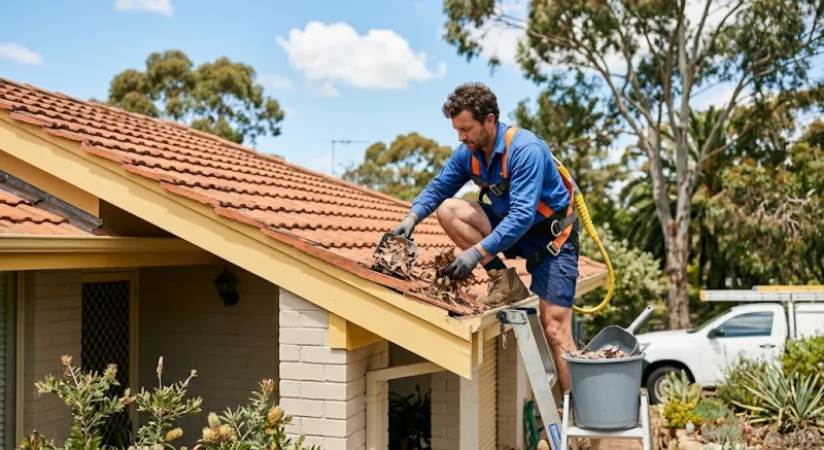
Is It Time to Replace Your Roof? Warning Signs Australian Homeowners Miss
Spot hidden roof damage before costly water leaks strike. Learn warning signs, local building codes, asbestos safety, and re-roofing costs across Australia.
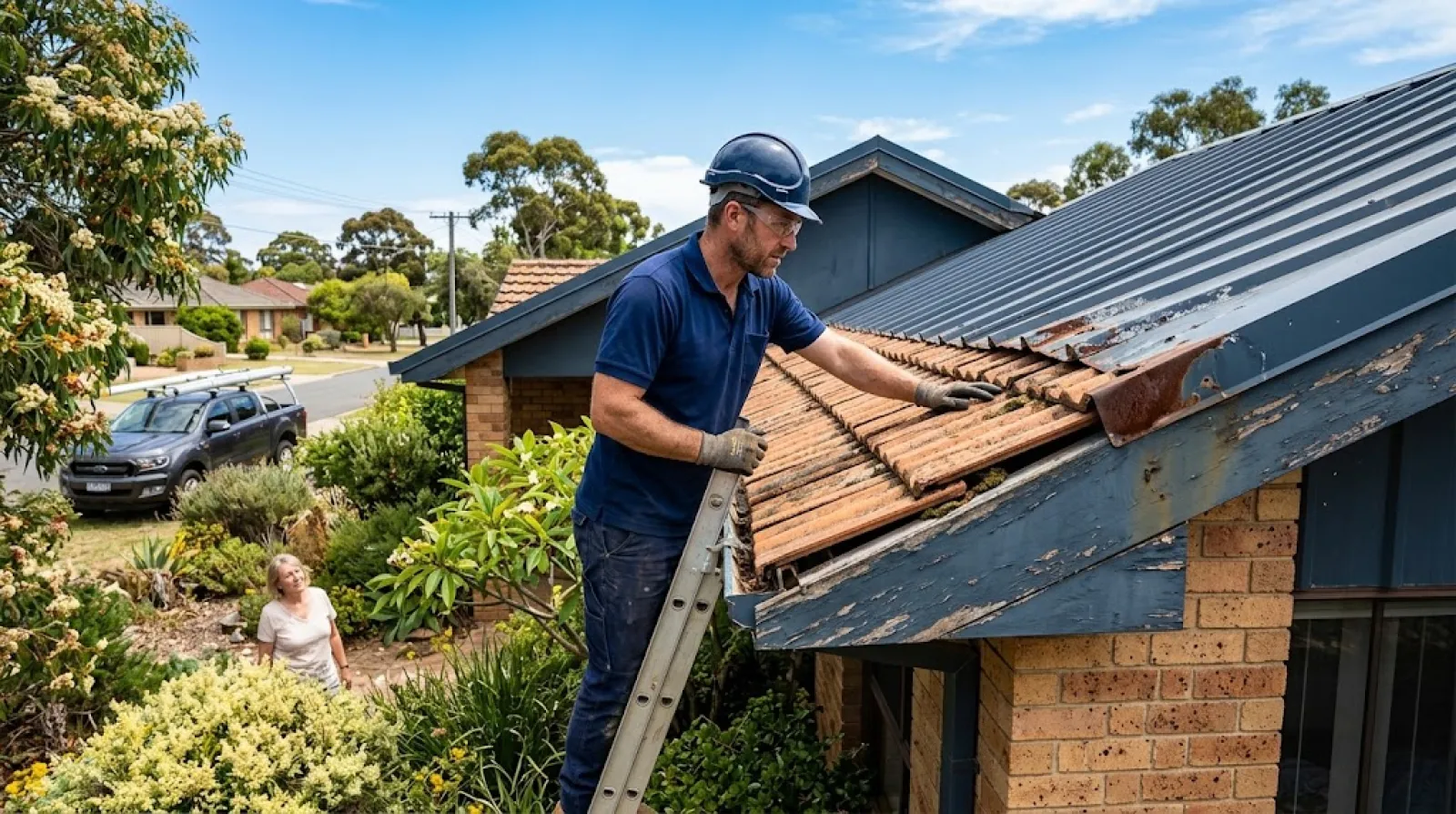
Your roof is your home’s first line of defence against Australia’s harsh environmental conditions. From blistering summer heatwaves and intense ultraviolet radiation to sudden hailstorms, cyclonic winds, and coastal salt spray, Australian roofs endure extreme weather that accelerates structural degradation.
Unfortunately, many homeowners only pay attention to their roof when water begins dripping through the plasterboard ceiling during a torrential downpour. By the time internal damage is visible, significant structural timber rot, electrical hazards, and insulation mould may have already taken hold behind the scenes.
Knowing when to repair, restore, or completely replace your roof is a critical part of maintaining property value and structural integrity. This comprehensive guide explores the warning signs Australian homeowners frequently miss, state regulatory standards, realistic re-roofing costs, and how to select qualified roofing services providers in Australia to secure your home.
The Harsh Australian Climate and Your Roof’s Lifespan
Different roofing materials behave differently depending on where your property is situated across Australia. A roof in tropical Far North Queensland faces vastly different stresses than a property in coastal Sydney, Melbourne, or the dry heat of Adelaide and Perth.
While quality materials are engineered to withstand tough conditions, microclimates heavily influence longevity:
-
Coastal Regions (e.g., Gold Coast, Newcastle, Wollongong): Salt air accelerates rust on iron fasteners and unsealed metal edges.
-
Tropical & Subtropical Zones (e.g., Brisbane, Darwin, Cairns): Heavy summer rains and high humidity encourage moss and algae growth while testing flashings to their absolute limits.
-
Hail-Prone Corridors (e.g., Western Sydney, ACT, Regional Victoria): Large hail impact creates hairline fractures in concrete tiles and deep dents in metal sheeting that compromise protective coatings.
9 Warning Signs Australian Homeowners Frequently Miss
While major roof leaks are obvious, the early indicators of total roof failure are often subtle. Spotting these red flags early can save tens of thousands of dollars in emergency internal repairs.
1. Sagging Rooflines and Ridge Beam Dip
Stand across the street and look closely at the horizontal ridge line of your roof. If you notice a visible dip, wave, or curve along the ridge or rafter planes, this indicates structural framing failure.
In Australian timber-framed homes, sagging is usually caused by prolonged water penetration that rots the roof trusses, or weight overload from heavy concrete tiles on old framing that wasn't designed for the load. A sagging roofline is an immediate structural warning that simple patching cannot fix.
2. Rusted Roof Valleys and Flashing Deterioration
Roof valleys are the metal channels that direct rainwater down intersecting roof pitches into the guttering system. Because water pools in valleys during heavy storms, leaves and debris build up, trapping moisture against the metal.
Look for red rust spots, bubbled paint, or flaking metal along valley trays and around chimneys, skylights, and vent pipes. Once valley metal corrodes through, water flows directly into your ceiling cavity every time it rains.
3. Interior Ceiling Stains and Sagging Plasterboard
Brownish rings, water spots, or bubbling paint on your ceiling plasterboard are classic signs of a leaking roof cavity. However, homeowners often miss subtle signs, such as:
-
Damp, musty odours inside built-in wardrobes or roof access hatches.
-
Mildew forming along internal cornices after prolonged rainy spells.
-
Plasterboard ceiling sheets swelling or showing slight bowing between joists.
4. Cracked, Shifted, or Missing Tiles
From ground level, small hairline cracks on concrete or terracotta tiles are almost impossible to detect. Over time, heavy rain, thermal expansion, and strong wind gusts cause tiles to shift out of alignment or crack entirely.
When tiles break or slip out of place, water runs down the underlayment (sarking). If the sarking is aged or deteriorated, the water leaks straight through to the structural battens.
5. Crumbling Ridge Capping Mortar (Bedding & Pointing)
Terracotta and concrete tile roofs rely on mortar (bedding) and a flexible acrylic compound (pointing) to hold the top ridge caps in position.
If you notice chunks of dried mortar lying in your gutters or down at ground level on your driveway, your ridge capping is failing. Loose ridge caps allow wind-driven rain to penetrate directly under the top courses of tiles and increase the risk of tiles blowing off during summer storms.
6. Rusted Screw Fasteners and EPDM Rubber Washer Failure
On corrugated metal and Colorbond roofs, sheets are held down by specialized roofing screws fitted with EPDM rubber washers. Exposure to severe Australian sun and extreme temperature fluctuations causes these rubber washers to shrink, crack, and dry-rot over time.
Once the rubber washer perishes, a tiny gap forms around every screw hole. On a standard roof with thousands of screws, this creates thousands of minor entry points for water. Furthermore, if non-compatible fasteners were used during installation, galvanic corrosion will rust out the metal surrounding the screw heads.
7. Daylight Visible Through the Roof Cavity
Pop your head up into the ceiling space on a sunny day with the ceiling hatch open and the internal lights turned off. If you can see pinpricks or beams of daylight shining through the roof deck, water can get in too.
While small gaps around roof vents might be normal, light coming through tile intersections, rusty metal seams, or degraded sarking indicates significant wear.
8. Granule Accumulation in Gutters
If you have concrete tiles, clear out your gutters and examine the sludge. High concentrations of coarse, sand-like granules mean the protective coating on your concrete tiles is washing away. Once concrete tiles lose their surface seal, they become porous, absorbing water like a sponge and adding immense dead weight to your roof structure.
9. Unexplained Spikes in Heating and Cooling Bills
A healthy roof system includes reflective foil sarking and adequate ceiling insulation. When a roof ages, deteriorated sarking, rotted sarking tape, or wet ceiling insulation loses its thermal resistance (R-value). If your air conditioning system is working twice as hard to keep your home cool in summer or warm in winter, an unsealed roof cavity could be the culprit.
Repair, Restore, or Re-Roof? Knowing the Difference
When facing roof issues, Australian property owners generally have three paths forward: localized repairs, roof restoration, or a complete roof replacement (re-roofing).
If your roof is over 35 years old and experiencing widespread leaks, investing in repeated minor repairs is often throwing good money after bad. Engaging professional roofing contractors in Australia for a complete replacement provides a fresh manufacturer warranty and long-term security.
Australian Building Codes, Licensing, and Asbestos Regulations
Roof replacement in Australia is governed by strict statutory requirements, safety laws, and national standards. Ignoring these regulations can void your home insurance policy and lead to significant council penalties.
1. National Construction Code (NCC) and Australian Standards
All residential roof installations must comply with the National Construction Code (NCC) and relevant Australian Standards, including:
-
AS 1562.1: Design and installation of sheet roof and wall cladding.
-
AS 2050: Installation of roof tiles.
-
AS 4200.2: Pliable building membranes and underlayments (Sarking installation).
-
AS 3500.3: Plumbing and drainage – Stormwater systems, gutters, and downpipes.
2. State Licensing Requirements
In Australia, roof replacement must be carried out by appropriately licensed tradespeople. Licensing bodies vary by state and territory:
-
New South Wales: Regulated by NSW Fair Trading. Works over $5,000 require a licensed contractor, and jobs over $20,000 require Home Building Compensation Fund (HBCF) insurance cover.
-
Queensland: Regulated by the Queensland Building and Construction Commission (QBCC). A QBCC licence is mandatory for residential building work valued over $3,300.
-
Victoria: Regulated by the Victorian Building Authority (VBA). Plumbing/roof plumbing work valued over $750 requires a licensed roof plumber, and a Compliance Certificate must be issued for jobs exceeding $750.
-
Western Australia: Regulated by Building and Energy (DEMIRS). Trades require registration for contracts exceeding $20,000.
-
South Australia: Regulated by Consumer and Business Services (CBS). Building work contractors must hold a valid licence.
3. The Asbestos Factor: Homes Built Before 1990
If your property was built or renovated prior to 1990, your old roof may consist of asbestos cement sheeting (often called Super Six or fibro).
Asbestos removal is subject to stringent Work Health and Safety (WHS) laws enforced by state regulators such as SafeWork NSW, WorkSafe Victoria, and Workplace Health and Safety Queensland:
-
The 10m² Rule: In most Australian jurisdictions, a unlicensed person can only remove up to 10 square metres of non-friable asbestos sheeting. Any larger area must be removed by a Class B (bonded) or Class A (friable) licensed asbestos removal contractor.
-
Disposal: Asbestos waste cannot be placed in general skip bins or domestic council rubbish. It must be wrapped in heavy-duty 200-micron plastic, labelled, and transported to an EPA-licensed waste landfill facility.
Typical Roof Replacement Costs in Australia
The cost to replace a roof in Australia varies based on roof area (measured in square metres), pitch, accessibility, choice of materials, structural repairs required, and geographical location.
Indicative Cost Table by Material and House Size (AUD)
Roof replacement costs vary by roof material and home size. For a small home of 100–150 m², standard Colorbond® roofing is estimated at $9,000–$14,000, Colorbond® Ultra (Coast) at $12,000–$17,000, concrete tiles at $10,000–$15,000, and terracotta tiles at $16,000–$22,000. For a medium home of 150–200 m², the estimated ranges are $14,000–$21,000 for standard Colorbond®, $17,000–$25,000 for Colorbond® Ultra (Coast), $15,000–$22,000 for concrete tiles, and $22,000–$32,000 for terracotta tiles. For a large home of 200–300 m², costs are approximately $21,000–$32,000 for standard Colorbond®, $25,000–$38,000 for Colorbond® Ultra (Coast), $22,000–$34,000 for concrete tiles, and $32,000–$48,000 for terracotta tiles. If asbestos sheet removal is required, an additional $4,000–$7,000 may apply to a small home, $6,000–$10,000 for a medium home, and $9,000–$15,000 for a large home.
Key Price Drivers
-
Scaffolding and Edge Protection: Under Australian WHS legislation, edge protection or scaffolding is mandatory for works at height. Scaffolding for a two-storey or steep-pitch home can add $2,000–$5,000 to the job total.
-
Roof Pitch and Complexity: Steep roofs require extra safety harness setups and slower, more cautious labour, increasing cost by 15% to 30%.
-
Changing Materials (Tile to Metal Conversion): Converting from heavy concrete tiles to lightweight Colorbond metal sheeting requires installing structural timber battens and tie-down straps to meet current wind-load requirements under modern Australian building codes.
-
Gutters, Downpipes, and Fascia: Replacing worn quad gutters or concealed box gutters alongside your roof replacement adds approximately $35 to $65 per lineal metre.
Regional Australian Considerations
Coastal Areas (Sydney, Gold Coast, Wollongong, Perth)
Salt-laden air causes standard steel to corrode rapidly. Property owners located within 100 to 200 metres of breaking surf or marine environments should specify Colorbond® Ultra steel or stainless steel fasteners to maintain warranty validity.
Storm & Cyclone Belts (Brisbane, Sunshine Coast, North QLD)
Roofs in Queensland must withstand severe summer convective storms and cyclonic wind shear. Building regulators enforce specific tie-down standards and heavy-gauge screw fixings. Ensuring high-capacity gutters are installed is essential to prevent storm water backwash into the roof cavity.
Cold & Variable Climates (Melbourne, Canberra, Hobart)
In southern capital cities, thermal insulation and condensation control are critical. Installing reflective foil sarking beneath roof sheets or tiles stops condensation droplets from dripping onto ceiling insulation during cold winter nights.
Practical Australian Homeowner Scenarios
Scenario A: The Brisbane Storm Damage Upgrade
-
Property Owner: Marcus, Homeowner in Coorparoo, Brisbane.
-
The Situation: A 1970s low-set brick home with original concrete roof tiles. After a severe November hail storm, Marcus noticed dark water dampness on his living room ceiling. An inspection revealed micro-cracks across dozens of porous tiles and rotted timber battens.
-
The Solution: Marcus decided against patching fragile 50-year-old tiles. He hired a licensed local roofing specialist to strip the old tiles, upgrade the roof tie-downs to meet current Queensland wind codes, install heavy-duty reflective insulation sarking, and lay a fresh Colorbond® roof in Custom Orb profile.
-
The Outcome: Increased weather resilience, improved thermal performance, and lowered summer cooling costs.
Scenario B: The Melbourne Heritage Tile Conversion
-
Property Owner: Sarah and David, Renovators in Brunswick, Melbourne.
-
The Situation: A two-storey Victorian terrace with failing terracotta tiles that were weeping moisture into the roof space during winter rains.
-
The Solution: Because the property is two-storey, mandatory perimeter scaffolding was erected to comply with WorkSafe Victoria standards. The roofer removed the original heavy tiles, repaired decayed timber rafters, and installed light metal battens and corrugated steel cladding.
-
The Outcome: The project eliminated structural roof overload and completely waterproofed the home while retaining heritage charm.
Hidden Costs and Red Flags When Hiring a Roofer
When seeking re-roofing quotes, homeowners should watch out for common industry traps and red flags:
Common Red Flags
-
No Licence Details on Written Quotes: Always verify the contractor’s licence number via your state’s online register (e.g., NSW Fair Trading Public Register or QBCC Licence Search).
-
Cash-Only Discounts without Insurance Proof: If a contractor cannot provide a Certificate of Currency for Public Liability Insurance (minimum $10–$20 million) and workers' compensation, you become personally liable for on-site accidents.
-
Unusually Cheap Bids: A quote significantly lower than competitors often means the contractor is omitting perimeter scaffolding safety setups, using cheap non-compliant import fasteners, or failing to replace decayed roof battens.
-
Vague Scope of Work: Ensure quotes explicitly outline waste disposal, sarking installation, gutter replacement, flashing materials, and cleanup.
How to Choose the Right Local Roofing Specialist
To ensure a seamless roof replacement project, follow these practical steps when selecting a contractor:
-
Verify Licensing and Insurance: Request proof of trade licence, asbestos removal licence (if applicable), public liability insurance, and Home Building Compensation cover for large projects.
-
Review Material Warranties: BlueScope Steel offers warranties up to 36 years for Colorbond® steel (subject to location criteria), while tile manufacturers provide warranties ranging from 20 to 50 years. Ensure your contractor provides official written manufacturer warranty documentation upon completion.
-
Obtain Three Itemized Written Quotes: Compare apples-to-apples on scope of work, including edge protection setup, tile/sheet disposal fees, flashing details, sarking grade, and project timeframes.
-
Check Local References and Recent Projects: Ask the roofer for addresses of recent installations in your nearby suburb so you can assess their craftsmanship in person.
Australian Homeowner Roof Inspection Checklist
Use this practical checklist to evaluate your roof's condition before calling out a specialist:
 Check ceilings internally for brown water rings, plaster sag, or mildew odours.
 Inspect gutters from ground level for sand-like concrete tile granules or mortar chunks.
 Check valley trays from ground level for visible red rust, leaf blockages, or paint bubbling.
 Look along the horizontal ridge line across the street for dips or sag.
 Inspect exterior downpipes for rust stains or loose bracket fixings.
 Check ceiling cavity on a sunny day (with lights off) for visible beams of daylight.
 Verify if your home was constructed prior to 1990 (potential asbestos content).
 Confirm your home building insurance covers storm water damage and impact damage.
Find Local Roofing Services and Australian Information on AusLocaly
When it is time to inspect, restore, or replace your roof, working with experienced local professionals who understand regional weather patterns, council permits, and Australian Standards is essential.
AusLocaly connects property owners, renters, and buyers across Australia with trusted trade professionals and local businesses in your area.
Visit AusLocaly today to research local service providers, access practical community guides, and find the right trade specialists for your property maintenance needs.