
Family Day Care vs Long Day Care: Which Childcare Option Suits Your Family?
Comparing Family Day Care vs Long Day Care in Australia. Learn about NQF ratios, Child Care Subsidy (CCS) gap fees, flexibility, and choosing the right option.
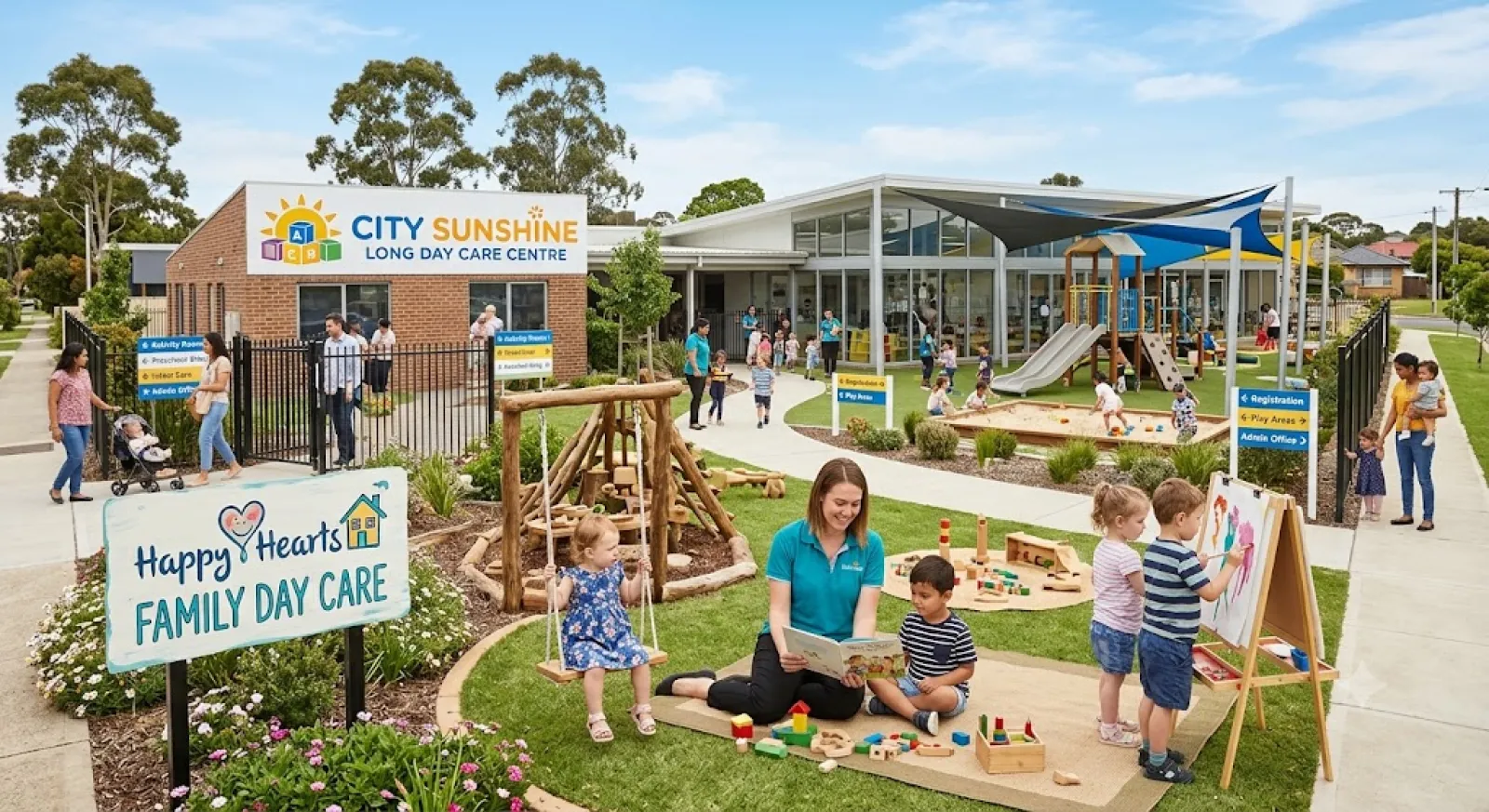
Selecting the right early childhood education and care model is one of the first major decisions new and returning Australian parents face. In Australia, the early childhood sector is governed nationally to ensure safety and developmental standards, but the daily delivery of care varies significantly between models.
The two most common approved options for working and studying families are Long Day Care (LDC)—commonly referred to as centre-based day care—and Family Day Care (FDC). Both models qualify for the Commonwealth Child Care Subsidy (CCS), but they differ fundamentally in setting, group sizes, operating hours, fee structures, and daily routines.
This practical guide provides an authoritative breakdown of how Family Day Care and Long Day Care operate across Australian states and territories, helping you weigh up costs, educator ratios, regulatory frameworks, and developmental benefits for your child.
Understanding the Two Main Australian Childcare Models
While both service types deliver early learning framed by the national curriculum, their operational environments create distinct experiences for children and parents.
What is Long Day Care (Centre-Based Care)?
Long Day Care services are purpose-built or dedicated early learning centres. They cater to larger groups of children—often ranging from 30 to over 100 children per day across separate age-segregated rooms (e.g., Nursery, Toddler, and Preschool/Kindergarten rooms).
-
Operating Hours: Typically open 10 to 12 hours per day (e.g., 6:30 AM to 6:30 PM), 50 to 52 weeks a year.
-
Staffing: Run by teams of Early Childhood Teachers (ECTs), room leaders, and educators holding Certificate III or Diploma qualifications in Early Childhood Education and Care.
-
Environment: Commercial facilities equipped with specialized outdoor play areas, commercial kitchens, and structured room schedules.
What is Family Day Care?
Family Day Care is an approved network of qualified educators who provide early education and care for small groups of children within their own private residential home.
-
Governance: FDC educators do not operate in isolation; they must be formally registered with an approved Family Day Care Scheme or Approved Provider (which may be run by local councils, non-profit organisations, or private providers). The scheme monitors compliance, provides pedagogical support, and conducts unannounced home visits.
-
Operating Hours: Highly flexible. While standard daytime care is common, many FDC educators offer extended hours, weekend care, overnight care, or flexible session blocks to suit shift workers (such as healthcare staff or emergency service workers).
-
Environment: A home setting featuring mixed-age peer groups, residential backyard play, and domestic routines.
Educator-to-Child Ratios and Group Sizes
Both Long Day Care and Family Day Care are regulated under the National Quality Framework (NQF) and overseen by the Australian Children’s Education & Care Quality Authority (ACECQA) along with state and territory regulatory authorities. However, the rules regarding maximum group sizes and staff-to-child ratios differ dramatically.
ACECQA National Ratio Requirements
Under National Regulations, centre-based services must meet strict ratios based on child age:
-
Birth to 24 months: 1 educator to 4 children (1:4 across all states and territories).
-
24 to 36 months: 1 educator to 5 children (1:5 across Australia, except Victoria where it is 1:4).
-
36 months to preschool age: 1 educator to 11 children in Victoria, Queensland, South Australia, ACT, and Northern Territory. In New South Wales, Western Australia, and Tasmania, the ratio is 1 educator to 10 children (1:10).
For Family Day Care, the maximum ratio is strictly 1 educator to 7 children at any one time. Furthermore, no more than 4 children can be preschool age or under. If the educator has their own children under 13 years of age present without another adult caregiver, those children count toward the total limit of 7.
1. Comparing Key Features: FDC vs LDC
Choosing between these two options depends on your child's temperament, your working arrangements, and your family's daily logistics.
| Feature | Long Day Care (LDC) | Family Day Care (FDC) |
| Physical Setting | Purpose-built commercial early learning center. | Educator's private home environment. |
| Social Grouping | Same-age peer rooms (e.g., Nursery, Toddlers, Pre-Prep). | Mixed-age grouping (infants, toddlers, and preschoolers together). |
| Primary Educator | Rotates across shifts; team-teaching approach. | Single dedicated primary educator per home. |
| Meal Provision | Usually supplied by on-site chef (included in fee). | Varies; often packed by parents or provided for a small fee. |
| Operating Model | Fixed daily session rate (e.g., 9-hr, 10-hr, 12-hr). | Flexible hourly or session rates depending on educator. |
| Preschool Program | Structured Kindergarten/Preschool program led by a qualified ECT. | Early Years Learning Framework (EYLF) integrated, often attending local playgroups. |
| Closure Contingencies | Open year-round except public holidays; absent staff replaced by casual relief. | If educator is sick or on leave, care pauses unless scheme arranges backup care. |
2. Typical Australian Childcare Costs and Government Subsidies
Childcare pricing in Australia varies significantly based on state, region, and care type. However, the out-of-pocket costs for both options are heavily offset by the Child Care Subsidy (CCS) administered through Services Australia (Centrelink).
Standard Fee Ranges (Before Subsidy)
-
Long Day Care: National average daily rates range from A$120 to A$185+ per day. Inner-city Sydney (e.g., Eastern Suburbs, North Shore) and Melbourne (e.g., Inner South, Bayside) often charge upwards of A$170 to A$220 per day, whereas regional areas in Queensland or South Australia generally sit between A$110 and A$145 per day.
-
Family Day Care: Rates are typically set hourly by individual educators or schemes, averaging A$11.00 to A$16.50 per hour (translating to roughly A$90 to A$155 per day depending on booked hours). FDC is often 10% to 20% cheaper for families needing shorter or non-standard hours because you pay primarily for the hours booked rather than mandatory 12-hour session blocks.
How the Child Care Subsidy (CCS) Works
The CCS percentage you receive depends on your combined annual family income, while the number of subsidised hours per fortnight depends on your activity test results (or the baseline minimum subsidy hours guaranteed under national rules).
-
Maximum Subsidy Rate: Families earning up to the base income threshold receive up to a 90% subsidy. The rate tapers down by 1% for every additional income increment up to the upper threshold.
-
Hourly Rate Caps: The Australian Government sets maximum hourly fee caps for each care type. If your provider charges higher than the hourly rate cap, the subsidy only applies up to the cap, and you must pay 100% of the difference out of pocket (the gap fee).
-
Electronic Gap Payment: Under federal law, all Australian parents must pay their gap fee electronically (EFT, direct debit, or credit card) directly to the approved provider.
3. State and Territory Regulatory Safeguards
Both care settings must follow the National Law and National Regulations administered by state regulatory authorities:
-
New South Wales: Regulated by the NSW Department of Education (Early Childcare Education State Secretariat).
-
Victoria: Regulated by the Department of Education (Quality Assessment and Regulation Division - QARD).
-
Queensland: Regulated by the Department of Education (Early Childhood Education and Care).
-
Western Australia: Regulated by the Department of Communities (Education and Care Services National Law Regulatory Authority).
-
South Australia: Regulated by the Education and Standards Board (ESB).
National Quality Standard (NQS) Ratings
Every approved Long Day Care centre and Family Day Care scheme is assessed and rated against 7 key quality areas under the NQS:
-
Educational program and practice
-
Children’s health and safety
-
Physical environment
-
Staffing arrangements
-
Relationships with children
-
Governance and leadership
-
Collaborative partnerships with families and communities
Service ratings (Exceeding NQS, Meeting NQS, or Working Towards NQS) are publicly available on the StartingBlocks.gov.au portal and must be displayed prominently at the service location.
4. Practical Scenarios: Which Option Fits Your Needs?
To help contextualize which setting aligns with your household situation, consider these realistic Australian scenarios:
Scenario A: Shift-Working Parents in Regional Western Australia
-
Family: A nurse working rotating shifts at a regional hospital in Bunbury, WA, with a partner working in logistics.
-
Challenge: Traditional Long Day Care centres open at 6:30 AM and close at 6:00 PM, which does not cover early shift handovers or evening weekend work.
-
Best Choice: Family Day Care. An FDC educator can accommodate non-standard hours, early drop-offs, or late pickups, charging strictly for booked hours under an individual Complying Written Arrangement (CWA).
Scenario B: Professional Couple in Inner-City Melbourne
-
Family: Two full-time corporate employees living in Richmond, VIC, working standard 8:30 AM to 5:00 PM hours.
-
Challenge: Seeking structured preschool preparation, social exposure to larger peer groups, and fully provided meals without daily prep.
-
Best Choice: Long Day Care. The centre provides hot lunches, nappies, and an integrated kindergarten program led by a Bachelor-qualified Early Childhood Teacher, lining up with routine corporate schedules.
Scenario C: Infant with Sensory Sensitivity in Suburban Brisbane
-
Family: First-time parents in Chermside, QLD, returning to part-time work with a 9-month-old infant who struggles in noisy environments.
-
Challenge: High-density nursery rooms in commercial centres can feel overwhelming for sensitive infants.
-
Best Choice: Family Day Care. The low 1:4 infant ratio within a quiet, home-based environment allows for a consistent, single bond with one primary educator.
5. Hidden Costs and Considerations to Watch
When calculating your household budget, look beyond the basic hourly or daily rate:
-
Administration & Levy Fees in FDC: FDC schemes often add a small administrative parent levy per hour (e.g., A$1.50 to A$3.00/hr) on top of the educator's hourly fee to cover scheme governance and compliance support.
-
Meals and Nappies: Most Long Day Care centres include morning tea, lunch, afternoon tea, and nappies in their daily fee. In Family Day Care, parents are frequently required to supply packed lunchboxes, milk formula, and nappies.
-
Public Holidays and Absentee Days: Standard Long Day Care centres charge full daily fees for public holidays even though the centre is closed. Under CCS rules, families receive up to 42 allowable absence days per financial year where subsidies still apply.
-
Backup Care Reliance: If your Family Day Care educator takes sick leave or planned annual leave, care stops unless the overarching scheme can place your child with another local educator.
Consumer Checklist: Evaluating Childcare Providers
Use this practical step-by-step checklist when touring local services in your suburb:
-
[ ] Check Regulatory Approval: Confirm the provider or FDC scheme is approved for CCS by Services Australia.
-
[ ] Review NQS Ratings: Look up the service rating on StartingBlocks.gov.au or inspect the displayed rating certificate.
-
[ ] Verify Educator Qualifications: Confirm staff hold minimum Certificate III, Diploma, or Early Childhood Teaching degrees.
-
[ ] Inspect Home Safety (For FDC): Check that window locks, pool fencing (if applicable), glass safety markings, emergency exits, and outdoor shade meet state regulations.
-
[ ] Ask About Illness Policies: Review exclusion periods for common childhood illnesses and how infectious outbreaks are managed.
-
[ ] Confirm What Fees Include: Ask whether meals, sun protection, excursions, nappies, and extracurricular activities are included in the headline rate.
-
[ ] Understand the Contract (CWA): Check notice periods for cancellation, late pickup fees, and public holiday charging policies.
Find Local Childcare Services and Australian Businesses on AusLocaly
Choosing between Family Day Care and Long Day Care comes down to your family's daily schedule, budget, and learning preferences. Whether you are searching for an accredited childcare provider in Australia, an experienced family day care educator in Australia, or a local early childhood teacher in Australia, finding reliable local services in your neighborhood is essential.
AusLocaly makes it simple to discover, research, and connect with trusted service providers across every state and territory. Explore local listings, view category guides, and find services tailored to your family's needs in major cities and regional areas alike.
Visit AusLocaly today to browse comprehensive Australian business categories or connect with local providers in major metropolitan hubs including Sydney, Melbourne, and Brisbane.
Related Topics & Tags
Brodie follows independent enterprises and the people who rely on their services. He enjoys exploring specialist businesses that may not receive much attention outside their local area. His writing focuses on business purpose, customer needs and service clarity. He contributes neutral articles for local discovery.